
University of British Columbia aquatic researchers receive $1M fellowships
Advertisement
Read this article for free:
or
Already have an account? Log in here »
We need your support!
Local journalism needs your support!
As we navigate through unprecedented times, our journalists are working harder than ever to bring you the latest local updates to keep you safe and informed.
Now, more than ever, we need your support.
Starting at $15.99 plus taxes every four weeks you can access your Brandon Sun online and full access to all content as it appears on our website.
Subscribe Nowor call circulation directly at (204) 727-0527.
Your pledge helps to ensure we provide the news that matters most to your community!
To continue reading, please subscribe:
Add Brandon Sun access to your Free Press subscription for only an additional
$1 for the first 4 weeks*
- Enjoy unlimited reading on brandonsun.com
- Read the Brandon Sun E-Edition, our digital replica newspaper
*Your next Free Press subscription payment will increase by $1.00 and you will be charged $20.95 plus GST for four weeks. After four weeks, your payment will increase to $24.95 plus GST every four weeks.
Read unlimited articles for free today:
or
Already have an account? Log in here »
VANCOUVER – Two University of British Columbia researchers are getting $1 million each for projects that study microscopic ocean organisms and toxic road run-off.
The university says Patrick Keeling and Rachel Scholes of its Vancouver campus are the recipients of two Wall Fellowships, its highest-value internal research award.
The fellowships fund five years of research and are meant to expand projects across the province and build on partnerships with local municipalities and First Nations.
Scholes, an assistant professor in environmental systems engineering at the university, said she was blown away and humbled to receive the award.
“I am so excited to get to do this work,” she said in an interview last week.
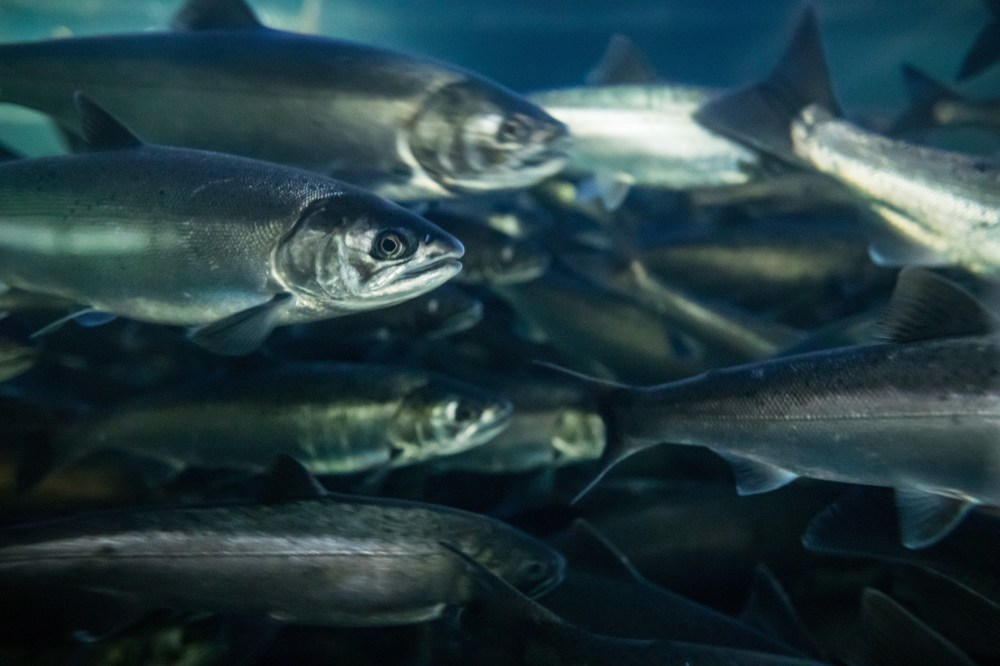
Her research will look at toxic tire chemicals that make their way into creeks and streams, harming salmon; and the tiny tire particles that people inhale near roadways that could harm humans.
One of those chemicals is 6 PPD-quinone, which is particularly lethal to coho salmon.
Scholes, whose previous research on 6 PPD-quinone found it was leaching into Metro Vancouver’s municipal stormwater systems through artificial turf fields, is now studying how the chemical leaches from drivers’ car tires during their daily commutes and its environmental and health impacts.
“It’s the friction between the tire and the roadway that generates a lot of these small tire-wear particles. And those small particles are a particular concern for us in terms of releasing tire rubber additives and chemicals,” she said.
Scholes said a key aim of the project is working with First Nations and local governments to implement mitigation strategies for toxic road run-off.
She said several First Nations, which act as stewards of salmon-bearing streams but don’t control the municipal infrastructure that may lead to road run-off, have expressed interest in testing the research team’s stormwater treatment solutions.
The fellowship will allow a trial of the equipment over several years, Scholes added.
Keeling, a botany professor at the university, says the award will fund his research into the microbial ocean life that scientists know almost nothing about.
“Who lives with who, how do they move around from one animal to another,” he said in an interview Thursday.
Keeling’s lab can individually sequence the genes of a single cell, which can help provide answers about microbial organisms’ function and purpose.
The award has also allowed him to hire a graduate student from France, with plans to hire more.
Like Scholes, he plans to partner with First Nations by teaching youth about microbial diversity in their communities.
Keeling said he’s happy to receive funding for a B.C.-based project and that for him, the research matters on a larger scale.
“I personally think that understanding the natural world and understanding the nature of the universe if one of the most important things that humans can do with the time that we’re given,” he said. “It’s really as simple as that.”
The university says it funded 19 additional graduate student awards and eight faculty research awards through its Peter Wall legacy fund. The projects include research on Indigenous watershed stewardship and sustainable agriculture.
This report by The Canadian Press was first published Sept. 16, 2026.