
Manitoba ends twice-yearly clock changes, going all year round on daylight time
Advertisement
Read this article for free:
or
Already have an account? Log in here »
We need your support!
Local journalism needs your support!
As we navigate through unprecedented times, our journalists are working harder than ever to bring you the latest local updates to keep you safe and informed.
Now, more than ever, we need your support.
Starting at $15.99 plus taxes every four weeks you can access your Brandon Sun online and full access to all content as it appears on our website.
Subscribe Nowor call circulation directly at (204) 727-0527.
Your pledge helps to ensure we provide the news that matters most to your community!
To continue reading, please subscribe:
Add Brandon Sun access to your Free Press subscription for only an additional
$1 for the first 4 weeks*
- Enjoy unlimited reading on brandonsun.com
- Read the Brandon Sun E-Edition, our digital replica newspaper
*Your next Free Press subscription payment will increase by $1.00 and you will be charged $20.95 plus GST for four weeks. After four weeks, your payment will increase to $24.95 plus GST every four weeks.
Read unlimited articles for free today:
or
Already have an account? Log in here »
WINNIPEG – Manitoba’s twice-yearly clock changes are a thing of the past as the province moves to make daylight time permanent.
That means Manitobans will not set their clocks back an hour on Nov. 1 as planned.
Premier Wab Kinew said Thursday that the decision came after hearing overwhelming support from a recent survey to ditch the time changes.
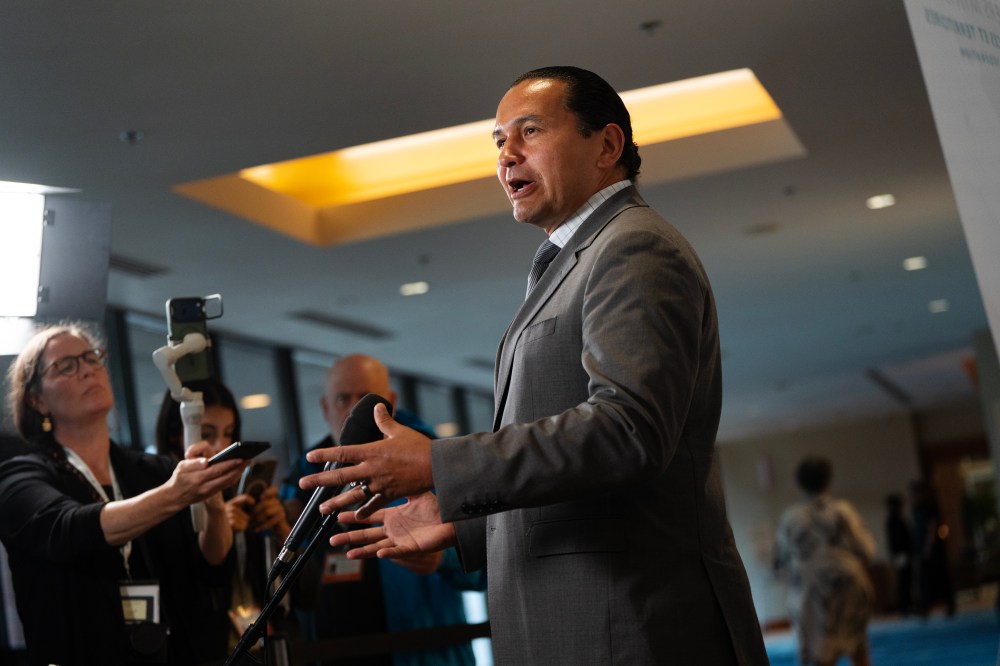
“We heard from Manitobans loud and clear,” Kinew said in a statement. “This change means one less adjustment families have to deal with each spring and fall.”
The survey, launched earlier this year, heard back from almost 72,000 Manitobans. Of those, 58 per cent wanted to stick with central daylight time, meaning less winter sun in the morning and more sun later in the day.
About 34 per cent pushed to make standard time the permanent one. The remaining eight per cent wanted to stick with time changes.
Kinew said the people have spoken and his government is listening, meaning daylight time will be the new normal.
The changes mean that those in Winnipeg will see the sun rise at close to 9:30 a.m. on the shortest winter days, while further north in places like Thompson it will be after 10 a.m.
Health experts, and Kinew himself, had pushed to make standard time permanent, citing that more daylight in the morning is easier on the body’s natural sleep rhythms and therefore better to overall health.
Inna Rabinovich-Nikitin, assistant professor in the University of Manitoba’s physiology department, says the late start for sunlight doesn’t match the body’s natural circadian rhythm of light and dark, resulting in a kind of jet lag.
She said the disruption can ultimately increase the chances of heart attacks, strokes, diabetes, obesity and cancer.
“Staying on daylight saving time (year-round) is actually considered worse than changing (clocks) twice a year,” Rabinovitch-Nikitin said in an interview.
But the province, in its own analysis handed out for those in the survey, noted that more light later in the day has shown to make children more active and therefore more healthy.
Business groups have supported the move as a way for people to be able to do more.
“More daylight in the evening means more opportunity for restaurants, retailers, farmers and communities across our province to make the most of the day,” said Winnipeg Chamber of Commerce CEO Loren Remillard in a statement.
The Opposition Progressive Conservatives have also pushed to make daylight time permanent, including through a private member’s bill from Springfield-Ritchot MLA Ron Schuler.
Schuler said in a statement that he was glad seasonal time changes will finally come to an end, but said Manitoba is a follower when it could have been a leader.
“Now that we’re lagging behind every other western province and territory, I hope that the government will finally decide to work together,” he said.
Manitoba has followed Alberta, British Columbia and the Northwest Territories in switching to permanent daylight time this year.
The switch in Alberta means it’s now aligned year-round with clocks in Saskatchewan, which ended time changes in 1966.
Had Manitoba opted for standard time year-round, it would have synced up with the other Prairie Provinces.
This report by The Canadian Press was first published Sept. 17, 2026.