
Why Alex Gibney used a digital version of Elon Musk in his doc about the tech titan
Advertisement
Read this article for free:
or
Already have an account? Log in here »
We need your support!
Local journalism needs your support!
As we navigate through unprecedented times, our journalists are working harder than ever to bring you the latest local updates to keep you safe and informed.
Now, more than ever, we need your support.
Starting at $15.99 plus taxes every four weeks you can access your Brandon Sun online and full access to all content as it appears on our website.
Subscribe Nowor call circulation directly at (204) 727-0527.
Your pledge helps to ensure we provide the news that matters most to your community!
To continue reading, please subscribe:
Add Brandon Sun access to your Free Press subscription for only an additional
$1 for the first 4 weeks*
- Enjoy unlimited reading on brandonsun.com
- Read the Brandon Sun E-Edition, our digital replica newspaper
*Your next Free Press subscription payment will increase by $1.00 and you will be charged $20.95 plus GST for four weeks. After four weeks, your payment will increase to $24.95 plus GST every four weeks.
Read unlimited articles for free today:
or
Already have an account? Log in here »
TORONTO – While researching his latest film, one of the most critical and expansive looks yet at billionaire Elon Musk, Alex Gibney says he came to the realization that he wasn’t in completely unfamiliar territory.
The American filmmaker behind a new documentary on the controversial tech titan is known for his deep, hard-nosed investigations into often polarizing figures.
Gibney calls Musk a narcissist, and compares him to some of his other controversial subjects who he says tried to “gaslight” the public, including Elizabeth Holmes, the failed Theranos entrepreneur, and Jeffrey Skilling and Ken Lay, the executives behind an accounting scandal at American energy company Enron.
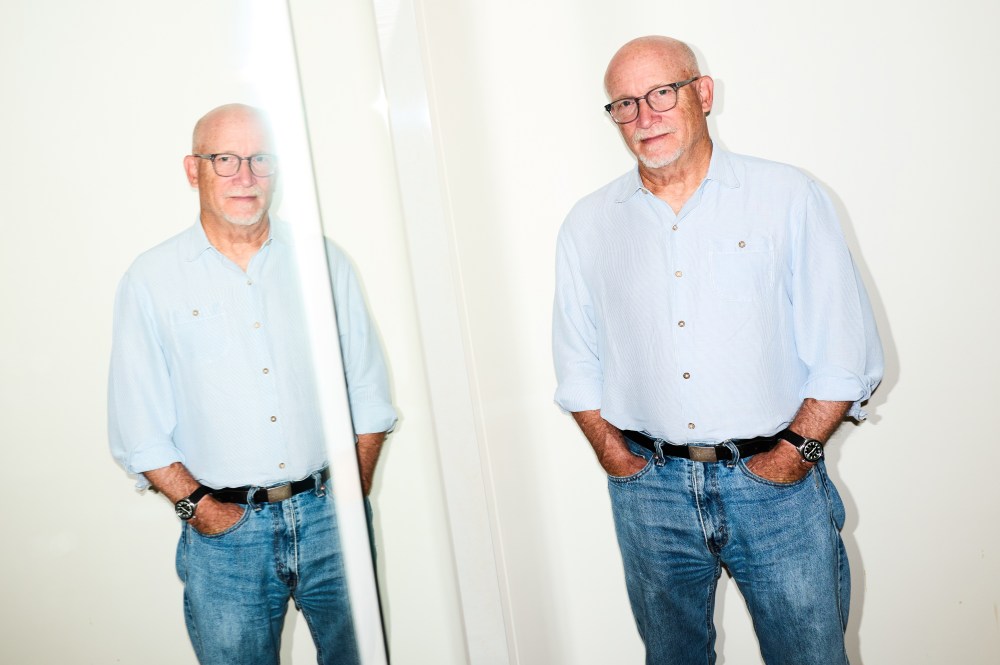
“It was weird for me, honestly, to realize, oh, I’m looking at somebody and I’m seeing the shadow of people I’ve dealt with before, their patterns,” he said in an interview coinciding with the premiere of his Musk documentary at the Toronto International Film Festival.
“If it weren’t for narcissists, I wouldn’t have a job.”
Gibney’s latest film “Musk” is a critical take on the businessman behind Tesla, SpaceX and X. Over nearly four hours, it delves into controversies at each of his companies and calls into question just how Musk amassed so much power and what he intends to do with it.
Musk has skewered Gibney for the documentary, which he did not participate in, calling it a “hit piece” and threatening to sue over its contents. Requests for comment left with his companies SpaceX and Tesla went unanswered.
Gibney stands by the film saying it was intensely researched, thoroughly fact checked and based on interviews with hundreds of people including Musk’s dad, former romantic partners, business associates, journalists and even Geoffrey Hinton, the British-Canadian computer scientist nicknamed the godfather of AI.
It took a bit of convincing for Gibney to even agree to make the documentary. When acquaintances first pitched him on the idea, it was years before the entrepreneur was a supporter of U.S. President Donald Trump. Gibney also thought Musk’s story was well documented.
“I felt a lot had been done, so what could I contribute?” Gibney said.
Then, a friend suggested Musk’s story is really about 21st century power.
“That was intriguing to me because I’ve done a lot of films about power and abuse of power and so with that suggestion, I dug in,” Gibney said.
He sifted through a massive number of X posts, interviews and videos the billionaire was featured in to gather material for the documentary.
He says he talked to just about anyone who knew Musk and had something to say. Many spoke off the record or on background — when material can be used but not attributed to anyone — because they were unauthorized to speak or afraid of reprisals.
What Gibney says he learned was that Musk thinks humanity is in a simulation akin to an existential video game world.
To really highlight that point, Gibney decided it was “thematically appropriate and formally playful” to create his own simulation of Musk to include throughout the film.
The simulation dresses a digital avatar version of Musk in his signature black leather jacket and seats him in a gamer lab for interview-style scenes. It is meant to mimic the real Musk as closely as possible, so it only delivers lines the businessman has previously said.
The documentary is upfront about the fact that the simulation scenes aren’t real Musk footage.
They were made by using artificial intelligence to sync an image of Musk to his real voice, allowing Gibney and his crew could fine-tune every detail to be more Elon-like.
“Because so much of the film is about AI, that seemed sensible, so it wasn’t like we gave ourselves over to AI,” Gibney explained.
The whole point was to make the audience question “what is real and what is unreal.”
That dichotomy has come up time and time again in Gibney’s work, which includes documentaries on disgraced former New York governor Eliot Spitzer, the Church of Scientology, and post-Soviet Russia through the lens of oligarch Mikhail Khodorkovsky.
“That’s kind of an old wine and a new bottle,” he said on the number of documentaries he’s done that examine how the powerful bend the truth.
While Gibney has returned to that central theme before, he seldom cycles back to the figures he’s turned into film fodder before.
Yet others appear to be taking interest in those subjects.
Canadian comedian Nathan Fielder, for example, was the talk of the Telluride Film Festival in Colorado earlier this month, when he hosted a secret screening of his own Holmes documentary “You Can See Everything.”
Gibney hasn’t seen the film but from the brief trailer sees little difference in the Holmes he analyzed in 2019’s “The Inventor: Out for Blood in Silicon Valley.”
“I’m in no position to say that other people shouldn’t be carrying on a tradition. If there’s more to say about Elizabeth Holmes, god bless,” Gibney said.
“I always feel like nobody should own a subject and I think we all profit from different versions of a topic.”
This report by The Canadian Press was first published Sept. 18, 2026.