
Bill will help reduce government interventions during strikes: Hajdu
Advertisement
Read this article for free:
or
Already have an account? Log in here »
We need your support!
Local journalism needs your support!
As we navigate through unprecedented times, our journalists are working harder than ever to bring you the latest local updates to keep you safe and informed.
Now, more than ever, we need your support.
Starting at $15.99 plus taxes every four weeks you can access your Brandon Sun online and full access to all content as it appears on our website.
Subscribe Nowor call circulation directly at (204) 727-0527.
Your pledge helps to ensure we provide the news that matters most to your community!
To continue reading, please subscribe:
Add Brandon Sun access to your Free Press subscription for only an additional
$1 for the first 4 weeks*
- Enjoy unlimited reading on brandonsun.com
- Read the Brandon Sun E-Edition, our digital replica newspaper
*Your next Free Press subscription payment will increase by $1.00 and you will be charged $20.95 plus GST for four weeks. After four weeks, your payment will increase to $24.95 plus GST every four weeks.
Read unlimited articles for free today:
or
Already have an account? Log in here »
OTTAWA – Jobs Minister Patty Hajdu says upcoming legislation will help reduce the number of times the federal government has to intervene in strikes.
Speaking to reporters on Parliament Hill Saturday, Hajdu did not provide many details about expected plans to amend the Canada Labour Code.
However, she said no government wants to intervene in a strike and that parties are better off if they can solve problems themselves at the negotiating table.
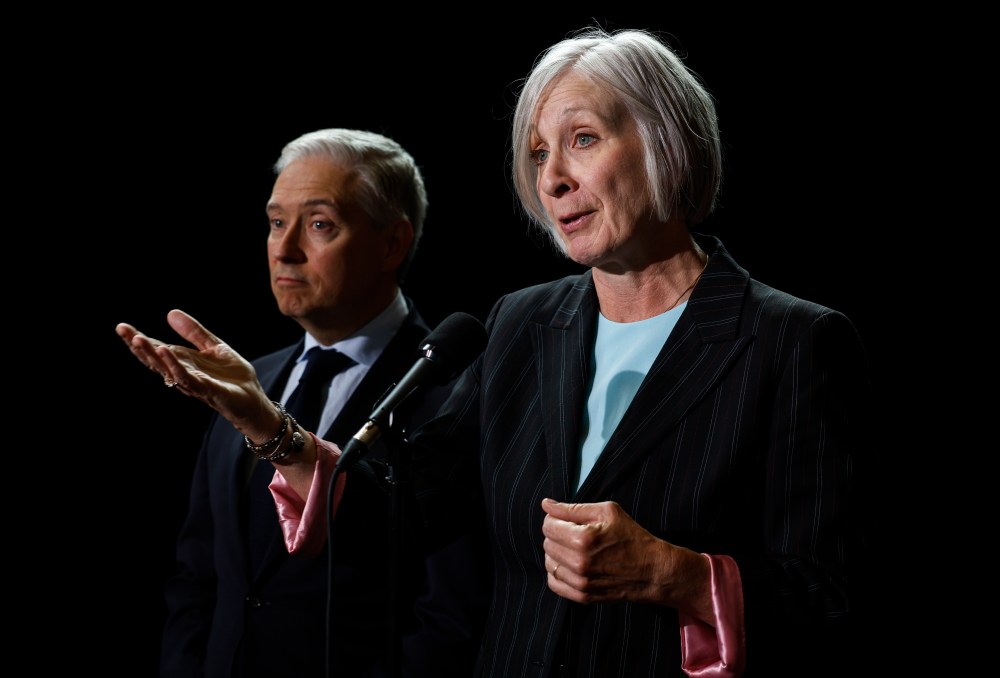
“The government already has the power to intervene,” she said. “The point is to reduce the times that the government is forced to solve the problem for employers and unions.”
Employers and unions have disagreed strongly on the use of Section 107 of the labour code, which has been used increasingly to curb work stoppages in key industries by referring disputes to the Canada Industrial Relations Board.
Employment and Social Development Canada said in a report earlier this month that employers and unions are divided over how much power Ottawa should have to intervene in labour disputes.
Prime Minister Mark Carney is meeting with his Liberal caucus in Ottawa on Saturday as MPs prepare to return to the House of Commons next week.
Looking ahead to the fall sitting of Parliament, several MPs said Saturday that they expect the pace to be fast.
Bea Bruske, president of the Canadian Labour Congress, said in a statement that the right to strike is in the national interest.
“Canada’s economic security depends on workers having the power to bargain for better wages, working conditions and job security,” she said. “Any new power to prevent or shut down a legal strike, including before it begins, would weaken that power. Canada needs workers with our elbows up, not our hands tied.”
Transport Minister Steven MacKinnon told reporters Saturday that the legislation isn’t targeting the right to strike.
“What we want to do is make achieving collective agreements easier,” he said.
This report by The Canadian Press was first published Sept. 19, 2026.
–With files from Craig Lord