
Climate change teaches a harsh, costly lesson
Advertisement
Read this article for free:
or
Already have an account? Log in here »
We need your support!
Local journalism needs your support!
As we navigate through unprecedented times, our journalists are working harder than ever to bring you the latest local updates to keep you safe and informed.
Now, more than ever, we need your support.
Starting at $15.99 plus taxes every four weeks you can access your Brandon Sun online and full access to all content as it appears on our website.
Subscribe Nowor call circulation directly at (204) 727-0527.
Your pledge helps to ensure we provide the news that matters most to your community!
To continue reading, please subscribe:
Add Brandon Sun access to your Free Press subscription for only an additional
$1 for the first 4 weeks*
- Enjoy unlimited reading on brandonsun.com
- Read the Brandon Sun E-Edition, our digital replica newspaper
*Your next Free Press subscription payment will increase by $1.00 and you will be charged $20.95 plus GST for four weeks. After four weeks, your payment will increase to $24.95 plus GST every four weeks.
Read unlimited articles for free today:
or
Already have an account? Log in here »
“You may not be able to prevent that next natural disaster from occurring, but you can take action to reduce the damages, limit the disruption and give your business a better chance of staying open.”
— Emilia Cameron, Institute for Catastrophic Loss Reduction
Over the last two years, Manitobans have witnessed firsthand the heavy toll that climate change is having on our communities — including our business communities.
The abstract debates that once dominated decades of global summits and scientific papers have been stripped of their academic detachment. For those of us living between the provincial borders, climate change is no longer a distant threat forecast for the turn of the century. It is a tangible, destructive force that has fundamentally rewritten the rules of life, work and survival in Manitoba.
To understand the full reality of this situation, we need only to look at the staggering environmental whiplash of the past 24 months.
Last year, the summer skies in Manitoba were a smoky burnt orange as more than 400 fires burned in the province, scorching an unprecedented 2.38 million hectares of land.
According to the official Manitoba Wildfire Report, the historic 2025 season was the second-most severe in the province’s history, and forced the evacuation of more than 33,000 residents.
This past spring, a joint report by The Narwhal and the Winnipeg Free Press found that the many wildfires caused at least $500 million in costs — everything from evacuations, emergency costs, closed businesses, insured losses, health-care costs, burned Hydro poles and many more.
And in June 2025, Statistics Canada estimated the potential economic disruption from the wildfires was around 2.4 per cent of Manitoba’s total GDP, including one-quarter of the northern region’s economy. Tourism operators were closed down, including lodges and outfitters, campgrounds, festival, restaurants and transportation networks all reported cancellations and closures.
In an interview with The Narwhal, Angela Cassie, the chief operating officer of Travel Manitoba, said 40 per cent of businesses reported lost revenue due to decreased visitation and 18 per cent had to close their businesses entirely for mandatory evacuations.
“The earnings from that summer season often sustains their businesses all year,” Cassie said. “A lot of them are looking at the summer of 2025 as a lost summer.”
Yet before the scars left behind by the wildfires could even begin to heal, the pendulum swung just as violently to the other extreme in 2026. Much of southern Manitoba experienced torrential, record-breaking downpours this spring and summer, triggering widespread regional flooding across parts of the province.
More than 50 municipalities and First Nations were forced to declare states of emergency, and several vital highway arteries were washed out, effectively cutting off several rural communities, including Dauphin and Swan River — and many in between.
The economic fallout from this year’s disastrous rainfall and subsequent flooding is still being calculated. Small business owners watched with sinking stomachs as consecutive flood surges wrecked their storefronts and wiped out seasonal sales.
Valley Meat Packers, which operates between Minitonas and Swan River, told the CBC earlier this year that in June, when the first flood washed out sections of the nearby highway on both sides of the business, customers lost nearly all access to the store. Co-owner Corina Tripp estimated the store lost about 90 per cent of its business during the closure, even as expenses remained the same.
As well, hundreds of agricultural producers, already financially fragile from previous droughts, saw their fields swallowed by water, forcing emergency government interventions just to keep family farms afloat.
Even now, many producers in western Manitoba have been hampered from getting onto rain-soaked fields for the last several weeks, forcing a hugely delayed harvest even as they watch their yields dwindle with each new rainfall.
At the same time, Manitoba Public Insurance was overwhelmed with more than 30,000 storm damage claims in a single month last July — a record for the Crown corporation — with more than 85 per cent of those claims coming from Winnipeg customers.
Manitoba finds itself on the front lines of this global crisis. As we transition from emergency flood recovery back into long-term planning, our collective mindset must shift. And this must also be said of the business community.
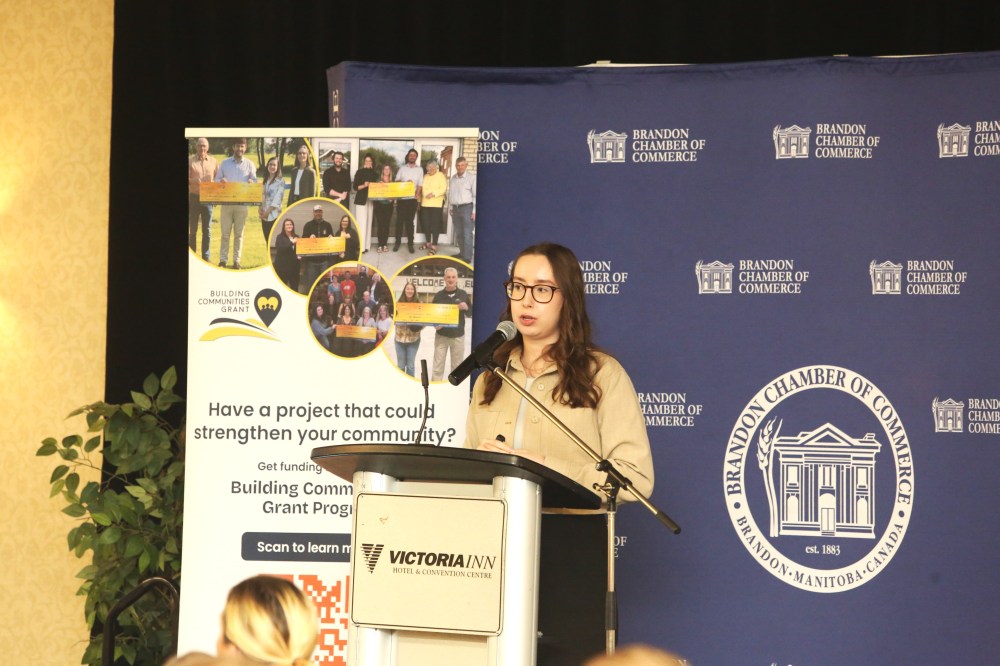
It was that message that Emilia Cameron brought to the Brandon Chamber of Commerce luncheon last week, a message that we should all heed as business owners prepare for the possibility that severe weather could — or rather, likely will — disrupt their operations.
Cameron suggested that preparedness doesn’t necessarily require major spending. Businesses concerned about heavy rain should check gutters and roof drainage, making sure they’re cleaned regularly, with nearby trees trimmed to prevent blockages. Businesses should also consider alternatives before they are needed, such as identifying temporary locations, working from home, backup communications and alternate suppliers.
Most importantly, owners and managers need to understand the chain of dependencies that keep a business operating, and prepare accordingly.
The Chamber should be lauded for bringing this kind of message forward to its members, particularly as Brandon saw yet another rising flood pass through our city this summer, and hosted thousands of evacuees the summer before.
The last two years have delivered a harsh and costly lesson to Westman residents and business owners alike. The only question left is whether we are ready to learn from it.