
Business groups welcome Ottawa’s latest move aiming to speed up major projects
Advertisement
Read this article for free:
or
Already have an account? Log in here »
We need your support!
Local journalism needs your support!
As we navigate through unprecedented times, our journalists are working harder than ever to bring you the latest local updates to keep you safe and informed.
Now, more than ever, we need your support.
Starting at $15.99 plus taxes every four weeks you can access your Brandon Sun online and full access to all content as it appears on our website.
Subscribe Nowor call circulation directly at (204) 727-0527.
Your pledge helps to ensure we provide the news that matters most to your community!
To continue reading, please subscribe:
Add Brandon Sun access to your Free Press subscription for only an additional
$1 for the first 4 weeks*
- Enjoy unlimited reading on brandonsun.com
- Read the Brandon Sun E-Edition, our digital replica newspaper
*Your next Free Press subscription payment will increase by $1.00 and you will be charged $20.95 plus GST for four weeks. After four weeks, your payment will increase to $24.95 plus GST every four weeks.
Read unlimited articles for free today:
or
Already have an account? Log in here »
Business groups are applauding new federal legislation that aims to speed up major projects, saying it includes measures they have long been urging Ottawa to take to boost Canada’s competitive stature.
Bill C-39, which was introduced in the House of Commons on Monday, proposes to cut review times, create zones of “national interest” and reduce the likelihood of disruptive work stoppages through changes to the Canada Labour Code.
“This bill helps address the structural weaknesses that have held back Canadian competitiveness for years,” said Goldy Hyder, president and chief executive of the Business Council of Canada, on Tuesday.
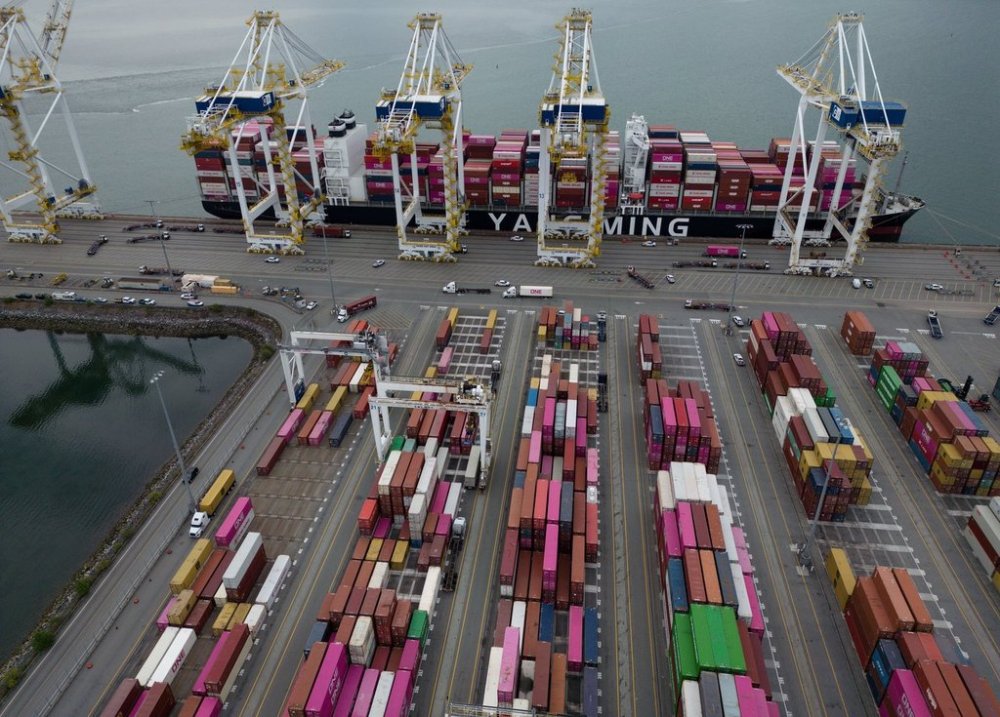
If passed, the bill would establish one-year federal review timelines. In the past, such reviews could take five years or more.
With that move, the government is “breaking critical legislative ground,” said Bryan Dethchou, senior director of natural resources, environment and sustainability for the Canadian Chamber of Commerce.
Last year, Prime Minister Mark Carney’s government established the Calgary-based major projects office to speed along infrastructure deemed in the national interest. So far, 27 projects have been referred to it for a streamlined review.
Dethchou said the chamber cheered that step, but was also concerned about hundreds of other projects being stuck in a “patchwork” assessment system.
“A door is now opening to all of these important projects, by providing industry with a clear, measurable timeline that will guide the assessment, review and approval process going forward,” he said.
“This, in turn, will assure a weary industry that the time to build is now, and there is a path to a decision that will lead to greater investment, jobs creation and, ultimately, strengthening our economic sovereignty.”
A coalition of British Columbia, Alberta, Saskatchewan and Manitoba business groups also welcomed the proposed bill, along with other recent moves, like an expanded tax deduction for business investments.
The Western Business Coalition is calling on Ottawa to further reduce regulatory requirements and to increase allocations under the Provincial Nominee Program within existing immigration levels.
“We applaud the prime minister and his government for this progress and urge Parliament to move quickly so businesses have the certainty to invest, build and grow in Canada even during this time of strained trade relationships and unstable geopolitics,” said Adam Legge, president of the Business Council of Alberta.
Laura Jones, president and CEO of the Business Council of British Columbia, said Canada is meeting the moment.
“But we need to keep pushing forward. Western Canada has an enormous role to play in turning that ambition into reality by helping Canada become a global energy and natural resources superpower and strengthening our reputation as a reliable partner for the world.”
Jordan Eizenga, a partner in Deloitte Canada’s infrastructure team, called the bill “massive” and “ambitious” and said it reflects many of the concerns the consulting firm has been hearing from clients wanting to invest in Canada.
“They’ve clearly heard a lot from industry that these are big impediments,” he said of the federal government.
“And we’re at a moment where we need to pull every lever we’ve got to get our economy going.”
The bill proposes the establishment of “regions of national interest” where certain projects could be pre-approved, subject to conditions and mitigation measures.
Eizenga said it’s a “sensible” step to take when there are multiple projects planned in the same geographic area.
“We don’t need to make people jump through the same hoops as if we’re going into a blank slate of untouched topography,” he said.
Nicole Wang, infrastructure advisory leader at EY Canada, said the bill sends a “strong signal” that Canada is open for business, but that how it’s implemented will be key.
“It’s important that we can show progress so that this isn’t just another announcement,” she said.
“It’s a piece of the puzzle.”
Wang added that some anxiety may remain among investors that the efforts to speed along projects may “backfire.” Indeed, environmental, labour and Indigenous groups have raised concerns about the proposed legislation.
Ottawa will have to prove decisions will be strong enough to endure court challenges and survive through political cycles, Wang said.
“Investing is something that is going to serve many decades, many generations,” she said.
“It’s front of mind for investors when they think about the environment to invest in.”
This report by The Canadian Press was first published Sept. 22, 2026.