
Canada’s literary awards say publishers are in best position to sniff out AI
Advertisement
Read this article for free:
or
Already have an account? Log in here »
We need your support!
Local journalism needs your support!
As we navigate through unprecedented times, our journalists are working harder than ever to bring you the latest local updates to keep you safe and informed.
Now, more than ever, we need your support.
Starting at $15.99 plus taxes every four weeks you can access your Brandon Sun online and full access to all content as it appears on our website.
Subscribe Nowor call circulation directly at (204) 727-0527.
Your pledge helps to ensure we provide the news that matters most to your community!
To continue reading, please subscribe:
Add Brandon Sun access to your Free Press subscription for only an additional
$1 for the first 4 weeks*
- Enjoy unlimited reading on brandonsun.com
- Read the Brandon Sun E-Edition, our digital replica newspaper
*Your next Free Press subscription payment will increase by $1.00 and you will be charged $20.95 plus GST for four weeks. After four weeks, your payment will increase to $24.95 plus GST every four weeks.
Read unlimited articles for free today:
or
Already have an account? Log in here »
TORONTO – Canada’s top literary prizes say they largely rely on publishers to ensure the books they award were authored by humans, not artificial intelligence.
The executive directors of Writers’ Trust of Canada and the Giller Foundation both said Friday that they have policies barring AI-written works from their awards.
Their responses come as one of France’s top literature prizes pulled a Canadian author’s debut novel from its long list over allegations he wrote the book with generative AI, which he has denied.
“Writers’ Trust is clear in its guidelines for every prize: Works containing AI-generated text, in whole or in part, are not eligible,” David Leonard said in an email.
“For our major book prizes we rely on attestation from the publishers that the works are human-authored, and we are continuously reviewing and exploring new ways of evaluating literary submissions for all of our prizes and programs.”
Writers’ Trust of Canada, which is celebrating its 50th anniversary, hands out hundreds of thousands of dollars in awards annually, including for fiction, nonfiction and emerging LGBTQ+ authors. This year’s ceremony is set for Nov. 10.
Leonard said the organization doesn’t share which tools it uses to evaluate whether contenders use AI, as that would make it easier to evade detection.
“What we can share is that any concerns are reviewed carefully by people, not decided by tools alone,” he wrote.
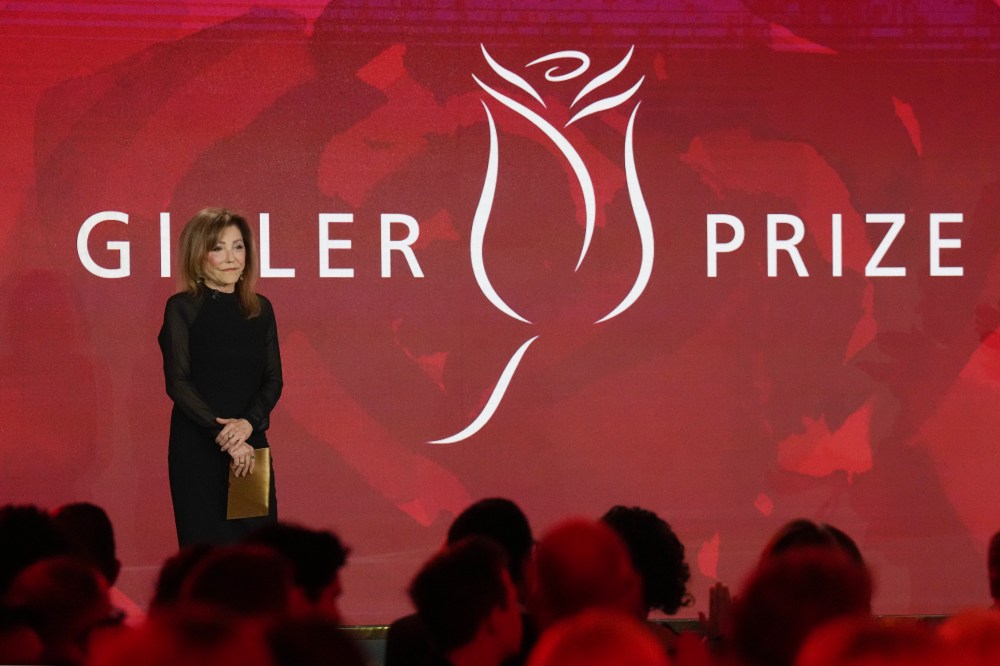
Elana Rabinovitch, executive director of the Giller Foundation, said her organization also prohibits AI-generated works — but publishers are better positioned to ensure their books are written by people and not machines.
The Giller Prize, worth $100,000, is awarded to a novel, graphic novel or short story collection deemed the best work of fiction published in English by a Canadian writer. It’s due to be handed out Nov. 16.
“I think, for better or worse, the gatekeepers of literary AI are the publishers and editors,” Rabinovitch said in an email.
“The publishing houses work closely with authors and their work, and would be, I think, the first to ascertain whether any AI tools were used in the writing of a book. That said, these tools are highly sophisticated and could well evade detection.”
Meanwhile, the Canada Council for the Arts, which administers the Governor General’s Literary Awards, said it’s in the process of establishing a policy setting out “clear expectations” when it comes to AI in books it considers for the prizes.
Caroline Lussier, director of arts promotion for the council, said the organization hopes the policy will be in place for the next competition cycle.
Lussier said the council was already working on its policy before the controversy involving the French award, and noted the organization has already published guidance on the use of AI in the projects it funds and in reviewing grant applications.
The Académie Goncourt announced Friday that it had removed Thélyson Orélien’s novel, “C’était ça ou mourir,” which translates to “It was either that or dying,” from the running for the Prix Goncourt amid allegations that the book was written using artificial intelligence, and separate plagiarism allegations involving his earlier work.
Orélien declined to provide comment to The Canadian Press on Friday, saying he was focusing on his health, but earlier this week vehemently denied using AI to write the novel.
This report by The Canadian Press was first published Sept. 25, 2026.
-with files by Charlotte Glorieux in Montreal.