
Manitobans need a centrist alternative
Advertisement
Read this article for free:
or
Already have an account? Log in here »
We need your support!
Local journalism needs your support!
As we navigate through unprecedented times, our journalists are working harder than ever to bring you the latest local updates to keep you safe and informed.
Now, more than ever, we need your support.
Starting at $15.99 plus taxes every four weeks you can access your Brandon Sun online and full access to all content as it appears on our website.
Subscribe Nowor call circulation directly at (204) 727-0527.
Your pledge helps to ensure we provide the news that matters most to your community!
To continue reading, please subscribe:
Add Brandon Sun access to your Free Press subscription for only an additional
$1 for the first 4 weeks*
- Enjoy unlimited reading on brandonsun.com
- Read the Brandon Sun E-Edition, our digital replica newspaper
*Your next Free Press subscription payment will increase by $1.00 and you will be charged $20.95 plus GST for four weeks. After four weeks, your payment will increase to $24.95 plus GST every four weeks.
Read unlimited articles for free today:
or
Already have an account? Log in here »
Obby Khan’s rather dramatic decision to resign as leader of the Manitoba Progressive Conservatives this week has exposed a fundamental conflict within the party he once sought to lead.
This conflict has a familiar ring to it, as it echoes a pattern of right-wing fragmentation that has played out across the country – both provincially and federally.
The hurried appointment of Konrad Narth as interim leader after Khan stepped down has exposed deep, irreparable fractures within Manitoba’s Official Opposition. Despite surviving a confidence vote with a 13-to-6 majority, Khan said he felt driven to quit his caucus and sit as an independent MLA after learning that a faction of his own colleagues — including MLAs Kathleen Cook, Richard Perchotte, Lauren Stone, and even Westman’s Jodie Byram representing Agassiz — intended to meet in secret to subvert the democratic will of the party.
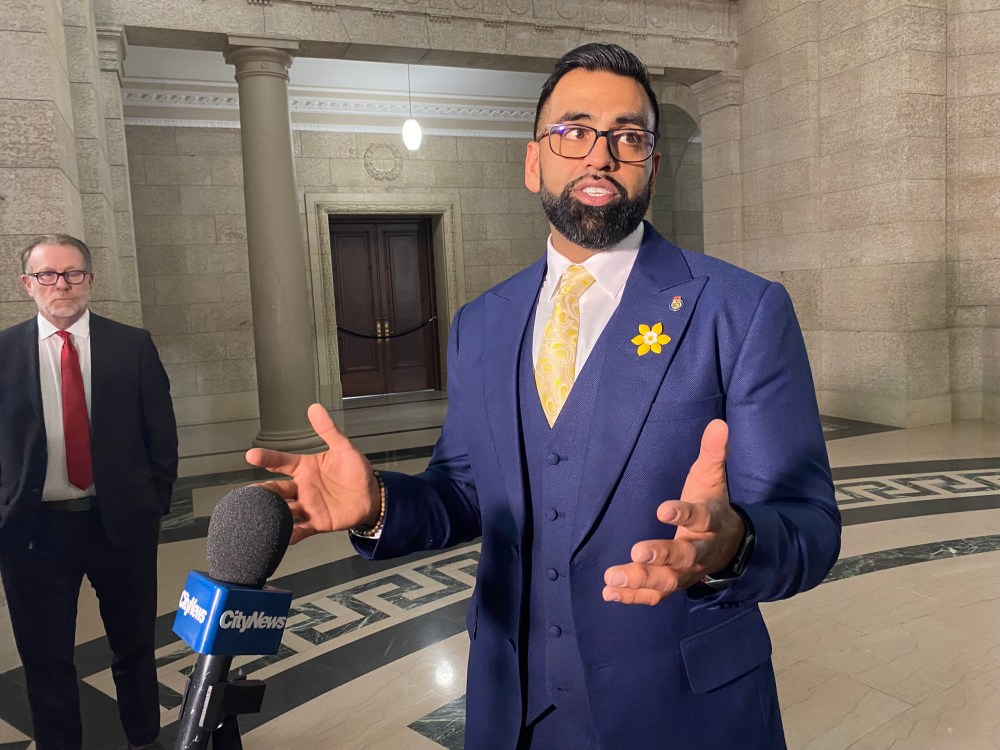
Khan’s parting indictment of his former colleagues, accusing them of lacking “moral integrity,” could well mark the end of the PCs as a stable governing alternative.
Manitobans have seen this script before, having watched similar political dramas unfold across the country. But we need look no further than the Saskatchewan example.
Throughout the 1980s, Premier Grant Devine’s Progressive Conservatives were the dominant right-wing force in Saskatchewan, winning back-to-back majorities. But that party’s poor administration left the province on the brink of bankruptcy with massive deficits, and in 1991 it was swept from power by the NDP.
A massive RCMP investigation into the PC caucus led to the conviction of 15 PC MLAs and staff members of criminal fraud, leaving the reputation of the Saskatchewan PC Party ruined and generally considered toxic by the public.
With the NDP dominating the Saskatchewan legislature, four PC MLAs and four Liberal MLAs walked away from their parties in 1997 and created a new one — the Saskatchewan Party. Since then, this coalition of the centre-right has created a political dynasty, having won five consecutive majority governments under two premiers since 2007.
While the Tory context in Manitoba is quite different, our province’s PC party has nevertheless been teetering on the edge of irrelevance for several years. Whatever brief rebuilding existed under Brian Pallister was torn asunder by the leadership of both Heather Stefanson and now Obby Khan. As a result, Manitoba’s PCs have drifted away from pragmatic conservatism and into polarizing rhetoric that has alienated moderate voters and left the party caucus wondering whether their party can survive.
Perhaps it shouldn’t. At least not in its current form. The continued infighting, the palace coups — again with Pallister — and the unfortunate dalliance with far-right rhetoric have rendered the PC brand difficult if not impossible to salvage.
Yet this collapse presents a historic opportunity to skip the years of political wilderness endured by political peers in other provinces and jump straight to a modern realignment.
With rumours circulating that Premier Wab Kinew could call an election as early as this spring — well ahead of the scheduled Oct. 5, 2027 date — there is an urgent need for a new political vehicle. The solution lies in a historic realignment: moderate, centrist Progressive Conservatives should permanently walk away from the far-right elements of their old caucus and merge with what remains of the Liberal Party of Manitoba.
The Manitoba Liberals currently hold just one seat in the legislature and lack the infrastructure to challenge the NDP on their own. Yet, the liberal-centrist values they represent are shared by tens of thousands of Manitobans who currently feel politically homeless.
Create a party that champions fiscal responsibility, economic growth, and efficient public management, but rejects the socially divisive culture wars and backstabbing that have defined too much of our politics in recent years.
By joining forces, centrist Tories and Liberals could build a brand-new, modern coalition. This new party would successfully isolate the extremist, unco-operative elements of the old PC party to the fringes of the legislature where they belong.
Rather than attempting to patch up a sinking ship under a temporary captain, Manitoba’s centrist leaders should learn the lessons of Canadian political history and have the courage to build something entirely new.
The historic progressive-conservative coalition is on its last legs. Let it die. And with its rather rancorous death knell, let a modern, centrist alternative take its place.