
Canadian astronaut reaches International Space Station for six-month mission
Advertisement
Read this article for free:
or
Already have an account? Log in here »
We need your support!
Local journalism needs your support!
As we navigate through unprecedented times, our journalists are working harder than ever to bring you the latest local updates to keep you safe and informed.
Now, more than ever, we need your support.
Starting at $15.99 plus taxes every four weeks you can access your Brandon Sun online and full access to all content as it appears on our website.
Subscribe Nowor call circulation directly at (204) 727-0527.
Your pledge helps to ensure we provide the news that matters most to your community!
To continue reading, please subscribe:
Add Brandon Sun access to your Free Press subscription for only an additional
$1 for the first 4 weeks*
- Enjoy unlimited reading on brandonsun.com
- Read the Brandon Sun E-Edition, our digital replica newspaper
*Your next Free Press subscription payment will increase by $1.00 and you will be charged $20.95 plus GST for four weeks. After four weeks, your payment will increase to $24.95 plus GST every four weeks.
Read unlimited articles for free today:
or
Already have an account? Log in here »
MERRITT ISLAND – Canadian astronaut Joshua Kutryk’s first thought after being told Thursday he had made it to space was one of disbelief.
“I don’t really believe it yet,” Kutryk said after being told the crew was in orbit, about 10 minutes after blasting off from Florida as part of the NASA SpaceX Crew 13 mission to the International Space Station.
“It does feel weird, though.”
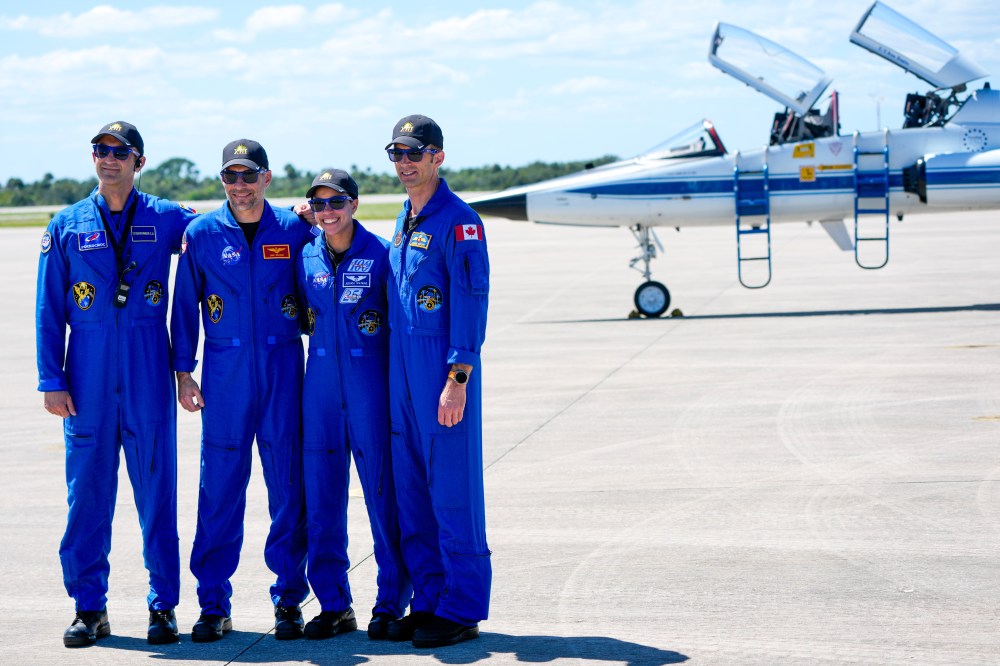
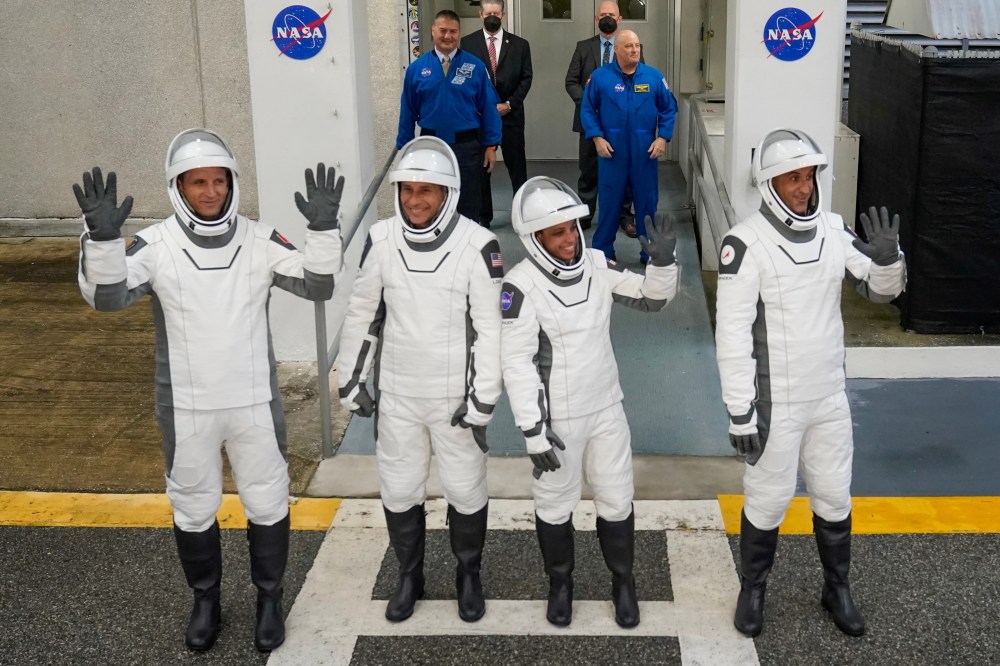
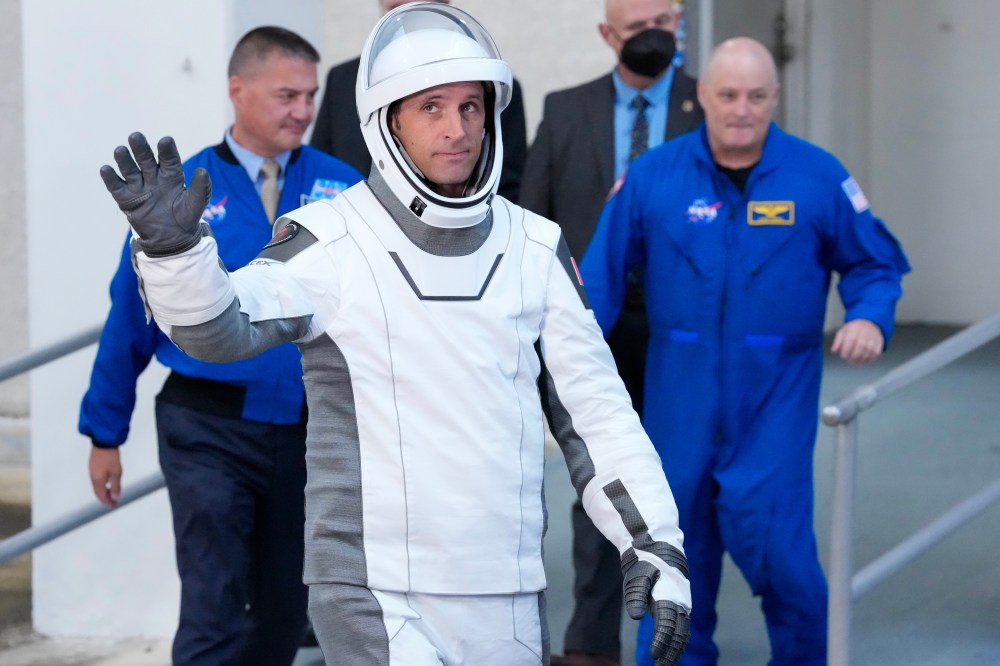
The 44-year-old is a mission specialist on the four-person crew, which also includes commander Jessica Watkins and pilot Luke Delaney of NASA and Roscosmos cosmonaut Sergey Teteryatnikov, another mission specialist.
NASA says the Crew 13 mission had the fastest flight ever to the International Space Station, taking just under eight hours to reach the facility.
The crew will spend six months at the station conducting experiments, doing research and taking part in critical maintenance work.
Kutryk will also be dealing with a unique situation during his months-long deployment off Earth — his wife is set to give birth to their third child.
The space station is a long way from the cattle farm where Kutryk grew up in Alberta. Before the launch, Kutryk said the crew members felt like “some of the luckiest people on Earth.”
Industry Minister Mélanie Joly watched the launch from the ground. It was the first she had ever attended.
“It was absolutely fantastic,” Joly said with a smile at the Kennedy Space Center. “It’s a very humbling experience as well because ultimately we’re very, very small humans in an extremely vast universe.”
Joly said the launch offered an important symbol of international co-operation during “tense geopolitical times.”
“When it comes to space, I think this is a place where we can collaborate and co-operate,” she said. “That’s what we’ve done.”
Collaboration on space innovation has continued despite U.S. President Donald Trump’s tariffs and threats of annexation.
Joly has been on the front lines of Trump’s trade war with Canada, first as foreign minister and now in her current portfolio, where she’s tasked with mitigating many of the tariffs’ effects.
She met with NASA administrator Jared Isaacman for about 30 minutes on Thursday. She said they spoke about how the Canadian Space Agency can continue to contribute to exploration, particularly of the moon and Mars.
Joly said she always talks about the importance of ending the trade war when she meets members of the Trump administration and other American politicians.
At a post-launch news conference, Isaacman said he continues to have fruitful discussions with Canada, particularly on a future lunar base. Pointing to the well-known Canadarm and its followup Dextre, Isaacman said Canada’s robotics expertise will play an important role in achieving America’s lofty ambitions in space.
“We are going to be counting on it as part of the architecture,” he said.
Kutryk’s mission adds to a memorable year for Canadian space exploration and research.
Canadian Jeremy Hansen was one of four astronauts aboard the Artemis II mission in April — humanity’s first trip to the moon in more than 50 years. The 10-day lunar fly-around saw Hansen and his crewmates travel farther from the surface of the Earth than anyone before them.
Mathieu Caron, director of astronauts, life sciences and space medicine at the Canadian Space Agency, told Thursday’s news conference that for the first time in his three-decade career, his children think he’s cool.
“Across Canada, we really see a renewed enthusiasm for human space exploration,” Caron said.
Joly said Canada is looking to push its space capabilities further by diversifying space partnerships and working more closely with the European and Japanese space industries, as well as other middle-power countries.
But Ottawa wants to do things faster and with more ambition, she added.
Joly said Canada’s defence industrial plan recognizes the importance of the space sector and new funds have been dedicated to the Canadian Space Agency. She said Canada needs to embrace the industrial part of space investment to create domestic jobs while also doubling down on science and civilian research.
A new Canadian Space Agency president will be named in the coming weeks, Joly said. A new space strategy will be unveiled in the coming months, which will promote Canada’s goals of creating opportunities, playing a larger role in the sector and sending more astronauts off Earth, she added.
“I think space exploration is important for our country,” she said.
“Also we benefit from the different research done … for our industry, for creating jobs but also to protect our sovereignty and also when it comes to science and the betterment of humankind.”
This report by The Canadian Press was first published Oct. 1, 2026.