
Hydro Québec faces issue we should avoid
Advertisement
Read this article for free:
or
Already have an account? Log in here »
We need your support!
Local journalism needs your support!
As we navigate through unprecedented times, our journalists are working harder than ever to bring you the latest local updates to keep you safe and informed.
Now, more than ever, we need your support.
Starting at $15.99 plus taxes every four weeks you can access your Brandon Sun online and full access to all content as it appears on our website.
Subscribe Nowor call circulation directly at (204) 727-0527.
Your pledge helps to ensure we provide the news that matters most to your community!
To continue reading, please subscribe:
Add Brandon Sun access to your Free Press subscription for only an additional
$1 for the first 4 weeks*
- Enjoy unlimited reading on brandonsun.com
- Read the Brandon Sun E-Edition, our digital replica newspaper
*Your next Free Press subscription payment will increase by $1.00 and you will be charged $20.95 plus GST for four weeks. After four weeks, your payment will increase to $24.95 plus GST every four weeks.
Read unlimited articles for free today:
or
Already have an account? Log in here »
You might be tempted to call it a canary in an electric power generation coal mine.
But instead, it’s just another heads-up into the already-obvious problem with the proliferation of data centres.
Last week, Hydro-Québec went before the Régie de l’énergie, Québec’s public utilities board, to change the rules for new and existing large data centres.
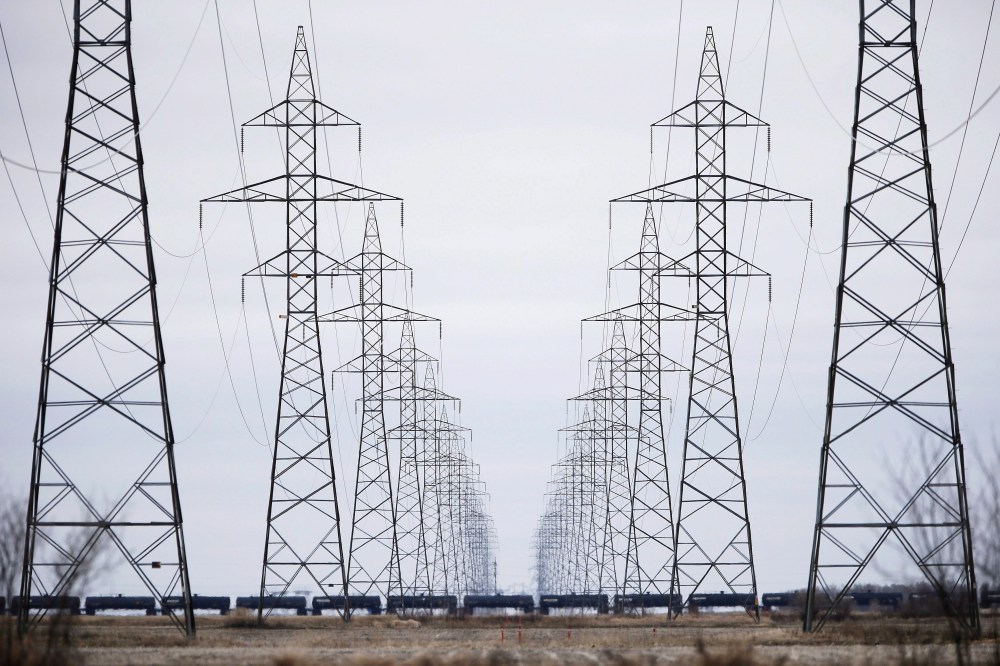
Now, it was not that long ago that Hydro Québec was actively wooing data centres — offering bulk power rates to be used to lure labour-intensive, power-hungry heavy industry (think aluminum smelters) with rates substantially lower than they offer Québec’s own residential customers. It was a way to use surplus power to create jobs and drive economic activity.
“Hydro-Québec is also part of the solution. By encouraging data centres to choose Québec and our clean energy, we are helping to green online traffic,” part of Hydro Québec’s website still says. “(O)ur electricity rates are among the lowest in North America.”
Google webcrawlers still find traces of past Hydro Québec web pages saying. “With electricity rates as low as 4.04¢/kWh… Québec is the smartest place to set up your data centre.”
Use that link, however, and you get a new page with a new, less optimistic message, saying “All new customers in this segment will automatically be subject to the proposed rate for large data centres, which is equivalent to an average of 13¢/kWh, approximately double what current large-power customers pay. The rate is expected to take effect in the second half of 2026, subject to approval by the Régie de l’énergie. … (A) five-year transitional rate is also available to data centres already connected to the grid to allow for a gradual shift to the new rate, providing customers with greater predictability.”
You can understand why: as data centres gobble up more and more power, it’s no longer a case of finding markets for cheap power — cheap power is vanishing. And data centres aren’t really the kind of business that generates large numbers of well-paying jobs anyway.
It’s even worse for blockchain operations using Québec power: Hydro Québec is telling them, “to better reflect the activity’s energy intensity and limited economic benefits … The revised rate would average 19.5¢/kWh.”
When you cross the line from using available power to having to build new generation facilities to address the growing power load, it becomes a mug’s game: instead of bringing in revenue or creating jobs, it means charging more across the entire rate base. Long-term, low-cost power deals become a millstone for utilities.
“I don’t think I will surprise anyone by saying that the context has changed deeply and that the era of energy surpluses is now behind us,” Sarah Trabelsi, chief of costs and pricing at Hydro-Québec, told the Régie. “We’re proposing these rates in an effort to manage and mitigate, or control, the impact on our customer base as a whole.”
The utility has said the average price for power for data centres in Québec is around 6.82 cents per kilowatt hour, while the average cost of power is 12 cents per kilowatt hour.
You do not have to be a business wizard to understand why that math doesn’t work.
You also don’t have to be a business wizard to understand that Manitoba — with a provincial utility already arguing it is facing real and looming risks of a winter-peak power shortfall as soon as 2030 — should continue to give data centres the coldest of cold shoulders.
If a business expects electrical ratepayers to cover the costs it creates, it’s a bad investment for ratepayers. Period.
» Winnipeg Free Press