
Manitoba Premier Wab Kinew sticks to French for third day in legislature
Advertisement
Read this article for free:
or
Already have an account? Log in here »
We need your support!
Local journalism needs your support!
As we navigate through unprecedented times, our journalists are working harder than ever to bring you the latest local updates to keep you safe and informed.
Now, more than ever, we need your support.
Starting at $15.99 plus taxes every four weeks you can access your Brandon Sun online and full access to all content as it appears on our website.
Subscribe Nowor call circulation directly at (204) 727-0527.
Your pledge helps to ensure we provide the news that matters most to your community!
To continue reading, please subscribe:
Add Brandon Sun access to your Free Press subscription for only an additional
$1 for the first 4 weeks*
- Enjoy unlimited reading on brandonsun.com
- Read the Brandon Sun E-Edition, our digital replica newspaper
*Your next Free Press subscription payment will increase by $1.00 and you will be charged $20.95 plus GST for four weeks. After four weeks, your payment will increase to $24.95 plus GST every four weeks.
Read unlimited articles for free today:
or
Already have an account? Log in here »
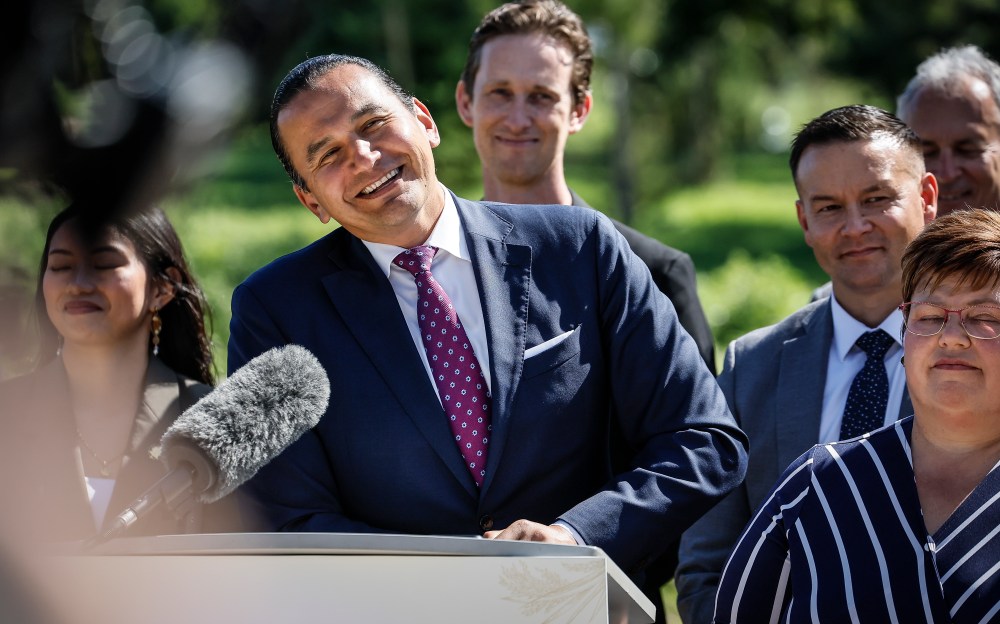
WINNIPEG – Manitoba’s premier spoke almost exclusively in French for the third consecutive day in the legislature on Wednesday in a move welcomed by the province’s francophone community.
The consistency is unusual for Wab Kinew, though he has suggested there is nothing noteworthy about him answering questions in one of the province’s two official languages.
In the legislature, he said in French that he was proud to live in a province where it is normal for the premier to speak the language during question period.
Derrek Bentley, president of the Société de la francophonie manitobaine, says hearing leaders speak in French is important.
“We obviously want French to be a normal and visible part of public life in Manitoba,” he said. “If our leaders aren’t able to use French, well, how will we ever get to a spot where we’re hearing more and more French in everyday public life.”
Kinew’s decision does not affect legislature members who don’t speak French, as they can access real-time translations. Bentley noted it could, however, affect Manitobans tuning in, as those live translations aren’t available to the public.
“Maybe that’s part of the reason why some folks might be getting their backs up,” he said.
“If you can’t tune in and listen to what’s going on through that translation, well, of course you’re going to be upset that suddenly you don’t have that access.”
He said it’s flawed to automatically link speaking French to a political act, even if it might raise questions for some. “Because we’re so unused to it being used on topics that aren’t directly related to La Francophonie, there’s always going to be a risk that folks misinterpret what’s actually going on.”
Kinew’s recent use of French in the house coincides with Konrad Narth becoming leader of the Opposition Tories. It also echoes back to a confrontation during question period in May, when Narth took issue with Kinew responding in French to a question asked in English.
Narth later apologized, saying he meant nothing against the French language but only took issue with how the premier was politicizing the use of the language.
He said Wednesday that he welcomes the premier’s use of the language, and is now expecting it, even if needing translations can disrupt the flow of debate.
“It does make things a little bit awkward because that isn’t normal conversation, but I welcome it and I encourage the use of French language in Manitoba.”
On Tuesday, Kinew pushed back against questions from reporters on whether his consistency in speaking French had anything to do with Narth.
Kinew spoke instead about how it wasn’t so long ago that there were ugly attacks against the francophone community in the province.
When pressed, he said it was important to be able to make his responses in both official languages.
“It has nothing to do with personality. It has nothing to do with emotions. It’s a bilingual venue.”
This report by The Canadian Press was first published Oct. 7, 2026.