
Corn yields look great despite tough farming year
Advertisement
Read this article for free:
or
Already have an account? Log in here »
We need your support!
Local journalism needs your support!
As we navigate through unprecedented times, our journalists are working harder than ever to bring you the latest local updates to keep you safe and informed.
Now, more than ever, we need your support.
Starting at $15.99 plus taxes every four weeks you can access your Brandon Sun online and full access to all content as it appears on our website.
Subscribe Nowor call circulation directly at (204) 727-0527.
Your pledge helps to ensure we provide the news that matters most to your community!
To continue reading, please subscribe:
Add Brandon Sun access to your Free Press subscription for only an additional
$1 for the first 4 weeks*
- Enjoy unlimited reading on brandonsun.com
- Read the Brandon Sun E-Edition, our digital replica newspaper
*Your next Free Press subscription payment will increase by $1.00 and you will be charged $20.95 plus GST for four weeks. After four weeks, your payment will increase to $24.95 plus GST every four weeks.
Read unlimited articles for free today:
or
Already have an account? Log in here »
MACGREGOR — Corn looks like it may have had a “fantastic” growing year, a farmer near MacGregor told the Sun at the start of harvest season.
Dean Toews, who farms corn, soybeans, canola and edible beans near MacGregor, said he has seen great initial impressions for corn since harvest started this month. The average yield per acre, combined with the weight of corn going into grain carts and the lack of flooded out regions of farmland, has painted a promising picture, he said.
“If we get it all in the bin, and everything is as we hope it to be, then yes, this is fantastic,” Toews said from his pickup truck on a corn field outside MacGregor. “It’s bright and sunny, it’s looking awesome, but there’s lots of work ahead.”
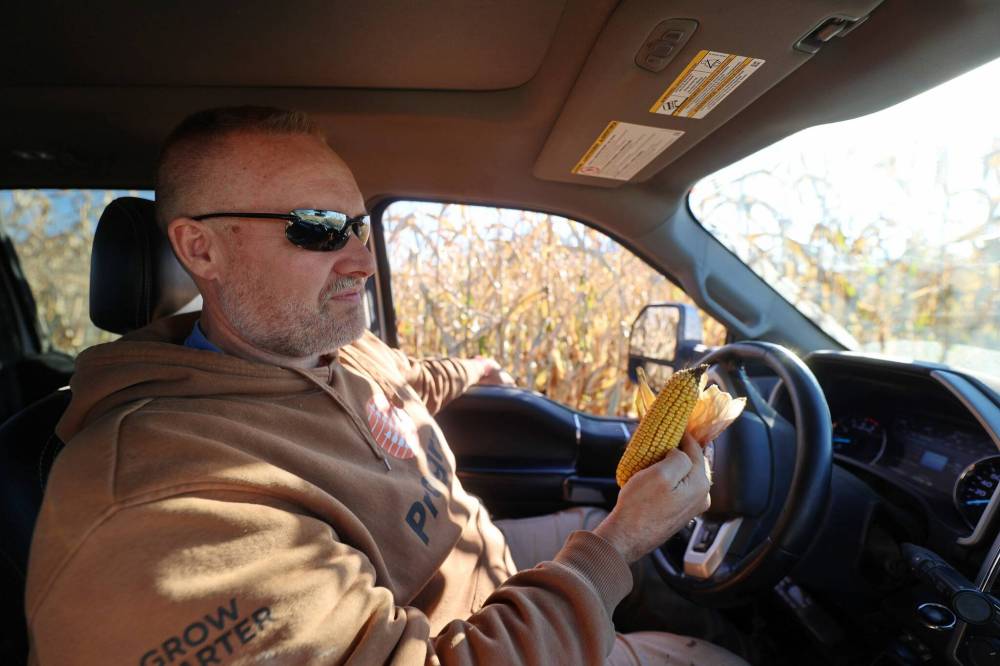
The goal for Toews, and his brothers Darren and Devin and father Bernie, is to get 5,500 acres of corn off the fields before the end of November. They personally own 3,500 acres, and have farmed the remaining acres for customers. The work is expected to keep them busy six days a week, from roughly 8 a.m. to 10 p.m., until the season changes.
Dean drives over to a wall of corn stalks. Through his driver’s-side window, he grabs a cob and husks it. The vegetable is filled out with yellow kernels, and it is large and evenly coloured in his hand. It looks good — but you don’t count your chickens before they hatch, he said.
“The reality is that it’s not in the bin yet. There’s still risks until you’re in the bin.”
Issues could pop up, he said, such as a heavy snowfall that restricts the ability to harvest the fields while they are in the best condition.
Darren, from the driver’s seat of a combine later, said that weather is the main obstacle the family is trying to get ahead of with its longer work hours starting this month.
“Snow is always knocking on our window,” he said, and steered the combine through corn stalks. The cabin is climate controlled with air conditioning and heating, in case he has to go out during winter, he said.
Through a large window in front of him, long rows of corn drew near before being sucked under the machine. He said he steers combines through corn stalks for about 400 hours each season.
“Sometimes I see corn rows in my sleep, by the end of harvest,” he said. “Some people probably find this incredibly monotonous, but it’s peaceful.”
Darren said he didn’t expect to see the fields look as good as they do this year because of concerning early season conditions.
“Its a surprise. I didn’t think we’d get this good of a crop. It started off cold.”
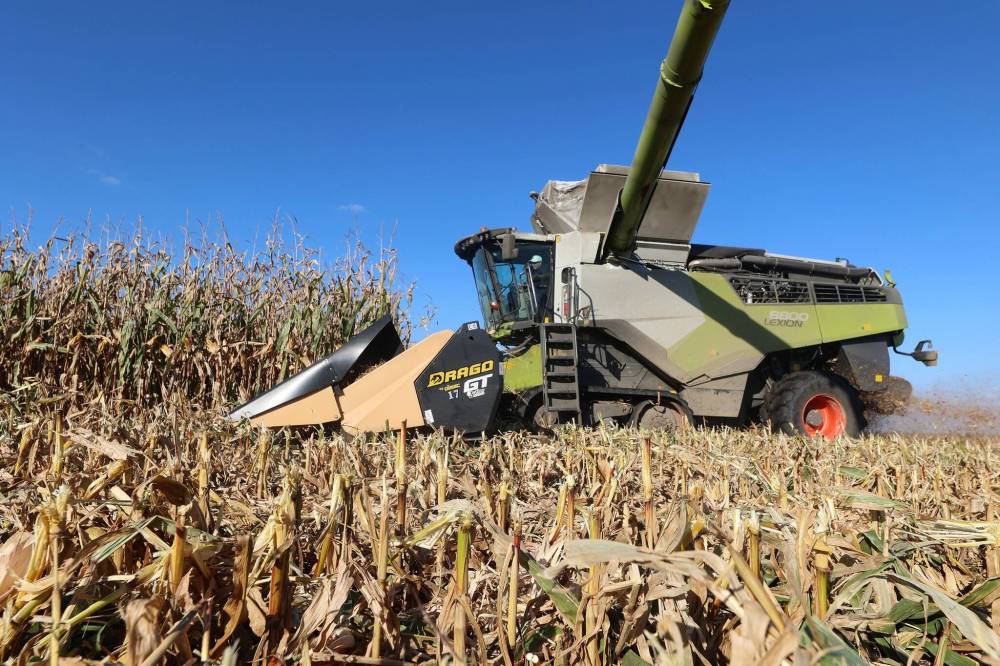
The promising year comes as corn interacted differently with weather events compared with other crops like wheat and canola, Dean said. Hot days in July, which probably hurt canola, ended up benefiting corn, he said.
“That same heat that helped corn grow and catch up, that negatively affected canola,” Dean said. “When it came to flowering in the heat in July, that affected the canola yield. But for corn it could handle the heat.”
He said corn “loves” hot weather, and is well suited to deal with extreme conditions such as drought and rainfall. The untimely wet September this year that impacted wheat and canola also did not hurt corn because the crop is more durable when it comes to handling humidity and is off the ground, distancing it from moisture, he said. The harvest for corn also starts later in the year, which turned out to take place after rainy conditions in September.
The wet harvest season for canola and wheat affected several Westman farmers, with a farmer near Rivers reporting “profit dropping on the ground” with mature canola unable to be taken off the fields, and wheat sprouting — degrading in quality — due to moisture. With the Westman area seeing high amounts of rain across the board, Brandon received 74.7 millimetres by the middle of the month.
Minto-area farmer and vice-president of Keystone Agricultural Producers Jake Ayre noted at the time that rain had washed out a significant amount of acres at his farm.
“We have lost anywhere from 15 to 30 per cent of fields just due to drown out,” he said in September. “You look at the field — that’s your bank account. That’s your revenue, and you slowly watch it fall away.”
He noted at the time that his corn acres looked promising, along with soybeans and edible beans.
Other farmers reported similar issues, with equipment being stuck in wet fields, the cost of harvest going up, and the quality of crop going down for canola and wheat.
Despite the good corn year, the crop faces the downside currently of using a high amount of fertilizer, Dean said. The cost increases to fertilizer, inflamed by the conflict in Iran, are hard to navigate, he said.
“Some of it will be buying when you think it’s low. But that’s a tough game.”
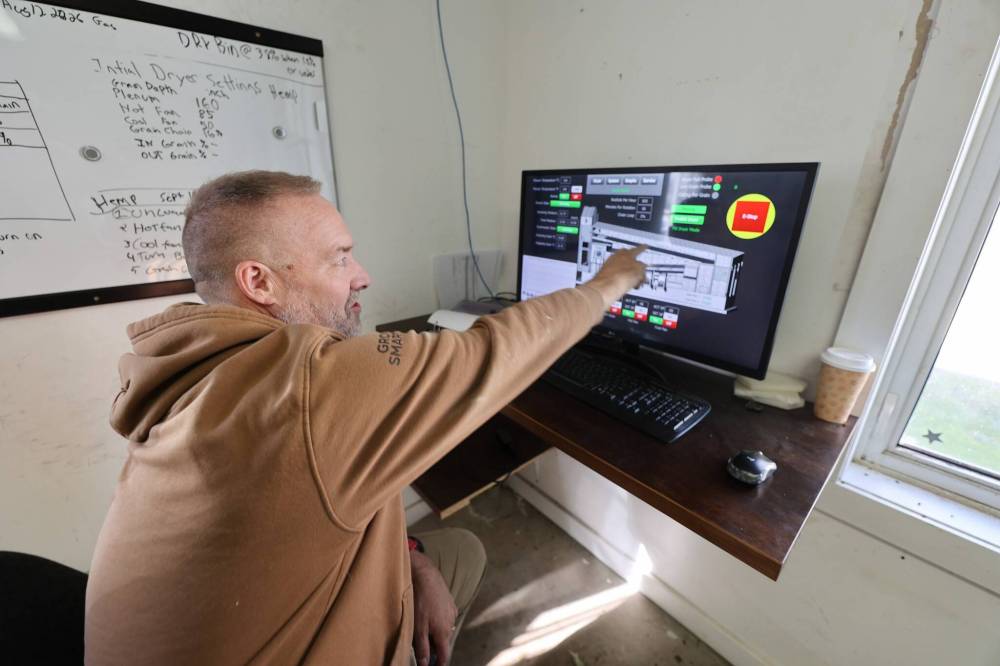
He noted at the start of the season that he would have to have an above-average crop to break even because of fertilizer costs. About 50 per cent of the Toews’ farm acreage is dedicated to corn.
Dean said in April that the farm has some reprieve as it employs a strategy to reduce fertilizer requirements called strip-tilling. Given the high cost of fertilizer when he purchased early this year, the strategy translated to about $72,000 in savings.
Aside from fertilizer impacts, corn has been a relatively sturdy crop with its value not swayed by political forces as seen with other crops like canola, Toews said. He said corn did not pop up as an issue of contention with disputes in trade between Canada and United States or other countries.
The value of Canadian canola was impacted when China launched an anti-dumping investigation into Canadian canola in 2024, with tariffs that caused uncertainty in the market and which were later reduced.
With an optimistic corn yield sitting in the fields, Dean said he is hoping that the weather will stay warm and there will be no major snowfalls. Corn could remain in the fields — and be harvested — through the winter, however it would be best to get it off the fields and feel safe about it as soon as possible.
» cmcdowell@brandonsun.com