
University of Guelph scientist leads project to recover butterfly species in Ontario
Advertisement
Read this article for free:
or
Already have an account? Log in here »
We need your support!
Local journalism needs your support!
As we navigate through unprecedented times, our journalists are working harder than ever to bring you the latest local updates to keep you safe and informed.
Now, more than ever, we need your support.
Starting at $15.99 plus taxes every four weeks you can access your Brandon Sun online and full access to all content as it appears on our website.
Subscribe Nowor call circulation directly at (204) 727-0527.
Your pledge helps to ensure we provide the news that matters most to your community!
To continue reading, please subscribe:
Add Brandon Sun access to your Free Press subscription for only an additional
$1 for the first 4 weeks*
- Enjoy unlimited reading on brandonsun.com
- Read the Brandon Sun E-Edition, our digital replica newspaper
*Your next Free Press subscription payment will increase by $1.00 and you will be charged $20.95 plus GST for four weeks. After four weeks, your payment will increase to $24.95 plus GST every four weeks.
Read unlimited articles for free today:
or
Already have an account? Log in here »
The last time the frosted elfin butterfly, known for its brown hue and delicate wings, was spotted in Ontario was in 1988.
Several surveys, including one in 2019, have turned up no sightings of the small, non-migratory butterfly in nearly 40 years, according to the Committee on the Status of Endangered Wildlife in Canada.
A group of Canadian scientists is now working to bring the extirpated species back to the northern shores of Lake Erie in Norfolk County it once inhabited. Extirpation refers to a species’ disappearance from a specific geographic region or habitat.
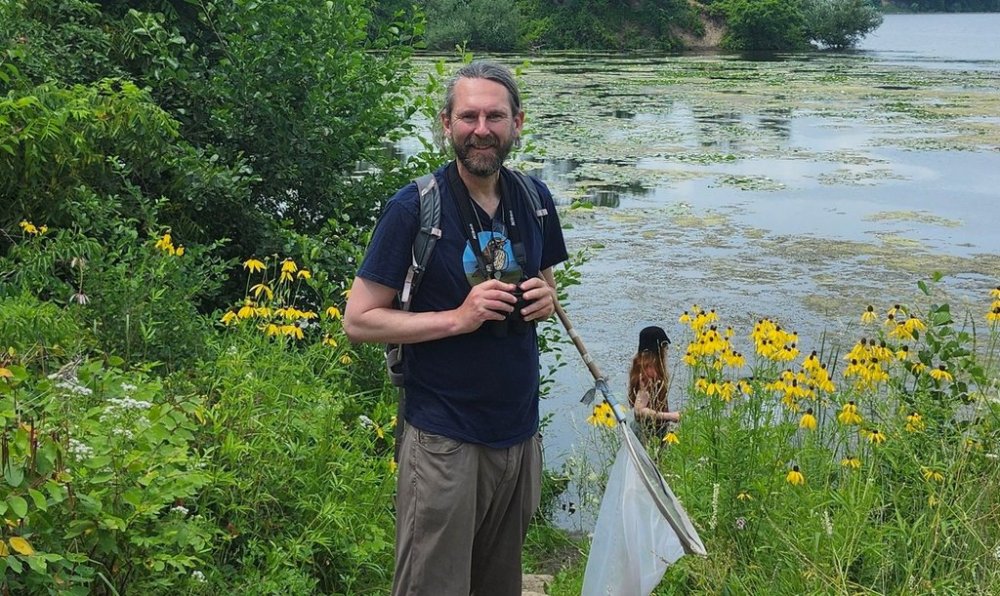
Ryan Norris, who teaches at the University of Guelph’s department of integrative biology, said the team is planning to import frosted elfin butterflies and their eggs from New York to breed them at the Cambridge Butterfly Conservatory before releasing them into the wild next spring in Port Rowan, southeast of London, Ont.
“And some of those habitats, many of them are restored. They’re old tobacco fields and now they’re really thriving kind of oak savanna habitats that allow us to reintroduce species like frosted dolphins,” he said.
Norris attributed the butterfly’s extirpation to the loss of habitat due to urban development and creation of farmland.
“We’ve destroyed things in the past, and in some cases we have, for some habitat types, … very little left of it, and it used to be much more abundant in places like southern Ontario,” he said in an interview.
He said the team is making sure there are enough wild sundial lupins, the frosted elfin’s host plant, before breeding could begin.
The project is part of larger cross-country efforts involving universities, conservation organizations and government agencies to save three endangered species of butterflies that also include the mottled duskywing and curiously isolated hairstreak, the University of Guelph said in a statement.
“By co-ordinating the recovery of three at-risk butterfly species at once, the team will develop what researchers believe is Canada’s first multi-species framework for insect conservation,” it said.
The federal government has provided $2.4 million in funding, the school said.
As part of the project, the mottled duskywing, a medium-sized butterfly that is dark grey and brown in colour, was reintroduced at Pinery Provincial Park in Grand Bend, Ont., and some other protected areas in Norfolk County five years ago.
The results have been remarkable, Norris said.
The butterfly’s population has reached several hundred at the Pinery site and close to 100 at a second location. At Pinery, the population could be even bigger, he added.
“They’re spilling over into campsites … We have seen them at other sites that we’re not monitoring. So, we’re really happy about that,” he said.
“So, I think (with) mottled duskywing, we’re kind of, we’re giving it a foothold. We’re giving it a chance for long-term persistence already in Ontario.”
The project also aims to strengthen the population of a rare species of butterfly known as the curiously isolated hairstreak that inhabits Waterton Lakes National Park in southern Alberta.
“So now what we have is a species with a single population … that we are obligated to protect and understand a little bit more about,” he said, adding that scientists are exploring to see if they can reintroduce the species in other locations, or supplement their population at their current location.
Restoring the habitat is key to secure the viability of all three species, he said.
The concentration of the butterfly’s population at one site is risky and makes them vulnerable as it could cause the insect to go extinct if a natural disaster strikes the area, experts say.
“I think our hope is if you kind of introduce it into an area that has suitable habitats surrounding it, that they’ll colonize those areas themselves,” he said. “That’s when you start to get into long-term stability.”
Norris said butterflies are pollinators, and they serve as a vital food source for other animals, making them a key player in a healthy ecosystem.
But bringing them back is a much more meaningful task, he said.
“By us assisting them, we’re restoring, rewilding places in Canada. I think that’s quite symbolic.”
This report by The Canadian Press was first published Oct. 31, 2026.