
Inside man or patsy? Crown, defence pitch narratives at trial of man accused in heist
Advertisement
Read this article for free:
or
Already have an account? Log in here »
We need your support!
Local journalism needs your support!
As we navigate through unprecedented times, our journalists are working harder than ever to bring you the latest local updates to keep you safe and informed.
Now, more than ever, we need your support.
Starting at $15.99 plus taxes every four weeks you can access your Brandon Sun online and full access to all content as it appears on our website.
Subscribe Nowor call circulation directly at (204) 727-0527.
Your pledge helps to ensure we provide the news that matters most to your community!
To continue reading, please subscribe:
Add Brandon Sun access to your Free Press subscription for only an additional
$1 for the first 4 weeks*
- Enjoy unlimited reading on brandonsun.com
- Read the Brandon Sun E-Edition, our digital replica newspaper
*Your next Free Press subscription payment will increase by $1.00 and you will be charged $20.95 plus GST for four weeks. After four weeks, your payment will increase to $24.95 plus GST every four weeks.
Read unlimited articles for free today:
or
Already have an account? Log in here »
Was a then-Air Canada employee an inside man who helped carry out one of the biggest gold heists in Canadian history, or a scapegoat exploited by a longtime friend and left to shoulder the blame?
Those were the two competing scenarios presented to a Brampton, Ont., court Monday as prosecutors and defence lawyers made their closing submissions in the trial of Parmpal Sidhu.
Sidhu has pleaded not guilty to theft over $5,000 and conspiracy to commit an indictable offence in connection with the April 2023 heist at Toronto’s Pearson airport.
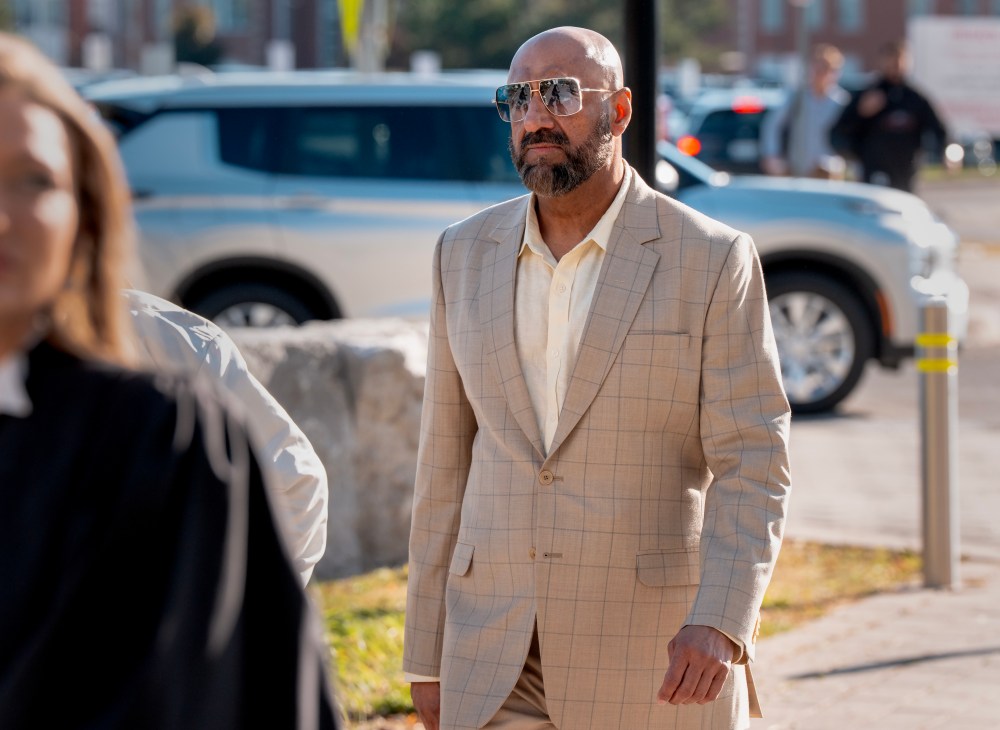
Court has heard Sidhu’s profile was used to print a doctored air waybill that allowed another man to pick up more than $22 million in gold and currency, but that it wasn’t uncommon for employees to use someone else’s profile on shared computers.
Prosecutors allege Sidhu was the one who printed the fraudulent waybill and who made the call to release the shipment. He also has a close relationship with Simran Preet Panesar, who worked for the airline at the time and is still wanted in the case, as well as a link to Archit Grover, another accused, they argued.
Sidhu was implicated by Arsalan Chaudhary, who is considered one of the architects of the plan, and made a “very explicit comment about the loss of his cut” in wiretaps from February 2024, Crown attorney Jelena Vlacic argued.
“For these following factors to exist … and for Mr. Sidhu not to have been involved in the planning and the execution of the theft is near impossible,” she said.
The defence, meanwhile, argued the evidence points to a different narrative: that Sidhu was taken advantage of by Panesar, his then-colleague and friend of roughly two decades, who they allege actually orchestrated the heist from the inside.
Panesar resigned in the months that followed the heist and left Canada with his family after being interviewed by police, the trial has heard. He has never returned and a Canada-wide warrant has been issued for his arrest.
Panesar “hijacked” Sidhu’s user ID and password as well as that of two other employees, while Chaudhary used Sidhu as a “blind telephone switchboard” to reach his alleged co-conspirator when he wasn’t answering his phone, defence lawyer Shale Wagman argued.
“And then when the police closed in, Panesar and Chaudhary fled abroad, leaving Mr. Sidhu in the ditch with a ruined career, mounting legal bills and broken promises to fix the mess they caused,” he argued.
“That is not piecemeal speculation. That single unified explanation connects every dot in this courtroom,” he said, adding investigators did not find any heist money in Sidhu’s home or bank accounts.
In reply, the Crown noted there is no evidence Panesar used Sidhu’s username and password, nor that Panesar and Chaudhary made “hollow promises” from abroad, and that those should only be considered as hypotheticals.
Chaudhary was one of the Crown’s key witnesses in the case.
Chaudhary was arrested earlier in the year as he flew back from Dubai and has since pleaded guilty to theft over $5,000. He was sentenced to four years in prison and given 40 years to pay back $22 million in restitution.
On the stand last month, Chaudhary testified that he’d planned the heist with Panesar and ended up taking 30 per cent of the boxes full of gold bars. He then melted some of the gold and sold it for cash before fleeing to Pakistan, he said.
Chaudhary said he communicated with Sidhu on the day of the theft but couldn’t remember what he said.
He told the court he let Sidhu know the truck and driver were ready on the day of the heist and Sidhu replied, “OK.”
But as his testimony continued, Chaudhary mostly said he did not remember details of conversations he’d mentioned in previous court statements — including one from July when he said he spoke to Sidhu on the phone three times on the day of the heist.
When asked about his previous statement that he’d discussed the logistics of the plan with Sidhu, Chaudhary said he couldn’t remember doing so.
He attributed his memory lapses to post-traumatic stress disorder linked to his alleged abduction in Pakistan.
The case is being heard by a judge alone and a ruling is expected in late January 2027.
In the leadup to the trial, prosecutors dropped the charges against two other men accused in the case: Ali Raza and Amit Jalota.
This report by The Canadian Press was first published Nov. 2, 2026.