
An acclaimed biography of Alexander the Great wins the Baillie Gifford nonfiction prize
Advertisement
Read this article for free:
or
Already have an account? Log in here »
We need your support!
Local journalism needs your support!
As we navigate through unprecedented times, our journalists are working harder than ever to bring you the latest local updates to keep you safe and informed.
Now, more than ever, we need your support.
Starting at $15.99 plus taxes every four weeks you can access your Brandon Sun online and full access to all content as it appears on our website.
Subscribe Nowor call circulation directly at (204) 727-0527.
Your pledge helps to ensure we provide the news that matters most to your community!
To continue reading, please subscribe:
Add Brandon Sun access to your Free Press subscription for only an additional
$1 for the first 4 weeks*
- Enjoy unlimited reading on brandonsun.com
- Read the Brandon Sun E-Edition, our digital replica newspaper
*Your next Free Press subscription payment will increase by $1.00 and you will be charged $20.95 plus GST for four weeks. After four weeks, your payment will increase to $24.95 plus GST every four weeks.
Read unlimited articles for free today:
or
Already have an account? Log in here »
LONDON (AP) — An “immersive” biography of Alexander the Great won the prestigious Baillie Gifford Prize for nonfiction Wednesday, in the latest sign of booming interest in the world of ancient Greece.
Edmund Richardson’s “Alexander: God, King, Man” was named winner of the 50,000 pound ($67,000) prize at a ceremony in London.
British journalist Kirsty Lang, who chaired the judging panel, said the book is the first work of ancient history to win the prize and “reads like a novel.”
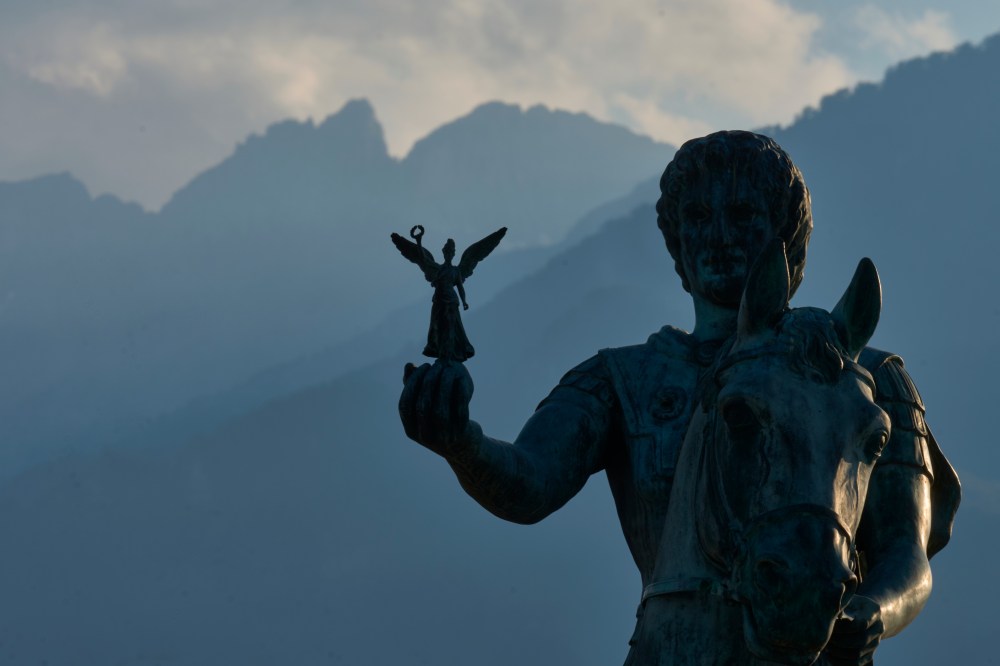
“It’s very immersive. You really feel that you’re there on the battlefield, marching across Central Asia and Egypt with Alexander,” she said. “And it contains a lot of new research,” including Richardson’s translations of sources from 12 ancient languages.
Richardson, a professor of classics at Durham University in England, spent a decade — “far too long, down far too many rabbit holes” — researching the life of Alexander, who inherited a debt-ridden Macedonian kingdom at 20, conquered territory stretching from Greece to India and died at 32.
“No one called him Alexander the Great in his lifetime,” Richardson told The Associated Press. “No one thought he was going to conquer the world. He was his father’s slightly disappointing son, even when he took the throne. He was a tributary, not the main event. And then he starts to do all of these astonishing things.”
Richardson said Alexander’s military expedition “transforms reality more profoundly than almost any other event in human history.”
“It connects the world up in ways that it has never been connected before,” he said. “It results in this flood of knowledge and understanding and ideas and religious belief and science and astronomy and art, crossing from Babylon to Greece, from Greece to modern-day Afghanistan, from Egypt across to Italy.”
The prize judges called the book “a love letter to the humanities and the work of historians and archaeologists,” at a time when those disciplines are under pressure from university funding cuts in the U.K. and elsewhere.
Lang said the book should appeal to fans of Christopher Nolan’s epic movie version of “The Odyssey,” which has helped drive a surge of popular interest in the ancient Greek classics.
“They knew to tell great stories,” Lang said. “Life, death, love, relationships, tragedy. They speak to the most basic of human emotions and motivations.”
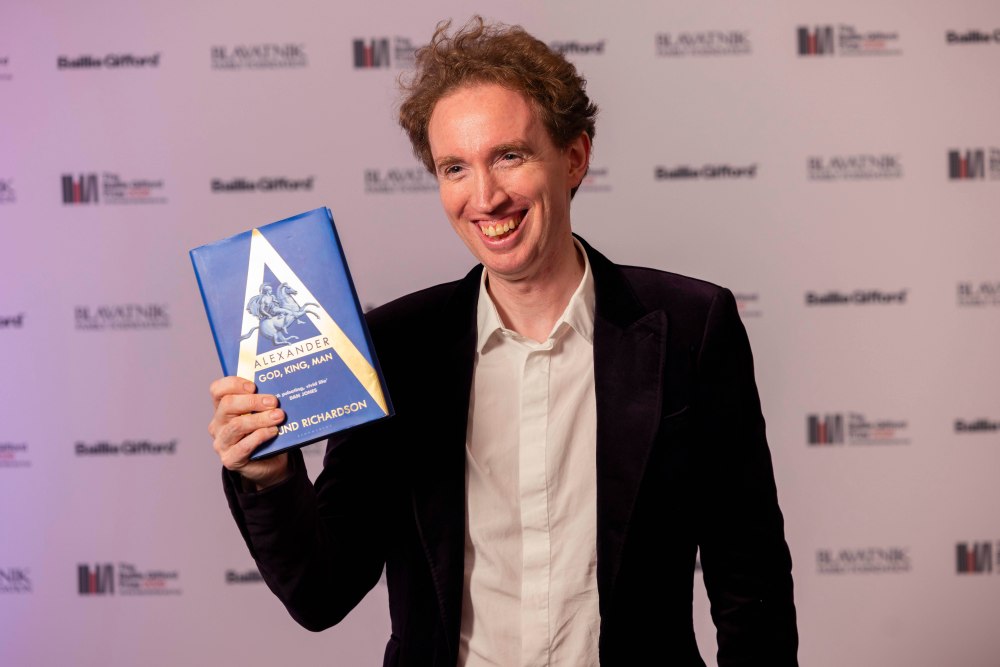
Founded in 1999, the Baillie Gifford prize recognizes English-language books in current affairs, history, politics, science, sport, travel, biography, autobiography and the arts. It has been credited with bringing an eclectic slate of fact-based books to a wider audience.
The winner was chosen from more than 350 entries and beat five other finalists, including American journalist Patrick Radden Keefe’s bestseller “London Falling,” the true story of a teenager who died after being caught up in the shadowy world of London’s superrich.
The other finalists were Nicholas Boggs’ James Baldwin biography “Baldwin: A Love Story”; Matthew Sweet’s life of romance novelist Barbara Cartland, “The Great Dictator”; Anand Gopal’s Syrian saga “Days of Love and Rage”; and Andrea Wulf’s “The Traveler,” about the 18th-century naturalist and explorer George Forster.
Last year’s winner was Australian writer Helen Garner for her collected diaries, “How to End a Story.”