
Here’s what you need to know as the Liberals prepare to table Budget 2026
Advertisement
Read this article for free:
or
Already have an account? Log in here »
We need your support!
Local journalism needs your support!
As we navigate through unprecedented times, our journalists are working harder than ever to bring you the latest local updates to keep you safe and informed.
Now, more than ever, we need your support.
Starting at $15.99 plus taxes every four weeks you can access your Brandon Sun online and full access to all content as it appears on our website.
Subscribe Nowor call circulation directly at (204) 727-0527.
Your pledge helps to ensure we provide the news that matters most to your community!
To continue reading, please subscribe:
Add Brandon Sun access to your Free Press subscription for only an additional
$1 for the first 4 weeks*
- Enjoy unlimited reading on brandonsun.com
- Read the Brandon Sun E-Edition, our digital replica newspaper
*Your next Free Press subscription payment will increase by $1.00 and you will be charged $20.95 plus GST for four weeks. After four weeks, your payment will increase to $24.95 plus GST every four weeks.
Read unlimited articles for free today:
or
Already have an account? Log in here »
OTTAWA – The federal Liberals are teeing up Thursday’s budget as the government’s next step toward fixing long-standing problems facing Canada’s economy.
Budget 2026 will be the second tabled under Prime Minister Mark Carney.
Budgets detail a government’s expectations for economic growth and the projected pace of spending and borrowing. They’re also political documents that can serve as a launching pad for legislation and government policy initiatives.
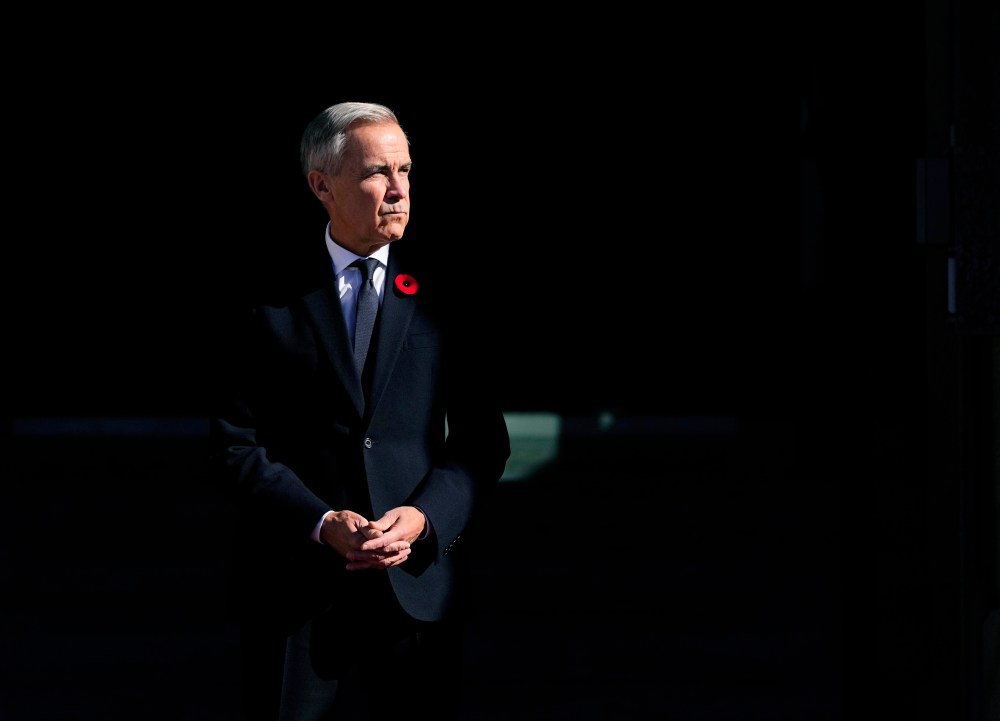
In addition to new spending items, Thursday’s budget will include an update on the federal government’s immigration levels plan.
After the budget is tabled in the House of Commons on Thursday afternoon, members of Parliament will debate the legislation for weeks and could seek amendments or carve-outs from the wider document.
With a majority government, the Liberals are in a strong position to get their budget approved.
Under Carney, the Liberals have vowed to boost productivity, stoke private investment and build out infrastructure to help Canadian businesses reach new markets.
Ottawa has presented its higher spending on defence and infrastructure as a response to U.S. President Donald Trump’s trade aggression and other sources of geopolitical volatility.
It’s all about securing economic sovereignty, the government argues. That explains this budget’s name — “Maîtres chez nous,” or “masters of our destiny.”
Analysts are expecting the federal government will continue to borrow and chart relatively deep deficits as it tries to reduce economic dependence on the United States while offering supports to tariff-afflicted industries.
An annual deficit refers to how much additional debt a government is taking on in a given fiscal year to cover spending commitments. Over time, growing deficits without a plan for reducing that debt can affect a country’s sovereign credit rating, making it even more costly to borrow.
Already, the parliamentary budget officer predicts debt-servicing costs will be the fastest growing expenses on the government’s balance sheet.
Critics warn high debt costs, if left to grow unchecked, can crowd out other government spending priorities and limit Canada’s ability to respond to future shocks.
The Liberal government regularly cites Canada’s strong sovereign credit rating in comparison to many of its G7 peers to justify its borrowing plans.
Conservative Leader Pierre Poilievre has been a vocal critic of the government’s deficits and is calling on Carney to curb “out-of-control spending” in the budget.
The Liberals have committed to reducing spending on day-to-day government operations so that, eventually, federal borrowing goes solely toward capital investments like major projects. They’ve also pledged to shrink deficits as a share of the economy.
Most fiscal experts predict Ottawa will post slightly smaller deficits in the coming years than those projected in the spring economic update back in April. Even after a raft of spending announcements over the summer, higher global oil prices from the war in Iran have meant higher federal revenues are offsetting those expenses.
Despite near-term improvements in the bottom line, observers will be looking for evidence the government isn’t baking permanently higher costs into its fiscal horizon.
In Budget 2026, Ottawa needs to explain how a higher track for government borrowing will produce measurable economic results, analysts from the Institute of Fiscal Studies and Democracy at the University of Ottawa argued in a budget preview.
A key goal in the Liberal plan is to attract more private investment from inside and outside of Canada. Many business leaders have ramped up calls for tax reform to encourage those kinds of investments.
One of the major spending items in Thursday’s budget was already announced in September — the so-called “productivity mega deduction.” This expanded incentive encourages businesses to invest in new equipment and machinery in exchange for upfront tax writeoffs. It’s expected to cost $36 billion over five years.
Finance Minister François-Philippe Champagne indicated in a speech to business leaders on Monday that the government is also planning to eliminate some tax pains for small- and medium-sized businesses.
Champagne said Budget 2026 is about “changing Canada’s growth model.” For more than a decade, that growth model has meant productivity levels that lag far behind the United States and other peer countries.
Much of the Liberals’ investment agenda is aimed at giving businesses the impetus to invest in better tools for their workers — a path most economists argue is a way to boost productivity.
Bank of Canada senior deputy governor Carolyn Rogers, who sounded the alarm on the nation’s productivity emergency two years ago, told MPs on Tuesday that the central bank was seeing signs of progress on the productivity front but there’s more work to do.
This report by The Canadian Press was first published Nov. 5, 2026.