
Environmental economist tells trial Canada has limited power to alter climate change
Advertisement
Read this article for free:
or
Already have an account? Log in here »
We need your support!
Local journalism needs your support!
As we navigate through unprecedented times, our journalists are working harder than ever to bring you the latest local updates to keep you safe and informed.
Now, more than ever, we need your support.
Starting at $15.99 plus taxes every four weeks you can access your Brandon Sun online and full access to all content as it appears on our website.
Subscribe Nowor call circulation directly at (204) 727-0527.
Your pledge helps to ensure we provide the news that matters most to your community!
To continue reading, please subscribe:
Add Brandon Sun access to your Free Press subscription for only an additional
$1 for the first 4 weeks*
- Enjoy unlimited reading on brandonsun.com
- Read the Brandon Sun E-Edition, our digital replica newspaper
*Your next Free Press subscription payment will increase by $1.00 and you will be charged $20.95 plus GST for four weeks. After four weeks, your payment will increase to $24.95 plus GST every four weeks.
Read unlimited articles for free today:
or
Already have an account? Log in here »
VANCOUVER – An environmental economist testifying at Canada’s first youth-led climate trial says the country has a limited ability to affect the climate inside its borders as it is largely determined by the choices of other countries.
David Anthoff, who studies climate change and environmental policy and is a professor at the University of California, Berkeley, is the first witness called by the federal government in the Federal Court trial in Vancouver.
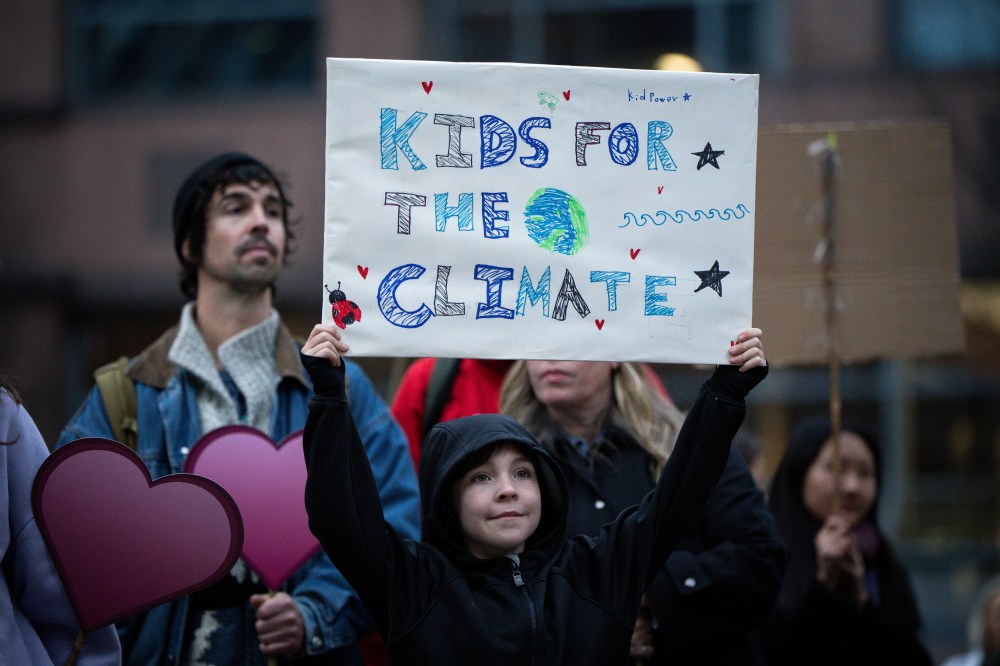
The case was brought by 15 youth, who are arguing that federal legislation violates their constitutional rights by continuing the trajectory of greenhouse gas emissions.
Anthoff said Monday that Canada contributes about 1.4 per cent of global emissions.
“So Canada can have an impact on the global climate and an impact on Canada’s climate by changing its own emissions, but it’s relatively small compared to the overall size of the problem,” he said.
“Most of the climate change that Canada will experience, whether that is large or not, will be determined by the choices of other countries outside of Canada.”
Anthoff said it is not his view that “what Canada does doesn’t matter,” that it is futile or that there are no consequences to its emissions, but Canada would fare better if it managed a foreign policy initiative between several countries that agreed to a co-ordinated effort.
“Then something like that might be a much bigger lever than just the domestic greenhouse gases within Canada just because the vast majority of this problem is caused by emissions outside of Canada’s border,” he told the court.
Anthoff testified that mitigation policies require international co-ordination, while adaptation policies do not.
He said mitigation policies that reduce greenhouse gas emissions “are meant to slow down climate change or solve the root problem.”
“Mitigation outcomes are by definition a function of the choices of every country, and so effective mitigation policies will require some level of co-ordination or joint action to happen,” he said.
Meanwhile, Anthoff said adaptation policies are actions or reactions people or states have to climate change, and can be done without co-ordination, within one jurisdiction.
“It could be a province that solves some of these problems by itself,” he said.
The plaintiffs’ lawyer, Catherine Boies Parker, told the court in her opening statement the case was not about the existence of climate change.
Rather, it hinges on whether the government is “constitutionally required to stop making it worse,” she said.
The plaintiff’s case was heard first and included testimony from youth from seven provinces and two territories on how they have suffered “specific harms connected directly to the government’s conduct.”
BJ Wray, counsel for Canada’s Department of Justice, told the court in opening arguments that the Charter was “never intended to solve existential crises,” and that providing the plaintiffs with a safe climate system” is not something the country can do on its own.
The trial comes about seven years after the case was first filed in 2019. It is expected to continue into late November, with closing arguments scheduled for February.
This report by The Canadian Press was first published Nov. 9, 2026.