
Tories eye ex-developmental centre for addiction treatment hub
Advertisement
Read this article for free:
or
Already have an account? Log in here »
We need your support!
Local journalism needs your support!
As we navigate through unprecedented times, our journalists are working harder than ever to bring you the latest local updates to keep you safe and informed.
Now, more than ever, we need your support.
Starting at $15.99 plus taxes every four weeks you can access your Brandon Sun online and full access to all content as it appears on our website.
Subscribe Nowor call circulation directly at (204) 727-0527.
Your pledge helps to ensure we provide the news that matters most to your community!
To continue reading, please subscribe:
Add Brandon Sun access to your Free Press subscription for only an additional
$1 for the first 4 weeks*
- Enjoy unlimited reading on brandonsun.com
- Read the Brandon Sun E-Edition, our digital replica newspaper
*Your next Free Press subscription payment will increase by $1.00 and you will be charged $20.95 plus GST for four weeks. After four weeks, your payment will increase to $24.95 plus GST every four weeks.
Read unlimited articles for free today:
or
Already have an account? Log in here »
WINNIPEG — The Progressive Conservatives would convert the former Manitoba developmental centre in Portage la Prairie into an addiction recovery campus, if elected next year.
Interim Tory leader Konrad Narth and Jeff Bereza, the local PC MLA, pitched the proposal as part of a broader strategy to expand treatment capacity as Manitoba struggles with a toxic drug crisis.
“The Manitoba developmental centre offers exactly what is needed for a recovery centre. It’s ready to go,” Bereza, the party’s addictions critic, said after the campaign announcement Monday. “The buildings are there, the infrastructure is there. We just have to have a will to make it happen.”
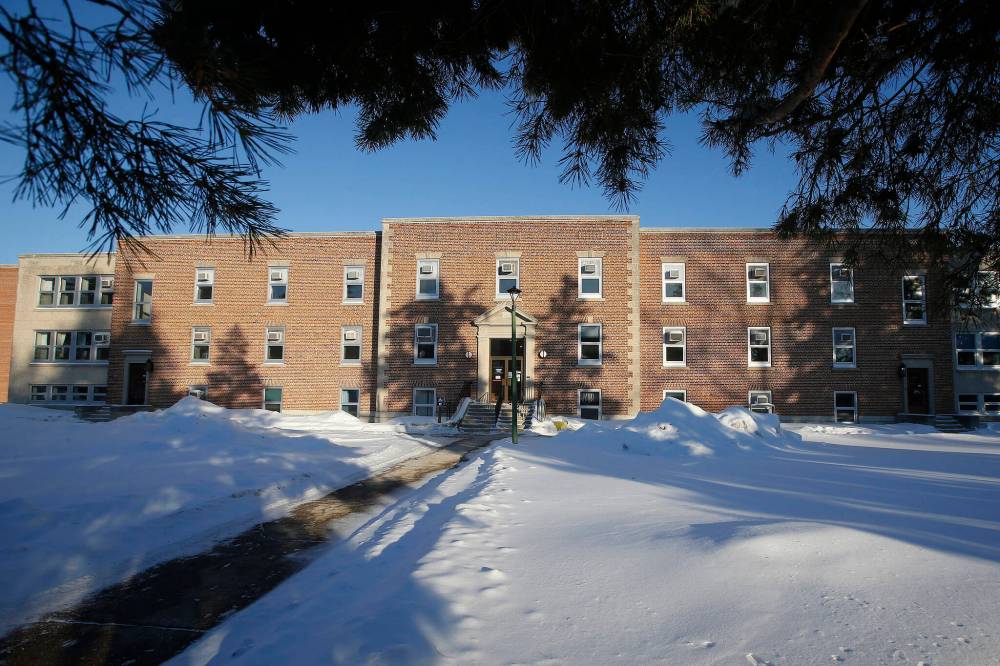
The former Manitoba Developmental Centre in Portage la Prairie could be converted into an addiction recovery centre, the Manitoba Progressive Conservatives say. (John Woods/Winnipeg Free Press files)
Manitoba’s next election must be held on or before Oct. 5, 2027.
The centre, which had a dark history, was a facility for people with intellectual disabilities. The centre opened in 1980 and had residents until 2024.
The former PC government announced in 2021 the site would close when all remaining residents were moved to community living.
The NDP government has not yet announced a plan for the 100-acre property, which has more than a dozen buildings, including cottages.
Bereza and Narth said wait times for addictions treatment are high because the province lacks spaces.
“This is centralized service in a single site that would be everything from emergency care of detox right down to the community reintegration of members that have gone through the full service,” Narth said.
The Tories said they would work with experts, the local community and Indigenous leaders to develop the proposed campus. A cost estimate was not provided.
Narth said the campus would open sooner and cost less than the $200-million centre for mental health and addictions announced by Prime Minister Mark Carney during his stop in Winnipeg Friday.
That centre, to be operated by the provincial government and modelled on a 51-bed facility in Toronto, is expected to open in Winnipeg as early as 2029. A location has not yet been chosen.
Narth said the facility would draw from the province’s existing workforce and add new hires to provide recovery services for hundreds of people at a time.
“We have capacity in the current system as it is — as I call it, the fragmented system that we have for delivery of these addiction services,” he said. “Immediately, that could be reorganized to this central campus model, and then we’d obviously want to expand on the capacity.”
Joseph Fourre, who founded the Singing Red Bear Foundation after his 31-year-old son, Harlan, died of fentanyl poisoning in 2023, attended the campaign announcement to speak in support of the proposal.
Patients would be transported to the campus from across the province, similar to how they are currently transported to or within Winnipeg for services, Narth said.
Bereza said Southport Airport, just outside Portage, could be used when patients arrive by plane from remote communities.
“This wouldn’t have the outside effects that some of the attempts of services within the city of Winnipeg — where people are surrounded by addictions and also the threats that came along with their recovery process — would have,” Narth said. “It doesn’t impact the community around it, as well, because all the services would exist at one facility.”
Bereza said he envisions a campus that offers opportunities such as land-based learning and trades training.
If elected, a Tory government would bring an end to the supervised drug consumption site the NDP government opened at 366 Henry Ave. in Winnipeg’s core in August. The facility, when fully up and running, will include primary health care, recovery and other services, the government has said.
Under a PC government, Narth said the facility would be “repurposed” and used as a triage centre to ensure people receive the care they deserve and to ease the burden on hospital emergency rooms.
In a statement, an NDP government spokesperson accused the Tories of trying to politicize Manitobans who have addictions problems.
The spokesperson said the NDP has added more than 1,200 treatment spaces, funded housing, harm reduction and overdose response, and created the “medical facilities,” such as the supervised drug consumption site, that “save lives” and help Manitobans toward recovery.
“The (developmental centre) presents a unique opportunity for impactful change in the Portage la Prairie community, and we will have more to say about the future of (it) soon,” the spokesperson wrote in an email.
» Winnipeg Free Press