
Cape Verde’s president is re-elected for a second 5-year term, provisional results show.
Advertisement
Read this article for free:
or
Already have an account? Log in here »
We need your support!
Local journalism needs your support!
As we navigate through unprecedented times, our journalists are working harder than ever to bring you the latest local updates to keep you safe and informed.
Now, more than ever, we need your support.
Starting at $15.99 plus taxes every four weeks you can access your Brandon Sun online and full access to all content as it appears on our website.
Subscribe Nowor call circulation directly at (204) 727-0527.
Your pledge helps to ensure we provide the news that matters most to your community!
To continue reading, please subscribe:
Add Brandon Sun access to your Free Press subscription for only an additional
$1 for the first 4 weeks*
- Enjoy unlimited reading on brandonsun.com
- Read the Brandon Sun E-Edition, our digital replica newspaper
*Your next Free Press subscription payment will increase by $1.00 and you will be charged $20.95 plus GST for four weeks. After four weeks, your payment will increase to $24.95 plus GST every four weeks.
Read unlimited articles for free today:
or
Already have an account? Log in here »
PRAIA, Cape Verde (AP) — Cape Verde ’s president, José Maria Neves, has been re-elected for a second five-year term, beating five other challengers, including the first woman presidential candidate in the country’s history, provisional results show. Neves called his re-election as president of the Atlantic island nation off West Africa “a great victory.” The election had been dominated by issues of high unemployment and a high cost of living that had sparked emigration from the country.
Provisional results showed Neves had comfortably edged out his opponents, garnering 64% of the votes while Joana Rosa, the main opposition candidate, won only 31.4% of the votes.
Rosa called Neves to concede defeat.
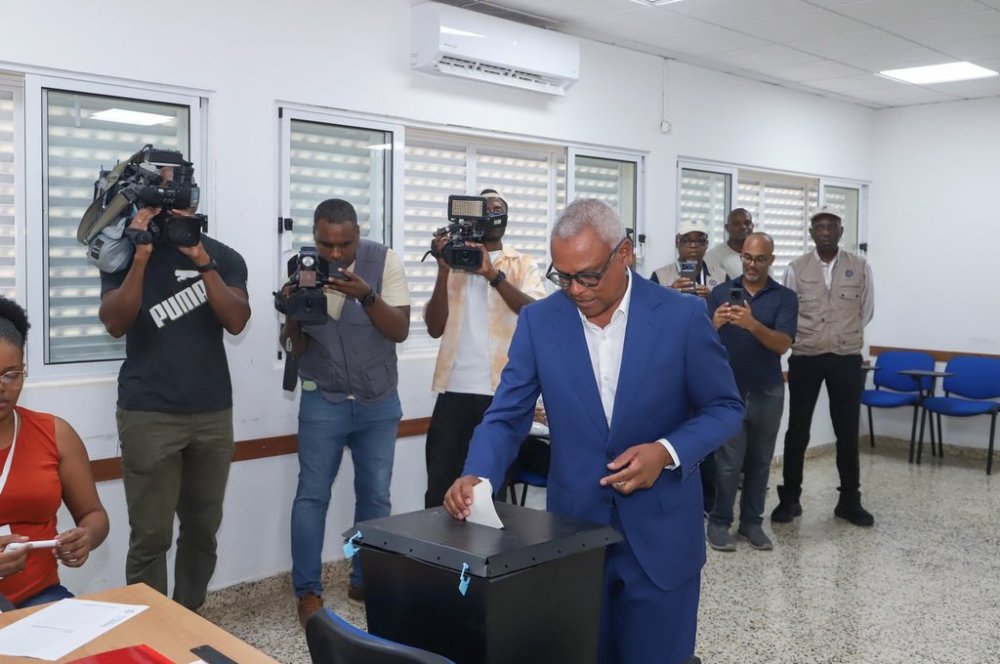
The tiny country has a history of smooth transfer of power and is one of the most stable countries in a region fraught with tense elections.
“The president of the republic does not have a majority; the president of the republic belongs to everyone,” Neves said in his victory speech.
The election was characterized by a very low turnout. Of the 418,000 registered voters, only 31.7% cast a vote.
Neves said the low turnout could be explained by a high rate of emigration, internal mobility and outdated voter records. He promised that a study will be undertaken to look into the problem.
Under Cape Verde’s parliamentary system, the prime minister directs policy and holds most executive power. The directly elected president’s role is largely ceremonial, although the office can veto legislation.