
Warmer El Nino waters heating up B.C.’s coast, ocean researchers say
Advertisement
Read this article for free:
or
Already have an account? Log in here »
We need your support!
Local journalism needs your support!
As we navigate through unprecedented times, our journalists are working harder than ever to bring you the latest local updates to keep you safe and informed.
Now, more than ever, we need your support.
Starting at $15.99 plus taxes every four weeks you can access your Brandon Sun online and full access to all content as it appears on our website.
Subscribe Nowor call circulation directly at (204) 727-0527.
Your pledge helps to ensure we provide the news that matters most to your community!
To continue reading, please subscribe:
Add Brandon Sun access to your Free Press subscription for only an additional
$1 for the first 4 weeks*
- Enjoy unlimited reading on brandonsun.com
- Read the Brandon Sun E-Edition, our digital replica newspaper
*Your next Free Press subscription payment will increase by $1.00 and you will be charged $20.95 plus GST for four weeks. After four weeks, your payment will increase to $24.95 plus GST every four weeks.
Read unlimited articles for free today:
or
Already have an account? Log in here »
Scientists with Ocean Networks Canada are seeing record-high water temperatures off British Columbia’s coast, saying it points to the arrival of an El Nino pattern.
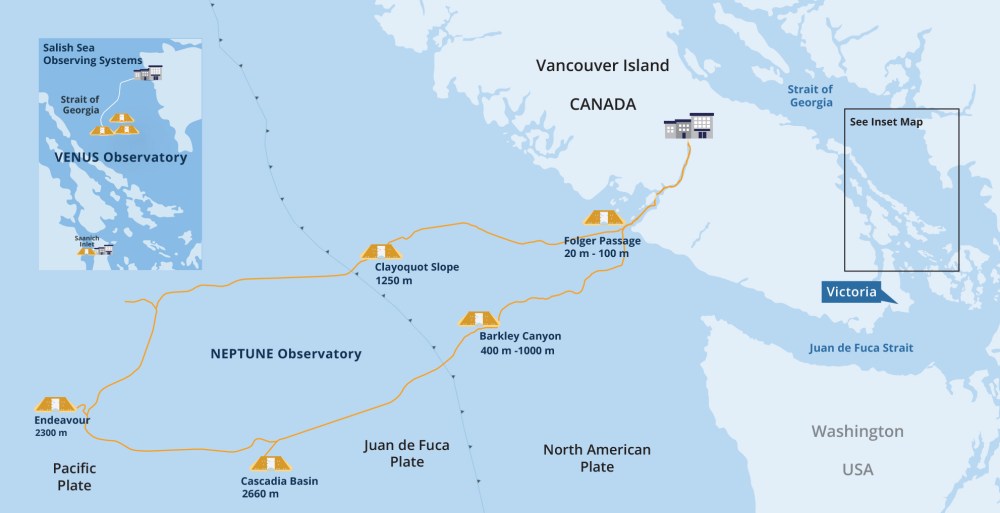
The initiative based at the University of Victoria operates two sea floor observatories with several research sites, including one off the west coast of Vancouver Island that recorded a temperature of 8.21 C at a depth of 400 metres on Nov. 8.
The group says the reading at the Barkley Canyon Upper Slope is 2.49 C higher than the long-term average at the site, where monitoring began in 2009, and it’s 0.89 C warmer than the previous record set in 2019.
Jay Cullen, an oceanographer and the group’s interim president, says the El Nino is playing out against a backdrop of longer-term warming due to global heating.
He says warmer water temperatures mean lower dissolved oxygen in ecosystems that are already under stress.
The warmer temperatures deeper in the ocean are concerning, he says, because that’s where many organisms live or retreat to find cooler conditions.
A graph shared by Cullen’s group shows the daily average temperature at the Barkley site climbing markedly starting in late October.
The group says the Clayoquot Slope, a deeper site more than 1,200 metres below the surface, has also been recording temperatures “significantly” above average.
The Cascadia basin, the deepest in the cluster of sites off Vancouver Island at 2,650 metres, is the lone exception, where temperatures are within usual ranges.
Steve Mihaly, a senior scientist with Ocean Networks Canada, says in a statement that the pulse of warm water is consistent with a strong El Nino, when trade winds weaken, shifting warm water east towards North America.
This report by The Canadian Press was first published Nov. 17, 2026.