
Carney says deal with U.S. possible but not there yet, after meeting Trump in China
Advertisement
Read this article for free:
or
Already have an account? Log in here »
We need your support!
Local journalism needs your support!
As we navigate through unprecedented times, our journalists are working harder than ever to bring you the latest local updates to keep you safe and informed.
Now, more than ever, we need your support.
Starting at $15.99 plus taxes every four weeks you can access your Brandon Sun online and full access to all content as it appears on our website.
Subscribe Nowor call circulation directly at (204) 727-0527.
Your pledge helps to ensure we provide the news that matters most to your community!
To continue reading, please subscribe:
Add Brandon Sun access to your Free Press subscription for only an additional
$1 for the first 4 weeks*
- Enjoy unlimited reading on brandonsun.com
- Read the Brandon Sun E-Edition, our digital replica newspaper
*Your next Free Press subscription payment will increase by $1.00 and you will be charged $20.95 plus GST for four weeks. After four weeks, your payment will increase to $24.95 plus GST every four weeks.
Read unlimited articles for free today:
or
Already have an account? Log in here »
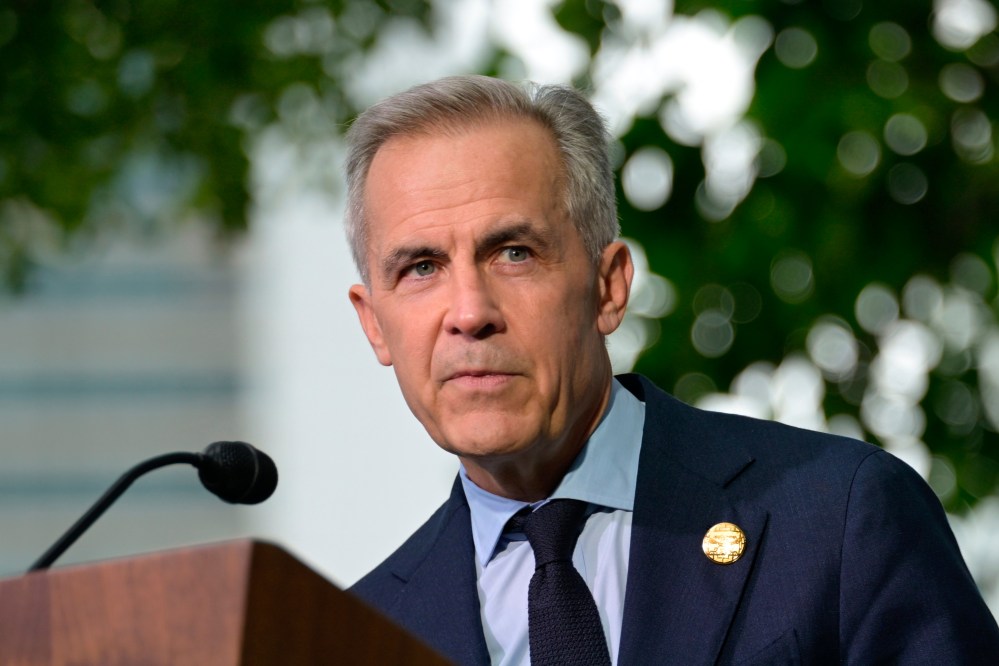
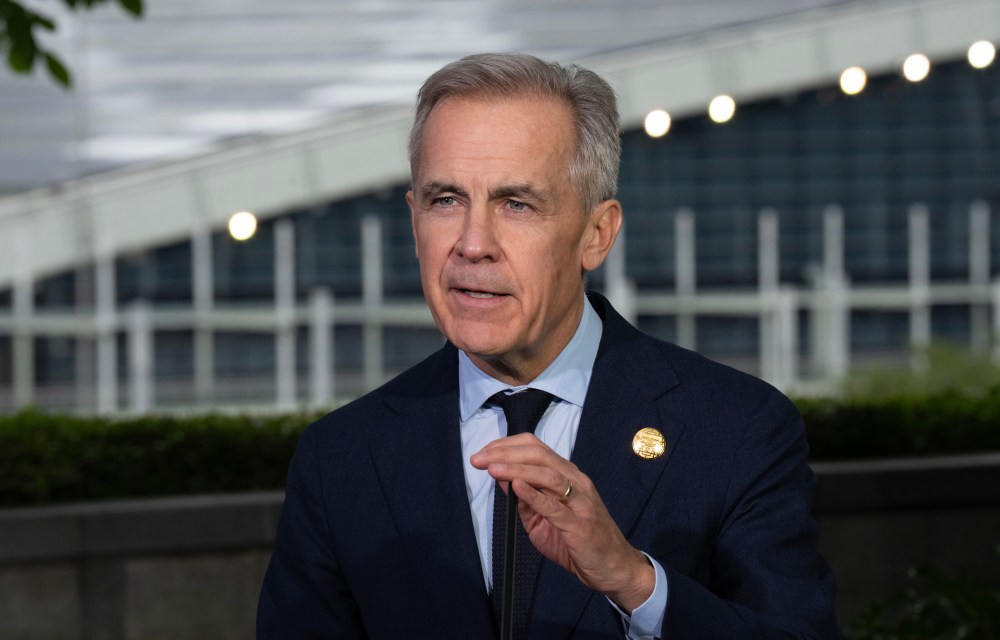
SHENZHEN – Prime Minister Mark Carney said a “very good trade arrangement” with the United States is possible but those talks are far more complex than the trade discussions Canada is having with China and other partners.
Canada won’t just sit around and wait for the U.S., he added.
“We would like to do the deal. But if the U.S. doesn’t want to do the deal, we’re busy,” Carney said, in an interview as part of the New York Times 2026 DealBook Summit.
He pointed to trade deals reached in recent days with the Association of Southeast Nations, or ASEAN, during a summit last weekend in the Philippines, as well as a deal with the Philippines itself. Canada is also expecting to sign a new trade deal with India in the next few months.
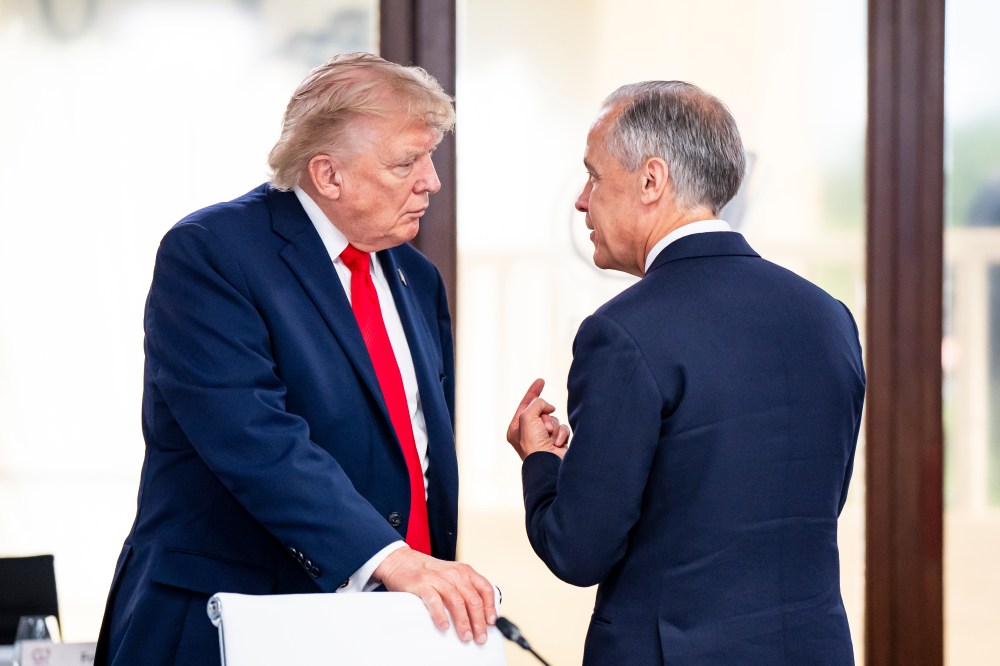
Carney was speaking remotely from Shenzhen, China, where he is attending the Asia-Pacific Economic Cooperation summit, or APEC, and made the comment shortly after he met with U.S. President Donald Trump. He called that meeting a “nice discussion” but said a deal with the United States isn’t at the finish line.
“Look, it should have been done six months ago, but, we’re not going to sign something that doesn’t make sense for Canada,” Carney said.
On Tuesday in Shenzhen, Carney held a bilateral meeting with Chinese President Xi Jinping, his second such meeting in China this year, both of which resulted in a number of tariffs and other trade irritants being resolved, including those affecting Canadian canola, seafood and pork, and Chinese steel, aluminum and electric vehicles.
Carney has raised eyebrows in the United States for appearing to play the U.S. and China off each other, and criticism in Canada for suggesting China has been easier to work with. He continued that commentary in his DealBook interview Wednesday.
“I can report that the trade negotiations are going exceptionally well,” he said. “We reached an agreement, we reduced tariffs and over 90 per cent of trade irritants. And, of course, I’m speaking about our trade negotiations with China. They’re very professional. They moved forward in a very linear fashion. and it’s all very rational and moving forward.
“Now, if you’re asking about the United States, well, we continue to have a series of issues there. Look, there is a very, very good trade arrangement that is possible. We had an existing one under (the Canada-U.S.-Mexico Agreement). There is one under the new trade policy that is possible, but we’re not yet there.”
The meeting with Trump was not on Carney’s public itinerary, but Carney’s office said the prime minister and president spoke for just under 20 minutes around dinnertime in Shenzhen.
“The leaders discussed the work underway to reach a mutually beneficial trade agreement that would create good jobs, boost affordability, and fully respect Canada’s languages, culture and sovereignty,” said a readout from Carney’s office.
“They agreed to continue the work and to stay in close contact.”
Carney’s office said the meeting included U.S. Trade Representative Jamieson Greer, U.S. Commerce Secretary Howard Lutnick, Trump’s chief of staff Stephen Miller and U.S. Secretary of State Marco Rubio. Carney’s chief of staff Marc-André Blanchard and Foreign Affairs Minister Anita Anand were there on the Canadian side.
The diplomatic relationship between Canada and the U.S. has been rattled by Trump’s heavy tariffs and calls for Canada to become the 51st state. It became more tense when Carney’s government walked away from formal trade talks in August, and as Ottawa and Washington accused each other of pushing eleventh-hour changes.
In response to the collapse of trade talks, Washington imposed tariffs on billions of dollars of Canadian goods. Ottawa then followed up with retaliatory tariffs on American products.
Shortly before the meeting, Carney told a news conference that he doesn’t believe Trump is uncomfortable with Canada expanding its trade relationship with China. He said Trump has sought to understand where Canada is going with its trade ties with China.
At that news conference Carney said it has been easier for Ottawa to secure new trade arrangements with China because Canada’s trade relations with the United States are “much more complex.”
“The United States fundamentally changed its trade objectives and we are focused on getting the right deal for Canadians,” he said.
He added that Canada is focused on exporting to China commodities such as iron and oil, rather than sensitive advanced technologies like superconductors.
Stephanie Kusie, the Conservative international trade critic, said Wednesday it’s “always concerning” to see the government engage with China, given its human rights record and previous tariffs on Canada.
She said it’s good that Canada is diversifying its trading relationships but she accused Carney of using that effort as a “distraction” from his failure to secure a deal with the United States.
Kusie said Canada has a “far more significant” relationship with the U.S. “through history and geography … and we should be leaning into that, not into a nation which does not promote democracy, human rights, the rule of law.”
Canada’s relationship with China is being rebuilt after it nearly disintegrated entirely over China’s arbitrary detention of two Canadians in retaliation for Canada arresting a Chinese telecom executive at the request of the United States. Canada’s accusations of Chinese interference in federal elections added to the diplomatic and trade tensions.
Carney began to restore the ties during a meeting with Xi at APEC in South Korea a year ago, and that continued at their meeting in Beijing in January.
He defended the move in the DealBook discussion on Wednesday, as part of Canada’s need to diversify its trade relationships so they are not so dependent on the United States, but also on any one partner at all.
“Deeper integration with one partner is a huge risk,” Carney said, referring to his economic diversification as “insurance.”
He said there are lessons from the recent experience with the United States — which he says fundamentally has changed its trade and foreign policies, including threats to annex Greenland and Canada. That lesson extends not just to trade but also to digital sovereignty, and Canada’s push to develop its own secure military communications, and not use Elon Musk’s Starlink. Ukraine has said restrictions imposed on Starlink there have impacted its ability to defend itself against Russian attacks.
“It would be simpler if we could just align just within the Western alliance that was there. And we could take first best technologies. But you know, you can’t go through Greenland. You can’t go through 51st state. You can’t go through Ukraine and Starlink and responsibly hold that assumption 100 per cent. And that is a very difficult and that’s a very difficult reality. But it is reality.”
This report by The Canadian Press was first published Nov. 18, 2026.
— With files from Nick Murray in Ottawa, Aaron Sousa in Edmonton and The Associated Press