
KAP to lobby against adulterated honey
Advertisement
Read this article for free:
or
Already have an account? Log in here »
We need your support!
Local journalism needs your support!
As we navigate through unprecedented times, our journalists are working harder than ever to bring you the latest local updates to keep you safe and informed.
Now, more than ever, we need your support.
Starting at $15.99 plus taxes every four weeks you can access your Brandon Sun online and full access to all content as it appears on our website.
Subscribe Nowor call circulation directly at (204) 727-0527.
Your pledge helps to ensure we provide the news that matters most to your community!
To continue reading, please subscribe:
Add Brandon Sun access to your Free Press subscription for only an additional
$1 for the first 4 weeks*
- Enjoy unlimited reading on brandonsun.com
- Read the Brandon Sun E-Edition, our digital replica newspaper
*Your next Free Press subscription payment will increase by $1.00 and you will be charged $20.95 plus GST for four weeks. After four weeks, your payment will increase to $24.95 plus GST every four weeks.
Read unlimited articles for free today:
or
Already have an account? Log in here »
Keystone Agricultural Producers has decided to push for tougher laws against companies that import adulterated honey into Canada.
The organization resolved last week to lobby the federal government to ensure “appropriate penalties are applied” to companies that import adulterated honey, which is mixed with foreign sugars such as corn syrup.
KAP will advocate for fines, suspensions of licences and recommendation for criminal prosecutions — powers already possessed by Canadian Food Inspection Agency — to be enforced when adulterated honey is found. It will also advocate for Canada to test all imported honey lots, with the cost incurred by the importer.
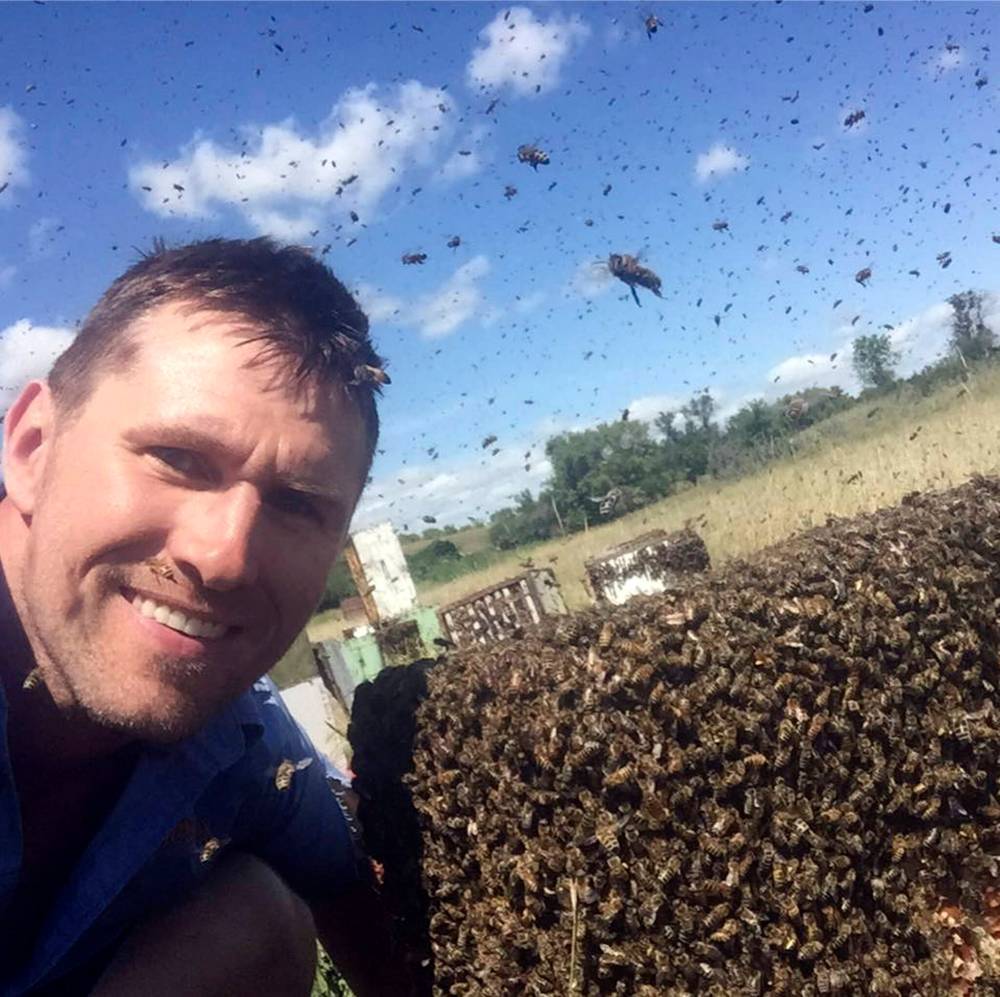
Michael Clark said more should be done to crack down on adulterated honey being imported into Canada, because it hurts local beekeepers. (Supplied)
The motion was passed at KAP’s advisory council meeting on Nov. 10.
Jill Verwey, KAP president, told the Sun it’s a matter of protecting locals.
“When adulterated honey enters Canada, it undermines consumer confidence, drives down prices and threatens the livelihoods of producers,” she said in an emailed statement. “Manitoba beekeepers work hard to produce high-quality honey, and they deserve a level playing field.
“We need stronger inspection and enforcement measures to protect the integrity of our honey supply.”
KAP will write a joint letter advocating for the enforcement in partnership with other agricultural groups.
Mike Clark, a director of the Manitoba Beekeepers’ Association, who brought the resolution to KAP, said one of the big issues with adulterated honey is that it devalues real honey.
“It lowers the cost all around,” he said. “It does greatly impact everyone within the honey industry.”
The cheaper, adulterated honey in Canada blocks business opportunities for genuine producers, he said.
“You call a packer, you call someone else who would normally buy honey, and they’re like, ‘Oh, that’s okay. I just bought honey for this lower price. I’ll buy your honey if you want to sell it at this price.’”
Clark pointed to industrial use, where companies seek to print “honey” as an ingredient on labels for products such as shampoo, cereal and lip balm. He said companies often look for the cheaper option in this scenario.
“They don’t really care if it is honey, or what it is. They want the cheapest product that they can call honey at a time, ” he said.
“Honey is such a unique and wonderful product that everyone wants to put (it on the label),” he said. “It’s a value-added product.”
Clark said Canada needs to take more action against “fraudulent” honey. He believes more needs to be done to heighten testing and enforcement.
“We would like to see, either the product is destroyed or they’re put on a watch list,” Clark said. “And there needs to be a heavier fine because right now, as it progresses, there’s nothing to stop people.”
Clark said he brought the issue to KAP because the organization can amplify the voice of beekeepers, which he said is often too small to be heard by government. The Manitoba Beekeepers’ Association has called adulterated honey an “existential threat” to Canadian beekeepers.

Keystone Agricultural Producers president Jill Verwey. (File photo)
The resolution brought by the Manitoba Beekeepers’ Association cited that over 133,000 kilograms of adulterated honey was taken out of the market in the 2024-25 fiscal year by the Canadian Food Inspection Agency. A rate of about 23 per cent adulteration was discovered in imports, it said.
The CFIA has stated that over 150,000 kg of food was prevented from being sold that year. Fruit juice, fish, olive oil, rice porridge and oat cakes made up the rest of the “misrepresented” food. The items “were either removed from Canada, voluntarily destroyed or relabelled before sale,” CFIA wrote.
Clark said he believes adulterated honey should not be allowed to be relablled as a different product and sold after it was caught by the CFIA.
The CFIA told the Sun last week in an emailed statement that it takes action against honey adulteration and knows that the situation impacts honey producers.
It did not comment on the specific motions raised at KAP.
“The Canadian Food Inspection Agency (CFIA) recognizes that honey adulteration and other forms of food fraud can have economic impacts on legitimate producers by creating unfair market conditions and undermining consumer confidence in the marketplace,” a spokesperson wrote. “The CFIA conducts targeted inspections, marketplace monitoring, and laboratory testing of consumer packaged honey as well as bulk honey going for further processing to identify non‑compliant products.”
The agency’s existing penalties for adulterated honey include product detention, disposal, orders to remove from Canada, administrative monetary penalties, recommendation for prosecution and the ability to suspend and cancel food business licenses, the spokesperson said.
The agency plans to continue its efforts to block adulterated honey sales in the country, the spokesperson said.
“The CFIA will continue to monitor the Canadian marketplace and trading patterns that may increase the risk of honey adulteration, and carry out inspections, sampling and compliance and enforcement actions to address this risk.”
CFIA’s enforcement against adulterated honey takes into consideration the harm caused by the offence, the compliance history of the party and whether there was intent to violate the federal requirements.
Bee Maid, a co-operative of Canadian beekeepers, did not respond before deadline last week when asked about the resolution to increase enforcement against adulterated honey imports.
» cmcdowell@brandonsun.com