
Hanover shows vision with smart glasses ban
Advertisement
Read this article for free:
or
Already have an account? Log in here »
We need your support!
Local journalism needs your support!
As we navigate through unprecedented times, our journalists are working harder than ever to bring you the latest local updates to keep you safe and informed.
Now, more than ever, we need your support.
Starting at $15.99 plus taxes every four weeks you can access your Brandon Sun online and full access to all content as it appears on our website.
Subscribe Nowor call circulation directly at (204) 727-0527.
Your pledge helps to ensure we provide the news that matters most to your community!
To continue reading, please subscribe:
Add Brandon Sun access to your Free Press subscription for only an additional
$1 for the first 4 weeks*
- Enjoy unlimited reading on brandonsun.com
- Read the Brandon Sun E-Edition, our digital replica newspaper
*Your next Free Press subscription payment will increase by $1.00 and you will be charged $20.95 plus GST for four weeks. After four weeks, your payment will increase to $24.95 plus GST every four weeks.
Read unlimited articles for free today:
or
Already have an account? Log in here »
History is filled with instances in which the education system has been forced — in many cases, reluctantly — to adapt to, incorporate and eventually embrace new developments in equipment and technology.
The fundamental task of writing evolved as quill and inkwell were replaced by the fountain pen and later the newfangled ballpoint model; in time, pen-and-paper writing gave way to keyboarding and computer screens.
Primitive arithmetical tools and techniques such as the abacus, slide rule and rote memorization of “times” tables were rendered irrelevant by the arrival of electronic calculators capable of handling complex mathematical functions.
Library shelves filled with reference books and periodically updated encyclopedia collections became a thing of the dusty past as online search engines and reference sites made access to seemingly limitless research materials as simple as Googling a key word or phrase.
With each new development, those entrusted with teaching our children have had to absorb, assess and adapt, always with an eye to what best serves the overall mission of educating young people in a manner that is effective, supportive and, above all else, safe.
Sometimes, in the era of instant online access to everything from information to social-media abuse, technological developments are at odds with the pursuit of educational enhancement.
In recent years, many school divisions have taken steps to limit the use of smartphones in educational spaces, citing the need to protect privacy and minimize distractions during school hours.
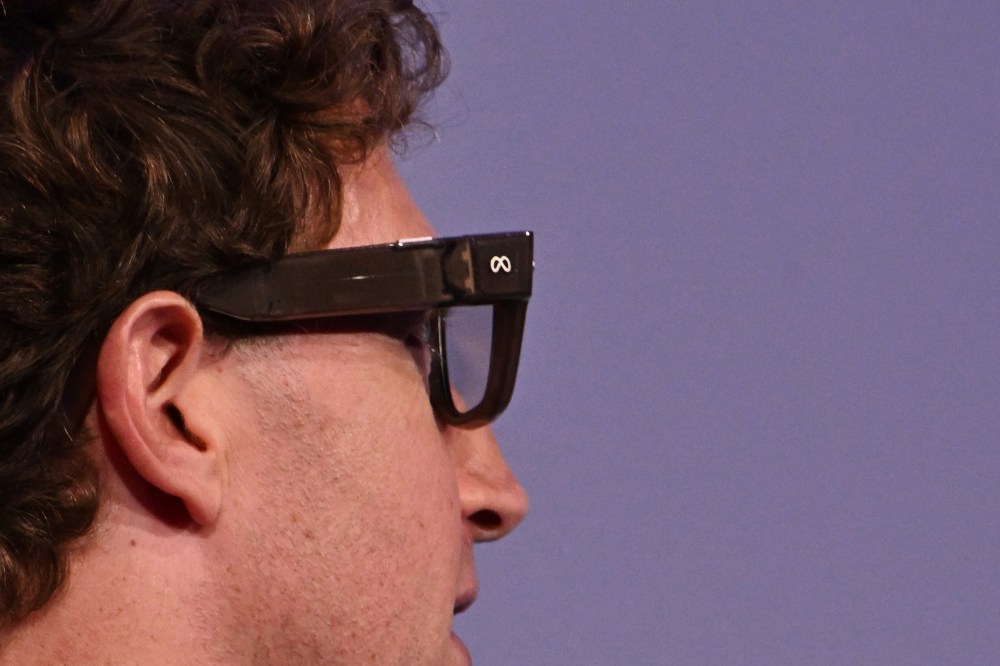
The recent arrival of so-called “smart glasses” has created a whole new set of concerns. The tech-enhanced eyewear looks very much like ordinary spectacles, but the glasses are outfitted with cleverly concealed cameras and audio equipment that allow the wearer to surreptitiously record anything in view and, by employing the glasses’ built-in artificial intelligence (AI), gain immediate access to voluminous information about whatever is being observed.
Smart glasses can also be capable of livestreaming, internet connectivity and facial recognition.
The technology is awe-inspiring in terms of the depth and breadth of what can be made available to the user at the tap of a finger and the quiet issuance of a voice command. But the potential ramifications of all that capability have prompted many school authorities, including some in Manitoba, to ban smart glasses from schools altogether.
It’s the right thing to do.
The Hanover School Division, which oversees schools in the Steinbach area, imposed a smart-glasses ban that applies “in classrooms, hallways, washrooms, change rooms, meetings and other spaces where we learn and work,” citing the need to “help protect the privacy of students and staff while supporting a focused and respectful learning environment.”
On the other side of the world, the educational authority in Western Australia has implemented a similar prohibition, outlining risks related to “student and staff privacy, child safety and well-being, unauthorized recording, photography or dissemination of information, exam and assessment integrity, cyber-security and information security, and disruption to teaching learning and school operations.”
With this relatively new technology destined to become more affordable, more advanced and more widely used, it’s inevitable that more school divisions will impose restrictions and provincial and federal lawmakers will consider broader legislation aimed at limiting or prohibiting smart glasses in educational settings.
There will undoubtedly be exceptions, such as in cases of visual impairment or linguistic barriers, when the latest high-tech gadgetry can serve a useful (but necessarily limited) purpose. But in overall terms, surely anyone can see — even without donning a pair of smart glasses — that the safety and security of students and the educational experience must be given absolute priority in our schools.
» Winnipeg Free Press