
Conservatives want MPs to vote on government’s plan for permanent residents
Advertisement
Read this article for free:
or
Already have an account? Log in here »
We need your support!
Local journalism needs your support!
As we navigate through unprecedented times, our journalists are working harder than ever to bring you the latest local updates to keep you safe and informed.
Now, more than ever, we need your support.
Starting at $15.99 plus taxes every four weeks you can access your Brandon Sun online and full access to all content as it appears on our website.
Subscribe Nowor call circulation directly at (204) 727-0527.
Your pledge helps to ensure we provide the news that matters most to your community!
To continue reading, please subscribe:
Add Brandon Sun access to your Free Press subscription for only an additional
$1 for the first 4 weeks*
- Enjoy unlimited reading on brandonsun.com
- Read the Brandon Sun E-Edition, our digital replica newspaper
*Your next Free Press subscription payment will increase by $1.00 and you will be charged $20.95 plus GST for four weeks. After four weeks, your payment will increase to $24.95 plus GST every four weeks.
Read unlimited articles for free today:
or
Already have an account? Log in here »
OTTAWA – The Conservatives plan to introduce a motion Monday calling on the House of Commons to reject the increase in permanent residents outlined in the government’s immigration plan, with a vote expected later this week.
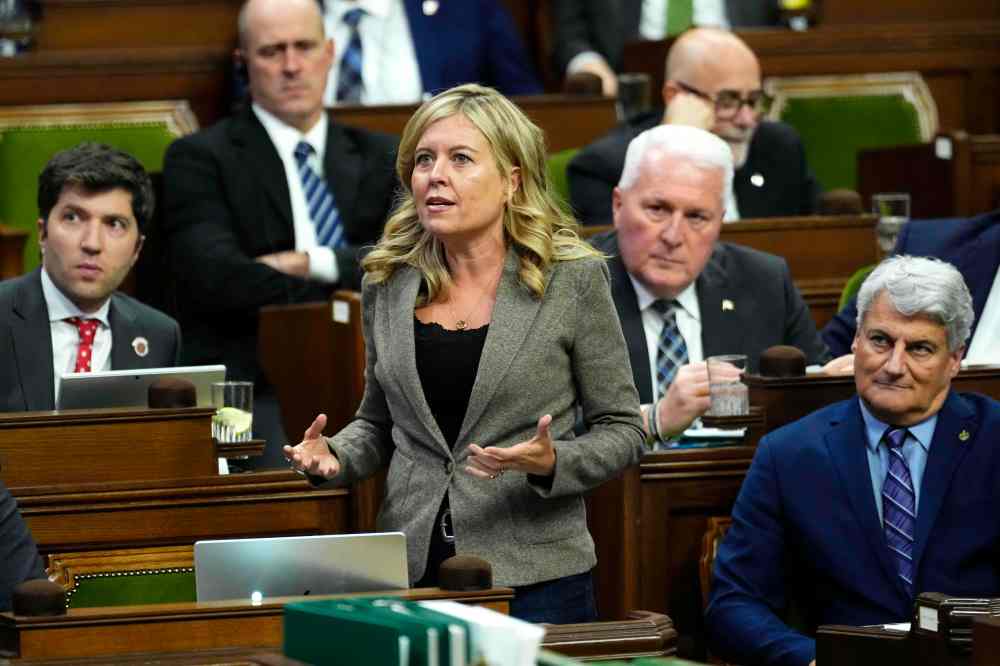
Immigration critic Michelle Rempel Garner told a Sunday news conference the plan to admit about 662,000 permanent residents next year is not sustainable due to unemployment, the cost of housing and availability of health care.
“We would love to see the Liberal backbench vote in favour of this motion. We need to take a pause. We need to bring down immigration levels and address these serious social infrastructure deficits so that everybody can succeed,” Rempel Garner said.
The government’s plan includes a broad target of 380,000 new permanent residents next year, plus a “one-time” plan to grant permanent residency to up to 200,000 additional people.
That 200,000 figure is split between 100,000 new permanent residents selected through provincial input and 100,000 people chosen from humanitarian and compassionate immigration streams — including about 50,000 Ukrainians and former Hong Kong residents who are already in Canada under special programs.
Rempel Garner says the government could still grant permanent residency to people from Ukraine and Hong Kong without increasing the overall number.
The government also plans to introduce 82,000 more permanent residents through a separate one-time program that started this year for protected individuals already in Canada and some temporary workers. This two-year plan includes 115,000 protected persons and around 33,000 temporary workers.
The government says the addition of 380,000 permanent residents through 2029 makes the system more predictable. It also says about half of the annual admissions are expected to be people already here on temporary visas.
Immigration Minister Lena Diab has defended the one-time plan for 200,000 additional permanent residents. She said the new permanent residents are largely people who are already here, so they won’t be imposing any new strains on the housing market or social infrastructure.
This report by The Canadian Press was first published Nov. 23, 2026.