
Oil and gas drillers optimistic heading into 2027, but warn of labour shortages
Advertisement
Read this article for free:
or
Already have an account? Log in here »
We need your support!
Local journalism needs your support!
As we navigate through unprecedented times, our journalists are working harder than ever to bring you the latest local updates to keep you safe and informed.
Now, more than ever, we need your support.
Starting at $15.99 plus taxes every four weeks you can access your Brandon Sun online and full access to all content as it appears on our website.
Subscribe Nowor call circulation directly at (204) 727-0527.
Your pledge helps to ensure we provide the news that matters most to your community!
To continue reading, please subscribe:
Add Brandon Sun access to your Free Press subscription for only an additional
$1 for the first 4 weeks*
- Enjoy unlimited reading on brandonsun.com
- Read the Brandon Sun E-Edition, our digital replica newspaper
*Your next Free Press subscription payment will increase by $1.00 and you will be charged $20.95 plus GST for four weeks. After four weeks, your payment will increase to $24.95 plus GST every four weeks.
Read unlimited articles for free today:
or
Already have an account? Log in here »
CALGARY – Improving market conditions and a more supportive political climate are expected to bolster Canadian oil and gas drilling activity next year, but labour shortfalls could threaten that momentum, trade group Enserva said in its annual state-of-the-industry report.
Total wells drilled across British Columbia, Alberta and Saskatchewan are expected to come in at 5,296 next year, about a four per cent increase from this year’s projected levels, Enserva said Monday.
After two years of declines in natural gas drilling, Enserva is expecting a seven per cent increase next year, and is calling for continued strength as new liquefied natural gas projects advance. Conventional oil is expected to see a four per cent uptick next year amid continued high commodity prices. Enserva is calling for a modest two per cent increase in oilsands drilling next year, but sees longer term growth materializing thanks to progress on the proposed Pacific Link pipeline to southern B.C. and environmental policy reforms.
“For the first time in years, there appears to be significant upside potential for the energy services sector over the long term. The sector stands to benefit from substantial drilling activity should many of the proposed LNG, data centre and pipeline projects advance,” the report said.
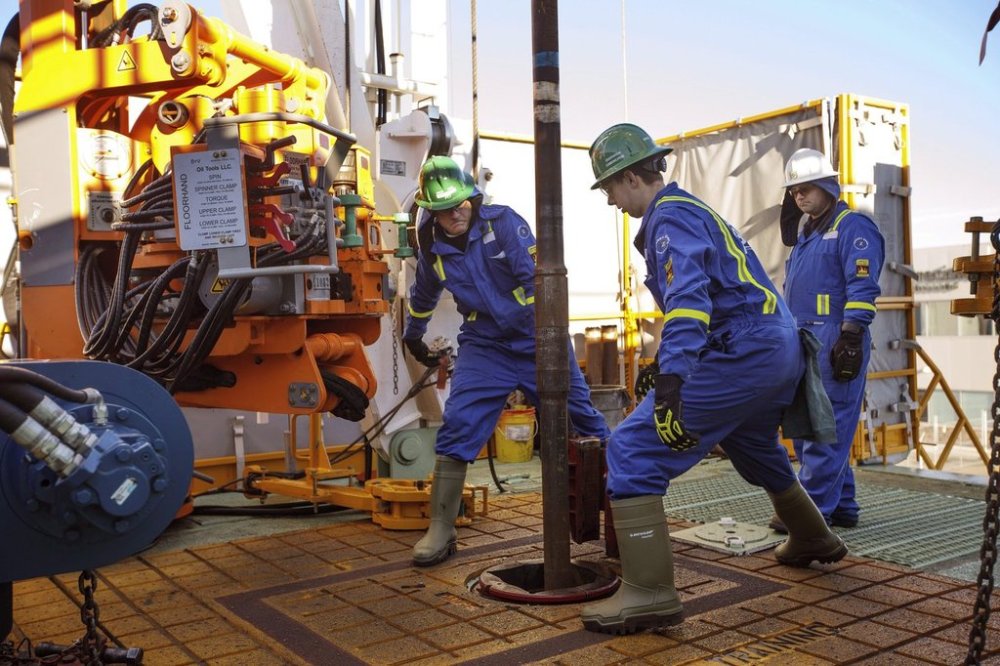
But it flagged competition for workers as a major challenge at a time when artificial intelligence data centres and major infrastructure projects draw from the same talent pool. Citing data from Energy Safety Canada, the report says the energy service sector will create an additional 11,710 jobs by 2035, and that shortages could arise as early as next year. There has already been upward pressure on wages, it said.
In a panel discussion at the report’s launch event on Monday, Bradley Fedora, president and CEO of Trican Well Service Ltd., said the prospect of “hyperinflation” in the cost of labour and materials is what scares him most. Currently, the crunch is most pronounced for drivers and mechanics, he said.
The key is investing in training early.
“You’re going to have to create a pathway for 16 year olds to say, ‘Hey, look, this industry is a career,'” he said.
It admitted it’s not easy to recruit.
“You’re away from home. It’s going to be a dirty, cold, muddy job and that’s not going to change.”
Thomas Alford, president of completion and production services at Precision Drilling, told reporters at the event that it can take up to eight years to train up a competent drill rig staffer.
“In order to do that, they need consistency at work. And certainly over the last decade that has been there.”
Gurpreet Lail, Enserva’s president and CEO, said data centres in Alberta and Saskatchewan, nuclear projects in Ontario, pipeline construction in B.C. are all competing for the same talent. Data centre developers like Meta have been offering big paycheques to tradespeople and perks that have until now been “unheard of” among Canadian businesses, she added.
“So I think there’s a lot to be done within our sector in order to attract that same talent and keep our talent.”
This report by The Canadian Press was first published Nov. 23, 2026.
Companies in this story: (TSX:PD) (TSX:TCW)