
Transport minister defends new land seizure powers proposed for high-speed rail
Advertisement
Read this article for free:
or
Already have an account? Log in here »
We need your support!
Local journalism needs your support!
As we navigate through unprecedented times, our journalists are working harder than ever to bring you the latest local updates to keep you safe and informed.
Now, more than ever, we need your support.
Starting at $15.99 plus taxes every four weeks you can access your Brandon Sun online and full access to all content as it appears on our website.
Subscribe Nowor call circulation directly at (204) 727-0527.
Your pledge helps to ensure we provide the news that matters most to your community!
To continue reading, please subscribe:
Add Brandon Sun access to your Free Press subscription for only an additional
$1 for the first 4 weeks*
- Enjoy unlimited reading on brandonsun.com
- Read the Brandon Sun E-Edition, our digital replica newspaper
*Your next Free Press subscription payment will increase by $1.00 and you will be charged $20.95 plus GST for four weeks. After four weeks, your payment will increase to $24.95 plus GST every four weeks.
Read unlimited articles for free today:
or
Already have an account? Log in here »
Transport Minister Steven MacKinnon is pushing back against criticism of new land seizure powers proposed for a high-speed rail project between Toronto and Quebec City.
MacKinnon says the enhanced expropriation abilities detailed in draft legislation would allow Ottawa to fast-track steps that could otherwise become bogged down for years and insists that “there is no removal of due process.”
The comments comes after the federal government included in a 519-page procedural motion on Friday measures that would expand its power to lock down property rights along the corridor, such as barring sale or work on a given lot for years.
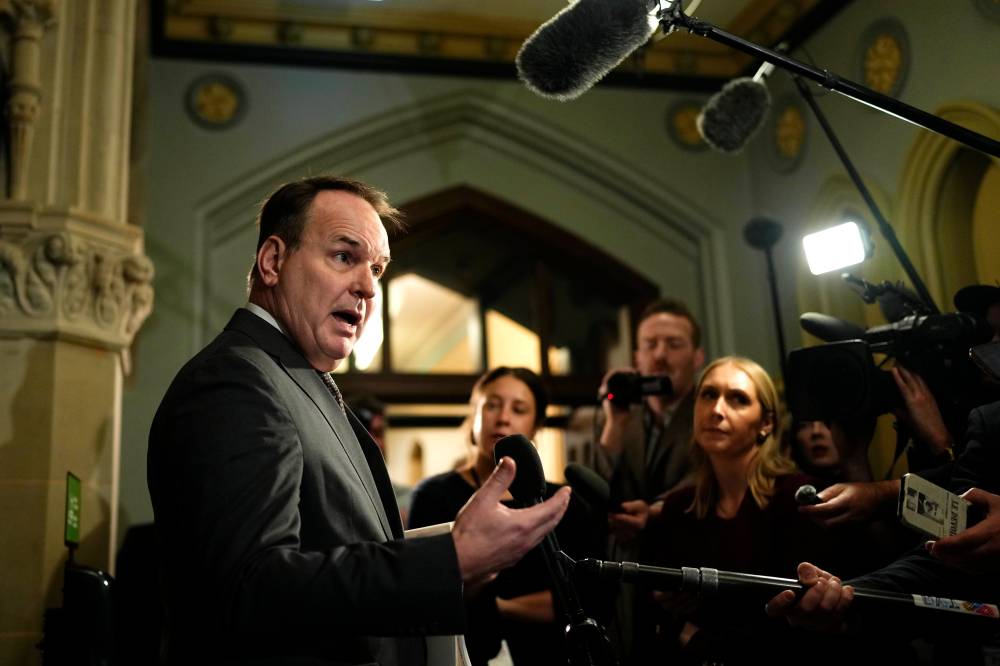
The move builds on a law passed in June that enabled the government to expropriate land without public hearings, among other reforms.
Ontario Conservative MP Michael Barrett says the latest changes would replace the existing Expropriation Act with a separate regime for high-speed rail, compounding concerns about cost and disruption to rural communities in eastern Ontario and Quebec.
The high-speed rail project would see trains running between the two provincial capitals at 300 kilometres per hour at a projected cost of between $60 billion and $90 billion, with work set to start on the Montreal-Ottawa leg by 2030.
This report by The Canadian Press was first published Nov. 24, 2026.