
McGuinty says he can’t explain Pentagon’s criticism of Canada’s defence spending
Advertisement
Read this article for free:
or
Already have an account? Log in here »
We need your support!
Local journalism needs your support!
As we navigate through unprecedented times, our journalists are working harder than ever to bring you the latest local updates to keep you safe and informed.
Now, more than ever, we need your support.
Starting at $15.99 plus taxes every four weeks you can access your Brandon Sun online and full access to all content as it appears on our website.
Subscribe Nowor call circulation directly at (204) 727-0527.
Your pledge helps to ensure we provide the news that matters most to your community!
To continue reading, please subscribe:
Add Brandon Sun access to your Free Press subscription for only an additional
$1 for the first 4 weeks*
- Enjoy unlimited reading on brandonsun.com
- Read the Brandon Sun E-Edition, our digital replica newspaper
*Your next Free Press subscription payment will increase by $1.00 and you will be charged $20.95 plus GST for four weeks. After four weeks, your payment will increase to $24.95 plus GST every four weeks.
Read unlimited articles for free today:
or
Already have an account? Log in here »
OTTAWA – Defence Minister David McGuinty says he can’t “divine” the thinking behind the Pentagon’s recent criticism of Canada’s defence spending.
The Pentagon released what it called a “fact sheet” on Monday which said Canada’s defence spending has limited the country’s ability to contribute to the protection of North America.
U.S. Defense Secretary Pete Hegseth last week issued a classified memo imposing restrictions on military co-operation with Canada around think-tanks and socializing.
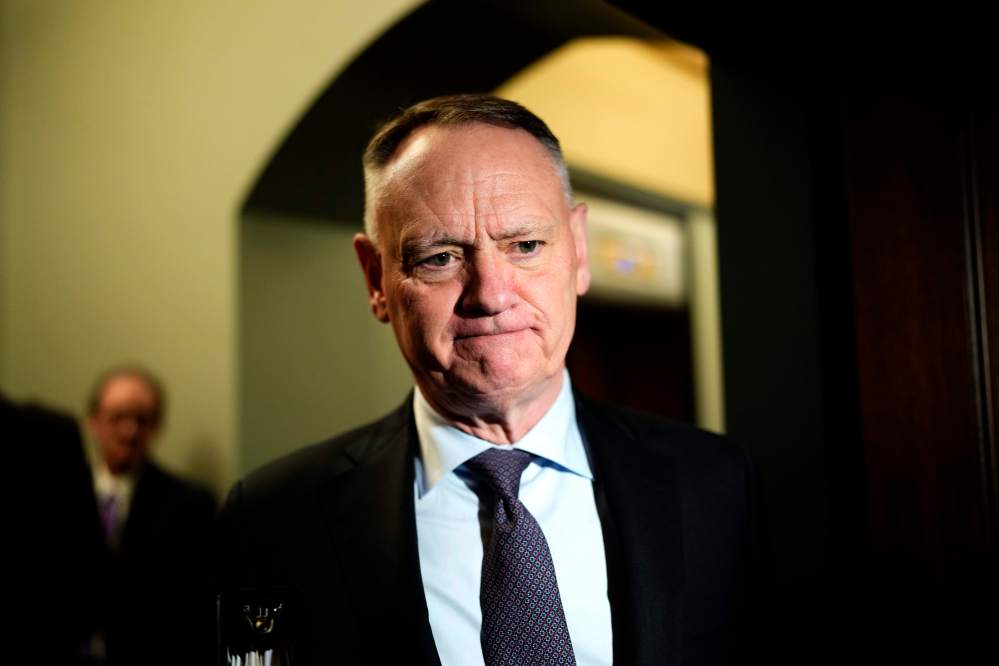
McGuinty told reporters in Ottawa Tuesday he can’t explain the messaging from Hegseth and the Pentagon.
He said Canada’s co-operation with the United States, whether directly or through NATO or Norad, has not changed.
“Canada is going to continue to execute. I have to say we’re so busy executing on plans, acquisitions, rebuilding 33 bases, improving our recruitment, our retention, fixing a cadet challenge yesterday. That’s what we’re focused on,” he said.
Last March, Prime Minister Mark Carney said Canada had met for the first time the NATO requirement to spend the equivalent of two per cent of GDP on defence. The target was set in 2014 and Canada was among the NATO members which had never hit it.
When NATO members met last year in The Hague, they agreed to increase their defence spending to the equivalent of five per cent of GDP by 2035 — 3.5 per cent on core military and defence and 1.5 per cent on broader security and defence-adjacent investments that were loosely defined.
When he was pressed by reporters on whether Canada would meet that five per cent commitment, McGuinty said Canada has a path to spending the equivalent of four per cent of GDP on defence by 2030.
“We are on track,” McGuinty said.
When he was asked how the U.S. reacted to Canada’s four-per-cent plan, McGuinty responded, “Canada is a sovereign nation. I’ll be very direct. We don’t report to the United States.”
The recent federal budget charted a course to meeting spending targets by 2030 but did not look at spending beyond that year. That plan includes spending 2.6 per cent of GDP, or about $99 billion, on core military, including ammunition and soldiers’ salaries.
This report by The Canadian Press was first published Nov. 24, 2026.
— with files from Kyle Duggan