
B.C. court rules against supplement makers in class action over false labelling
Advertisement
Read this article for free:
or
Already have an account? Log in here »
We need your support!
Local journalism needs your support!
As we navigate through unprecedented times, our journalists are working harder than ever to bring you the latest local updates to keep you safe and informed.
Now, more than ever, we need your support.
Starting at $15.99 plus taxes every four weeks you can access your Brandon Sun online and full access to all content as it appears on our website.
Subscribe Nowor call circulation directly at (204) 727-0527.
Your pledge helps to ensure we provide the news that matters most to your community!
To continue reading, please subscribe:
Add Brandon Sun access to your Free Press subscription for only an additional
$1 for the first 4 weeks*
- Enjoy unlimited reading on brandonsun.com
- Read the Brandon Sun E-Edition, our digital replica newspaper
*Your next Free Press subscription payment will increase by $1.00 and you will be charged $20.95 plus GST for four weeks. After four weeks, your payment will increase to $24.95 plus GST every four weeks.
Read unlimited articles for free today:
or
Already have an account? Log in here »
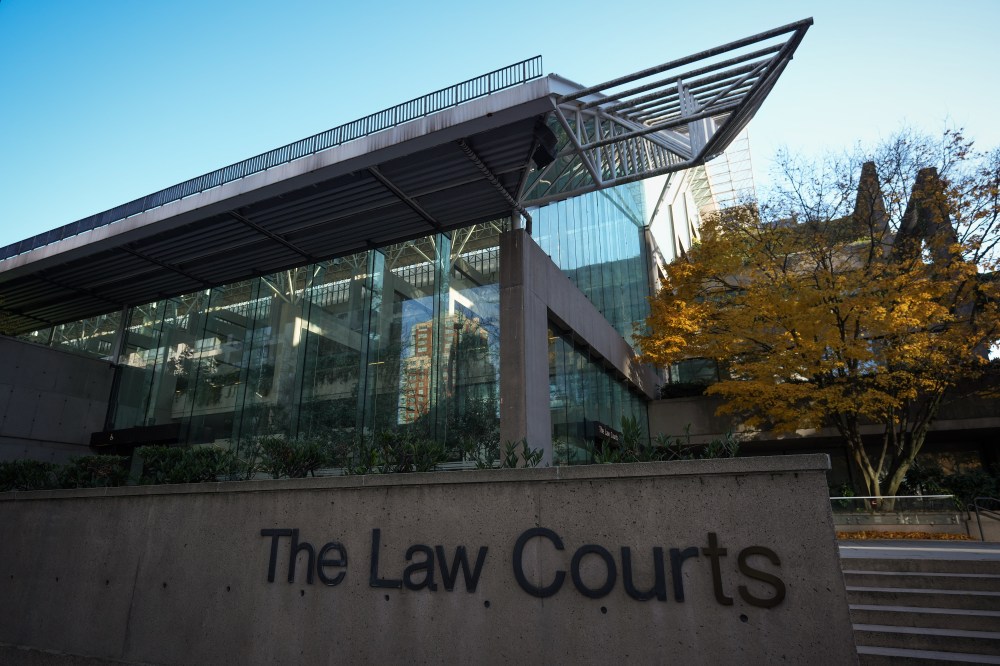
VANCOUVER – Lawyers representing plaintiffs in a class-action suit involving a falsely labelled health supplement say they have received a favourable ruling from the Supreme Court of British Columbia.
CFM Lawyers, one of two firms representing the plaintiffs, says the court has found products labelled as glucosamine sulphate made by Jamieson Laboratories, WN Pharmaceuticals and Natural Factors Nutritional Products did not contain the chemical compound.
The ruling issued by Justice Ward K. Branch on Oct. 26 says the supplements instead contained a dry, physical mixture of glucosamine hydrochloride and potassium sulphate, which did not undergo a chemical reaction to form glucosamine sulphate.
The defendant companies did not immediately respond to a request for comment, although CFM says they have appealed the decision in B.C.’s Court of Appeal.
The class-action lawsuit began in August 2019 and was certified by Branch in 2021, with the class listed as all Canadians who bought the product on or after May 6, 2004.
The court decision says the issue was first identified in a published article in 2012, with Health Canada then responding to a public inquiry from a whistleblower who was a contractor with one of the defendant companies in 2013.
That complaint was closed in 2014 at the request of the whistleblower.
Court documents show that the defendants accepted that their products were a physical mixture instead of one that was chemically bonded to form the compound, but argued that the mixture could be sold as glucosamine sulphate in “the broader regulatory context, history, industry practices and Health Canada’s conduct.”
The defendants also argued that the sales of a physical mixture “must be acceptable” because there has been no evidence of a chemically bonded form of glucosamine sulphate ever observed or produced in Canada.
Branch dismissed those arguments in the decision.
“You cannot sell horses with affixed narwhal tusks as unicorns, even if unicorns do not exist, and even if the national unicorn regulator has not prevented you from doing so,” the judge said in the decision.
“It does not matter (at this stage) whether the product being sold as a rose smells as sweet — if you are selling a rose, the consumer is entitled to a rose, no matter how sweet what you are selling smells.”
The decision comes after a 32-day trial held between 2025 and 2026, and no claim process has been established in the case.
This report by The Canadian Press was first published Nov. 25, 2026.