
US military says it disabled another ship that tried to breach naval blockade on Iranian ports
Advertisement
Read this article for free:
or
Already have an account? Log in here »
We need your support!
Local journalism needs your support!
As we navigate through unprecedented times, our journalists are working harder than ever to bring you the latest local updates to keep you safe and informed.
Now, more than ever, we need your support.
Starting at $15.99 plus taxes every four weeks you can access your Brandon Sun online and full access to all content as it appears on our website.
Subscribe Nowor call circulation directly at (204) 727-0527.
Your pledge helps to ensure we provide the news that matters most to your community!
To continue reading, please subscribe:
Add Brandon Sun access to your Free Press subscription for only an additional
$1 for the first 4 weeks*
- Enjoy unlimited reading on brandonsun.com
- Read the Brandon Sun E-Edition, our digital replica newspaper
*Your next Free Press subscription payment will increase by $1.00 and you will be charged $20.95 plus GST for four weeks. After four weeks, your payment will increase to $24.95 plus GST every four weeks.
Read unlimited articles for free today:
or
Already have an account? Log in here »
WASHINGTON (AP) — The U.S. military has disabled a merchant ship in the Gulf of Oman that was trying to run its blockade of Iranian ports, U.S. Central Command said Friday in a statement.
According to the statement, the military disabled the Palau-flagged M/V Pacific Archer on Thursday by firing “precision munitions” at the ship’s stern from a military aircraft.
“The ship’s propulsion was ultimately disabled and the civilian crew was unharmed,” the statement added.
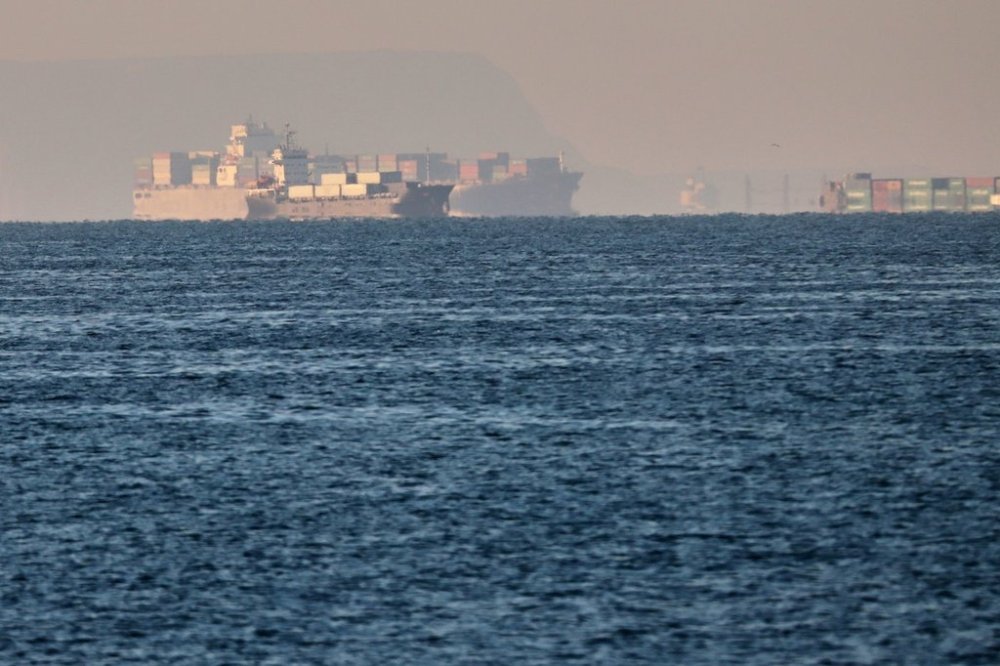
According to U.S. Central Command, the Pacific Archer left the Iranian port of Bandar Abbas before it attempted to run the blockade. Ship tracking websites list the ship’s destination as Singapore.
The U.S. has been blockading Iranian posts since April, though the blockade was lifted in the summer during peace talks with Tehran and resumed in July. Since then, the U.S. military says it has redirected 158 merchant ships and disabling those that refuse to comply.
The Pacific Archer is at least the 15th disclosed vessel to be disabled by the U.S. military since the blockade began in the spring and the sixth since it resumed this summer. The previous vessel was disabled on Nov. 7.
In June, the practice drew condemnation when a military strike on a Guinea-Bissau-flagged tanker attempting to evade the American blockade resulted in three deaths.
Three Indian sailors were killed when American forces struck the Palau-flagged M/T Settebello, officials in India said at the time. The leader of the International Maritime Organization, a United Nations agency, condemned the attack.
U.S. Central Command has consistently said that American forces issue multiple warnings before firing on the merchant ships.
Iran’s Revolutionary Guard said on Friday that two tankers attempted to transit the Strait of Hormuz through an “unauthorized” route, claiming that one of them struck a naval mine while the other was forced to turn back.
The claims could not be independently verified.
In a statement carried by Iran’s state broadcaster, the country’s Revolutionary Guard also said the number of oil tankers attempting to transit through unauthorized routes in the critical waterway has sharply decreased in recent days.
Iran continues to warn ships not to pass through the strategic shipping lane without approval from Tehran.
Oil flows in the first two weeks of November fell by around 20% to around 13 million barrels per day compared with October, when exports roughly equaled the prewar amounts of 15-16 million barrels per day, according to Rystad Energy.
Reasons for the November decline include Iranian attacks that discourage tankers from attempting the strait crossing and reduced flows through a key Saudi pipeline to the Red Sea port of Yanbu, which has also been attacked several times.
A report by U.N. Trade and Development finds that disruptions in the Strait of Hormuz, the Red Sea, the Black Sea and the Panama Canal are lengthening voyages, raising fuel costs, driving port congestion and adding to uncertainty. Alternative ports, inland transport and logistics arrangements have kept trade moving, but at a higher cost.
___
Toqa Ezzidin in Cairo contributed.