
Kinew disappointed in Supreme Court decision on Quebec’s secularism law
Advertisement
Read this article for free:
or
Already have an account? Log in here »
We need your support!
Local journalism needs your support!
As we navigate through unprecedented times, our journalists are working harder than ever to bring you the latest local updates to keep you safe and informed.
Now, more than ever, we need your support.
Starting at $15.99 plus taxes every four weeks you can access your Brandon Sun online and full access to all content as it appears on our website.
Subscribe Nowor call circulation directly at (204) 727-0527.
Your pledge helps to ensure we provide the news that matters most to your community!
To continue reading, please subscribe:
Add Brandon Sun access to your Free Press subscription for only an additional
$1 for the first 4 weeks*
- Enjoy unlimited reading on brandonsun.com
- Read the Brandon Sun E-Edition, our digital replica newspaper
*Your next Free Press subscription payment will increase by $1.00 and you will be charged $20.95 plus GST for four weeks. After four weeks, your payment will increase to $24.95 plus GST every four weeks.
Read unlimited articles for free today:
or
Already have an account? Log in here »
WINNIPEG — Premier Wab Kinew has called the Supreme Court ruling on Quebec’s secularism law “bittersweet.”
Kinew said he’s disappointed the high court allowed Bill 21 to stand.
“Let’s just be honest here, this was designed to discriminate against Muslims primarily, but also Sikhs and other religious minorities,” the premier said.
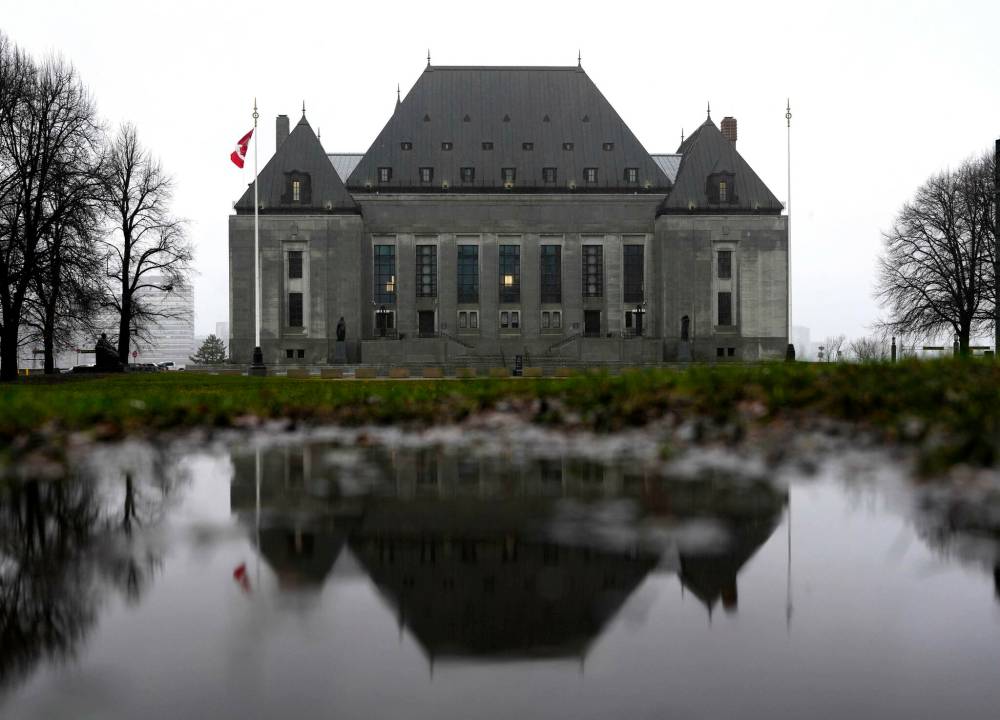
The Supreme Court of Canada building in seen in Ottawa on Friday. The court ruled governments can use the so-called notwithstanding clause in the Canadian Charter of Rights and Freedoms. (The Canadian Press)
The court ruled governments can use the so-called notwithstanding clause in the Canadian Charter of Rights and Freedoms — as Quebec did when it introduced Bill 21 to ban public servants in positions of authority from wearing religious symbols while on the job.
A provision in section 33 of the Charter shields any law introduced under the notwithstanding clause from being reviewed or struck down by a court.
Manitoba was one of five provinces that had intervener status in the case.
The province argued the Charter “should be interpreted in a manner that best promotes the role and responsibility of all branches of government to secure the rights and freedoms of persons in Canada.”
Kinew said there’s a silver lining to the ruling.
“We went to the Supreme Court to argue that even if the notwithstanding clause can be used, that judges still should be able to weigh in if a province’s laws would otherwise violate people’s charters rights.”
“The notwithstanding clause is still going to stand, but at least now, after this decision today, because of our intervention at the Supreme Court, Canadians who are being discriminated against have a tool,” he said.
The Supreme Court ruled “it is not for the courts to substantively review the legitimacy of the legislative policy pursued by the legislative body or the appropriateness of invoking the notwithstanding clause.”
Manitoba passed legislation in June — the Constitutional Questions Amendment Act — that requires the provincial government to seek the Manitoba Court of Appeal’s opinion before it can invoke the notwithstanding clause to override fundamental human rights.
“Here in Manitoba, we will never use the notwithstanding clause,” Kinew said.
“Any future government that wants to use section 33 here in Manitoba will actually have to go to the court and get one of these non-binding rulings that the Supreme Court supported today.”
Kinew said the Canada he wants to live in has RCMP officers free to wear a turban, school teachers free to wear hijab, and Hutterite women able to wear head coverings.
“You should be able to wear a cross if you so choose. And yes, your premier should be able to have long hair,” said Kinew, who wears his in a bun.
“These are all cultural symbols that would be banned by Bill 21, which I think is legislated racism.”
He echoed former Tory premier Brian Pallister, who in 2019 invited Quebec professionals impacted by Bill 21 to move to Manitoba. At the time, Pallister launched a roughly $20,000 newspaper and digital ad campaign in Quebec — featuring “21 reasons” to move to Manitoba — and introduced a legislature resolution supporting religious freedom in response to Quebec’s secularism law.
“Any nurse, any doctor, any police officer who wants to come to come work in Manitoba, come on over,” Kinew said Friday.
He expressed concern about other provinces legislating discrimination.
“There’s a whole other phenomenon where some provincial governments are going even further, using section 33 to try and go after LGBT folks in our society, which again, I think is wrong.”
» Winnipeg Free Press