
Alberta, Saskatchewan urge Ottawa to approve gopher poison following rejection
Advertisement
Read this article for free:
or
Already have an account? Log in here »
We need your support!
Local journalism needs your support!
As we navigate through unprecedented times, our journalists are working harder than ever to bring you the latest local updates to keep you safe and informed.
Now, more than ever, we need your support.
Starting at $15.99 plus taxes every four weeks you can access your Brandon Sun online and full access to all content as it appears on our website.
Subscribe Nowor call circulation directly at (204) 727-0527.
Your pledge helps to ensure we provide the news that matters most to your community!
To continue reading, please subscribe:
Add Brandon Sun access to your Free Press subscription for only an additional
$1 for the first 4 weeks*
- Enjoy unlimited reading on brandonsun.com
- Read the Brandon Sun E-Edition, our digital replica newspaper
*Your next Free Press subscription payment will increase by $1.00 and you will be charged $20.95 plus GST for four weeks. After four weeks, your payment will increase to $24.95 plus GST every four weeks.
Read unlimited articles for free today:
or
Already have an account? Log in here »
REGINA – The Alberta and Saskatchewan governments are pushing Ottawa to lift a ban on an effective rodent poison as farmers warn of an increase in damaged crops and injuries to livestock.
The provinces said the Pest Management Regulatory Agency had rejected their proposal to allow the emergency use of two per cent liquid strychnine to control swelling populations of Richardson’s ground squirrels, commonly known as gophers.
The agency had banned strychnine two years ago, arguing that it poses risks to other wildlife species that consume poisoned carcasses.
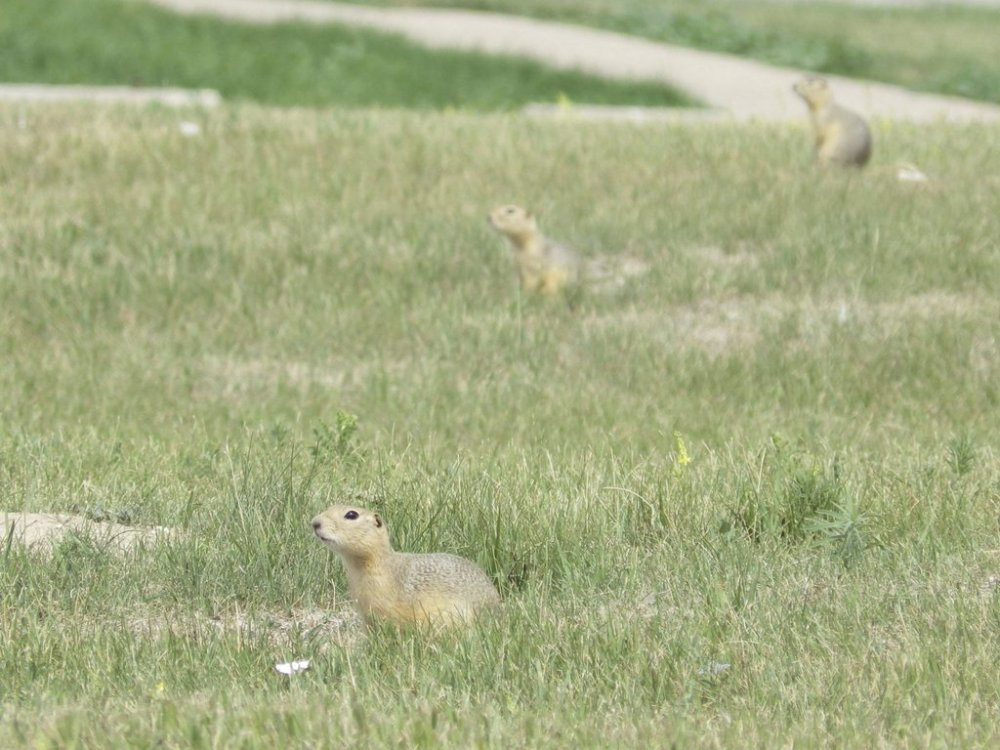
Don Connick, who farms in southwestern Saskatchewan, said he remembers seeing plenty of gopher mounds last summer protruding from his neighbour’s cropland.
“It looked like it had been shelled,” Connick said in a phone interview Tuesday from Gull Lake, 300 kilometres west of Regina.
Connick and other farmers say populations of gophers have grown significantly since the strychnine ban, resulting in more damaged crops and injured livestock that step into holes the rodents create.
“(Gophers) have reached epidemic proportions in lots of areas,” Connick said.
Aware of the issue, both Alberta and Saskatchewan requested the agency reconsider its position on the poison, asking it to approve two per cent liquid strychnine in emergency situations.
The agency denied the provinces’ proposal this week.
James Thorsteinson, Saskatchewan’s legislative secretary to the agriculture minister, said in an interview that gopher damage amounted to millions of dollars in losses this year.
“Every region of the province has areas that have tens of thousands of gophers. It’s crazy,” he said.
Bill Huber, the president of the Saskatchewan Association of Rural Municipalities, said the rodents thrive in drier conditions, noting some areas of Saskatchewan have experienced nearly a decade of drought.
“They’ve basically just cleaned hilltops off in whole fields where there’s hundreds and hundreds of acres of land,” he said.
Alberta Agriculture Minister RJ Sigurdson said in a statement he’s disappointed by the decision.
“The downstream effect will also contribute to the ongoing food affordability and security crisis we are facing in Canada,” he said.
When the ban was implemented in 2024, the agency noted species at risk to strychnine use were the swift fox and burrowing owl. It also had concerns over whether producers were administering the poison properly and regularly monitoring their fields for dead gophers.
Health Canada, which oversees the agency, said in a statement its concerns still stand.
It said while it weighed issues brought up by the agriculture sector, environmental and health safety requirements took priority.
“The environmental risks of strychnine, including secondary poisoning of non-target animals and species at risk, could not be mitigated to acceptable levels,” it said.
Thorsteinson said Saskatchewan and Alberta had proposed to the agency that producers would make narrower applications of the poison and undergo mandatory training, arguing this would have mitigated concerns.
But Health Canada said the proposal did not include new or effective measures.
It said there are other pest control products available, though farmers and Thorsteinson say they aren’t as effective as strychnine.
Alberta and Saskatchewan will continue to urge Ottawa to reconsider the decision, Thorsteinson said.
“We need to take a good economic look at this as well, not just a straight environmental (look),” he said.
Connick said he had been hopeful the agency would have accepted the provinces’ proposal.
He resorted to using other poisons or shooting gophers to control populations last year, he said.
“I am certainly not a big fan of putting out poisons like strychnine. I wish there was a viable alternative to it,” he said.
“I think we have to be cognizant that strychnine, when used as directed, is relatively safe.”
This report by The Canadian Press was first published Feb. 3, 2026.