
Canada’s agriculture sector divided on Mercosur free trade deal
Advertisement
Read this article for free:
or
Already have an account? Log in here »
We need your support!
Local journalism needs your support!
As we navigate through unprecedented times, our journalists are working harder than ever to bring you the latest local updates to keep you safe and informed.
Now, more than ever, we need your support.
Starting at $15.99 plus taxes every four weeks you can access your Brandon Sun online and full access to all content as it appears on our website.
Subscribe Nowor call circulation directly at (204) 727-0527.
Your pledge helps to ensure we provide the news that matters most to your community!
To continue reading, please subscribe:
Add Brandon Sun access to your Free Press subscription for only an additional
$1 for the first 4 weeks*
- Enjoy unlimited reading on brandonsun.com
- Read the Brandon Sun E-Edition, our digital replica newspaper
*Your next Free Press subscription payment will increase by $1.00 and you will be charged $20.95 plus GST for four weeks. After four weeks, your payment will increase to $24.95 plus GST every four weeks.
Read unlimited articles for free today:
or
Already have an account? Log in here »
OTTAWA – Industries in Canada’s agriculture sector are divided on whether a free trade deal with the Mercosur group would benefit the country as Canada and the South American trading bloc look to strike a deal by year’s end.
Representatives from the Canadian Cattle Youth Council gathered on Parliament Hill last month to warn that a free trade deal with Mercosur could jeopardize beef production in Canada and pose risks to food safety.
“The government itself warns that our food supply chains rely too heavily on foreign suppliers, and that Canada relies on imported beef to meet demand,” said Canadian Cattle Youth Council President Judson Christopherson. “You don’t fix that by making Canadians more reliant on food from abroad.”
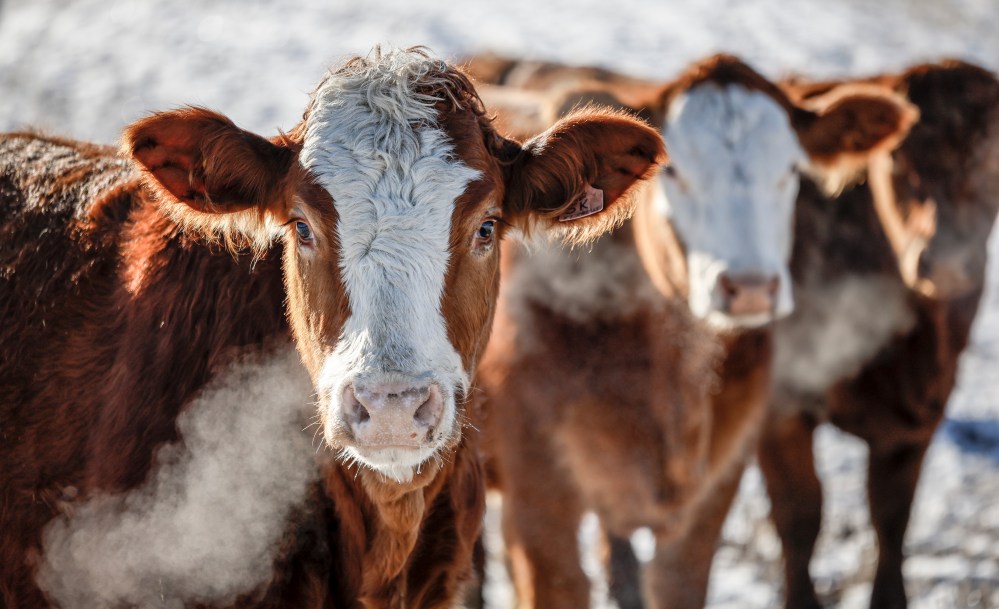
But Michael Bourque, president and CEO of Fertilizer Canada, said in a letter to Prime Minister Mark Carney earlier this year that a trade agreement with Mercosur is a chance for Canada to strengthen its position as a global supplier of crop nutrients.
He said potash is Canada’s largest export to Brazil and Canada must ensure its potash sector remains competitive.
“At a time when Canada is advancing trade diversification as a national priority, we must pursue opportunities that expand market access and support long-term economic growth,” said Bourque.
“Few opportunities align more closely with these objectives than a trade agreement with Mercosur, one of the world’s fastest-growing economic regions and home to the world’s fifth-largest economy.”
Bourque said the Mercosur bloc includes some of the world’s most productive and fastest-growing agricultural economies. As global demand for food continues to grow, he said, the region will play an increasingly important role in “feeding the world,” creating opportunities for Canadian suppliers of crop nutrients, agricultural technology and expertise.
“Fertilizer Canada strongly urges the Government of Canada to finalize and ratify a trade agreement that positions Canada to be a long-term partner in that growth,” he said.
Keith Currie, president of the Canadian Federation of Agriculture, said any Canada-Mercosur agreement must account for significant differences in production scale, cost structures, regulatory frameworks and market conditions.
Currie said while opportunities may exist in some sectors, the benefits for Canadian agriculture are likely to be uneven and it’s important that any deal protects Canadian farmers.
The Mercosur trading bloc includes Argentina, Brazil, Paraguay and Uruguay. In 2024, Canada’s merchandise trade with Mercosur totalled $15.8 billion, with Canada’s exports valued at $3.1 billion and imports valued at $12.8 billion.
International Trade Minister Maninder Sidhu has said the government is looking to sign three major trade deals before the end of the year — with Mercosur, the Association of Southeast Asian Nations and India.
Canada and Mercosur launched free trade negotiations in March 2018. Talks were paused for years due to the pandemic and only resumed in October 2025.
Brazil, which recently held a general election, is Mercosur’s co-ordinator for free trade negotiations with Canada.
This report by The Canadian Press was first published Nov. 12, 2026.