
Soaring house prices in Vancouver and Toronto unsustainable: Bank of Canada
Advertisement
Read this article for free:
or
Already have an account? Log in here »
We need your support!
Local journalism needs your support!
As we navigate through unprecedented times, our journalists are working harder than ever to bring you the latest local updates to keep you safe and informed.
Now, more than ever, we need your support.
Starting at $15.99 plus taxes every four weeks you can access your Brandon Sun online and full access to all content as it appears on our website.
Subscribe Nowor call circulation directly at (204) 727-0527.
Your pledge helps to ensure we provide the news that matters most to your community!
To continue reading, please subscribe:
Add Brandon Sun access to your Free Press subscription for only an additional
$1 for the first 4 weeks*
- Enjoy unlimited reading on brandonsun.com
- Read the Brandon Sun E-Edition, our digital replica newspaper
*Your next Free Press subscription payment will increase by $1.00 and you will be charged $20.95 plus GST for four weeks. After four weeks, your payment will increase to $24.95 plus GST every four weeks.
Read unlimited articles for free today:
or
Already have an account? Log in here »
Hey there, time traveller!
This article was published 09/06/2016 (3738 days ago), so information in it may no longer be current.
OTTAWA – The Bank of Canada delivered a warning Thursday that surging housing prices in the hot markets of Vancouver and Toronto are rising at an unsustainable clip.
Governor Stephen Poloz cautioned that those climbing real estate prices have outpaced local economic fundamentals like job creation, immigration and income growth.
The central bank’s decision to weigh in this week on what has been a long-running concern came after it saw growing evidence those markets were fuelled by “self-reinforcing” expectations among prospective buyers and lenders, Poloz said.
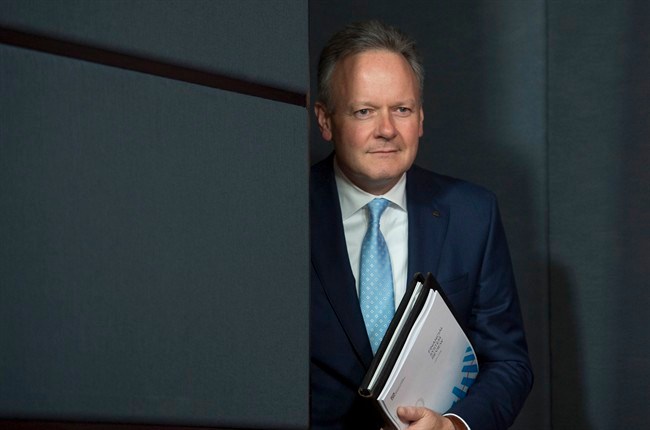
The bank’s concern is that people believe the price trajectory will continue to point skyward.
“You have to admit (there’s) the possibility that the price could actually decline in these circumstances,” Poloz told a news conference in Ottawa after the release of the bank’s semi-annual assessment on the state of Canada’s financial stability.
“But we’re not predicting that or anything.
“We’re just saying the risk that that could happen — whatever number it is — is growing as we sit here.”
The Bank of Canada’s document noted year-over-year house price growth in the greater Vancouver area hit 30 per cent last month, up from 15 per cent in December. In Toronto, the report said prices increased 15 per cent, compared to 10 per cent six months ago.
Vulnerabilities linked to greater imbalances in regional housing markets and the continued rise of household debt were higher than they were six months ago, the bank said in its latest financial system review.
While the probability of a trigger, such as a severe recession, remains low, the bank said the severity of such an event has increased since its December assessment.
Going forward, Poloz said the longer these risks prevail, the bigger impact they could have.
“It’s not as though there’s been some sudden change or anything like that, but all of the evidence continues to accumulate,” he said.
The central bank became the latest to voice concerns about real estate overvaluation in Canada.
Earlier this month, the Organization for Economic Co-operation and Development urged Ottawa to introduce new measures to reduce some of the risk associated with soaring home prices and household debt levels in Toronto and Vancouver.
In April, the Canada Mortgage and Housing Corp. said prices in several cities didn’t match with their economic fundamentals.
The central bank’s warning Thursday comes as the federal government faces pressure to address expanding household indebtedness and rising prices, particularly in Toronto and Vancouver.
On Wednesday, Finance Minister Bill Morneau said Ottawa was conducting an in-depth examination of real estate markets to determine what measures might be necessary to ensure Canadians can still afford to buy homes.
Morneau did not specify what sort of changes the government was considering or how soon it may introduce them.
Over the winter, he increased the minimum down payment for homes over $500,000 to 10 per cent from five per cent, a measure aimed specifically at cooling off the Toronto and Vancouver markets. It was one of several mortgage rule changes the government has made in recent years.
Asked about Ottawa’s rule tweaks, Poloz said he believes they have helped make the system more resilient.
“We can’t point to what the market would have been without those things,” he said.
“But we can say with a fair bit of certainty that all that sequence of changes, starting several years ago, has succeeded in adding more buffering to the system.”
Morneau added that Ottawa is also examining whether there is any evidence to support the notion held by some that foreign buyers are driving up home prices.
In its report Thursday, the Bank of Canada said foreign demand has contributed to price growth in Vancouver and Toronto, which in turn has boosted overall household indebtedness.
The bank noted, however, that it’s difficult to measure the impact of foreign investment on the housing market.
Carolyn Wilkins, the bank’s senior deputy governor, said Thursday that data on foreign investment in Canada’s housing sector is “particularly poor,” though some research has shown it is adding to market demand.
Wilkins also pointed to an unanswered question: if there’s an adverse shock, would foreign owners sell?
Overall, the bank said the level of risk to Canada’s financial system was largely unchanged from six months ago because the higher household vulnerabilities come with the backdrop of an ongoing economic recovery.
The report, which examines vulnerabilities and risks to the financial system, also highlighted other persistent concerns.
It pointed to the continued presence of fragile fixed-income market liquidity as a key vulnerability in the overall financial system, while it repeats the risks of a sharp increase in long-term interest rates, stress from emerging markets like China and prolonged weakness in commodity prices.
Follow @AndyBlatchford on Twitter.