
How risky is flying during the coronavirus pandemic?
Advertisement
Read this article for free:
or
Already have an account? Log in here »
We need your support!
Local journalism needs your support!
As we navigate through unprecedented times, our journalists are working harder than ever to bring you the latest local updates to keep you safe and informed.
Now, more than ever, we need your support.
Starting at $15.99 plus taxes every four weeks you can access your Brandon Sun online and full access to all content as it appears on our website.
Subscribe Nowor call circulation directly at (204) 727-0527.
Your pledge helps to ensure we provide the news that matters most to your community!
To continue reading, please subscribe:
Add Brandon Sun access to your Free Press subscription for only an additional
$1 for the first 4 weeks*
*Your next subscription payment will increase by $1.00 and you will be charged $20.00 plus GST for four weeks. After four weeks, your payment will increase to $24.00 plus GST every four weeks.
Read unlimited articles for free today:
or
Already have an account? Log in here »
Hey there, time traveller!
This article was published 30/06/2020 (2106 days ago), so information in it may no longer be current.
How risky is flying during the coronavirus pandemic?
Flying can increase your risk of exposure to infection, but airlines are taking some precautions and you can too.
Air travel means spending time in security lines and airport terminals, which puts you into close contact with other people. As travel slowly recovers, planes are becoming more crowded, which means you will likely sit close to other people, often for hours, which raises your risk.
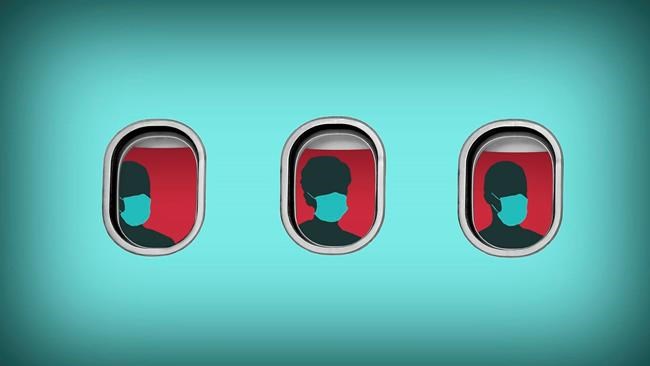
Once on a plane, most viruses and other germs don’t spread easily because of the way air circulates, according to the U.S. Centers for Disease Control and Prevention. Airlines also say they are focusing on sanitizing the hard surfaces that passengers commonly touch.
Some airlines like Alaska, Delta, JetBlue and Southwest are blocking middle seats or limiting capacity. But even if every middle seat is empty you will likely be closer than the recommended distance of 6 feet to another passenger now that planes are getting fuller.
American, United and Spirit are now booking flights to full capacity when they can. All leading U.S. airlines require passengers to wear masks. Lauren Ancel Meyers, an expert in disease outbreaks at the University of Texas, says that can help limit risk.
For air travel, and all other types of transportation, the CDC recommends washing your hands, maintaining social distancing and wearing face coverings.
Several airlines announced Monday that they will ask passengers about possible COVID-19 symptoms and whether they have been in contact with someone who tested positive for the virus in the previous two weeks.
Still, Meyers said you still might consider whether you need to be on that plane. “We should all be in the mindset of ‘only if necessary’ and always taking the most precautions we can to protect ourselves and others,” she said.
___
The AP is answering your questions about the coronavirus in this series. Submit them at: FactCheck@AP.org.
Read previous Viral Questions:
Who would be the first to get a COVID-19 vaccine?
Is it safe to form a COVID-19 “support bubble” with friends?
Is it safe to stay in hotels as reopenings get underway?
Related Articles
Air passengers wary as new rules take effect
Advertisement Advertise With Us