
US says oil, gas sales damage climate – but won’t stop them
Advertisement
Read this article for free:
or
Already have an account? Log in here »
We need your support!
Local journalism needs your support!
As we navigate through unprecedented times, our journalists are working harder than ever to bring you the latest local updates to keep you safe and informed.
Now, more than ever, we need your support.
Starting at $15.99 plus taxes every four weeks you can access your Brandon Sun online and full access to all content as it appears on our website.
Subscribe Nowor call circulation directly at (204) 727-0527.
Your pledge helps to ensure we provide the news that matters most to your community!
To continue reading, please subscribe:
Add Brandon Sun access to your Free Press subscription for only an additional
$1 for the first 4 weeks*
- Enjoy unlimited reading on brandonsun.com
- Read the Brandon Sun E-Edition, our digital replica newspaper
*Your next Free Press subscription payment will increase by $1.00 and you will be charged $20.95 plus GST for four weeks. After four weeks, your payment will increase to $24.95 plus GST every four weeks.
Read unlimited articles for free today:
or
Already have an account? Log in here »
Hey there, time traveller!
This article was published 02/11/2021 (1816 days ago), so information in it may no longer be current.
BILLINGS, Mont. (AP) — The Biden administration is planning to sell oil and gas leases on huge tracts of public land in the U.S. West, despite the Interior Department’s conclusion that doing so could cost society billions of dollars in climate change impacts, according to government documents.
Administration officials announced last week that government regulators for the first time will analyze greenhouse gas emissions from fossil fuels extracted from government-owned lands across the U.S.
Burning those fuels accounts for about 20% of energy-related U.S. emissions, making them a prime target for climate activists who want to shut down leasing. President Joe Biden campaigned on pledges to end new drilling on public lands.
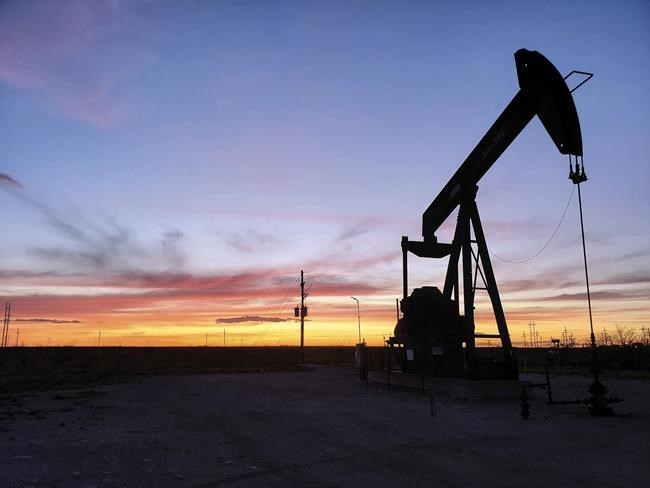
Hundreds of parcels of land that companies nominated for leasing were dropped from the sales because of concerns about wildlife being harmed by drilling rigs.
Yet officials with the Interior Department’s Bureau of Land Management (BLM) said for now there’s little they can do to prevent the broad climate change impacts from burning fuels extracted from the remaining parcels. That’s in part because they can’t discern the significance of emissions from government-owned fuel reserves versus other sources, officials wrote in newly released documents.
The determination applies to lease sales planned early next year in Wyoming, Colorado, Montana, Utah, Nevada, New Mexico, North Dakota and other states.
“BLM has limited decision authority to meaningfully or measurably prevent the cumulative climate change impacts that would result from global emissions,” agency officials wrote in their Montana lease proposal.
Similar statements were included in documents released for sales in other states.
The leasing plans could change as the administration continues to analyze greenhouse gas emissions and their effects on people and the environment, administration officials said Tuesday.
The land bureau plans to defer leasing on almost 600 square miles (1550 square kilometers) in Wyoming, 213 square miles (550 square kilometers) in Colorado and 5 square miles (14 square kilometers) in Montana because of potential impacts to a struggling bird species, the greater sage grouse, and migrating pronghorn antelope.
Still, Wyoming has the most land up for new leasing, roughly 280 square miles (725 square kilometers).
The so-called social costs of emissions from burning oil and gas from all the parcels — including more natural disasters, crop losses and public health problems due to climate change — are projected to range from $630 million to about $7 billion, according to land bureau documents.
The administration’s decision not to cite the climate costs as a reason to limit leases frustrates environmental activists and others who have urged curbs in government fossil fuel sales. They said it undermined the president’s participation in the U.N. climate summit in Glasgow, where Biden and other world leaders on Tuesday pledged to cut emissions of methane, a byproduct of drilling.
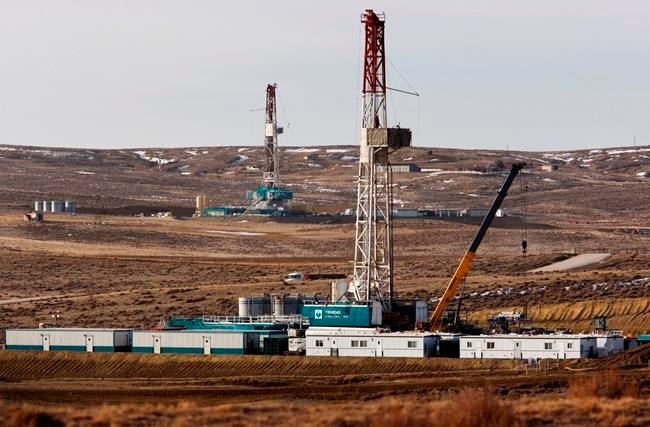
Harvard University economics professor James Stock said it was confusing for the administration to put a dollar value to greenhouse emissions, but then assert that such impacts are impossible to discern because of the global nature of climate change.
“To say it’s too hard, they can’t do that — that’s simply not true. All of those calculations have been done,” Stock said. “This is very surprising to me and inconsistent with the Biden administration’s climate goals.”
Similar determinations that U.S. fossil fuel lease sales should not be sharply restricted over global warming concerns were made under former Presidents Donald Trump and Barack Obama.
“This seems to be is business as usual,” Jeremy Nichols with the environmental group WildEarth Guardians said of the upcoming lease sales. “It flies in the face of scientists finding that any more fossil fuel production is unacceptable and countries need to find ways to limit production.”
Republicans and petroleum industry representatives were quick to slam Biden last week when he announced plans to analyze greenhouse gas emissions. The decision not to directly address them reinforces that stopping development of federal lands would have little impact on climate change, said Kathleen Sgamma with the Western Energy Alliance, an industry trade group.
“Stopping all leasing and development on federal lands would have zero impact on climate change, as the production is simply displaced to nonfederal lands or to OPEC” or other foreign producers,” Sgamma said.
Studies by independent experts have concluded that some but not all reduced drilling on federal lands and waters would be offset by crude imports.
Approvals to drill on leased U.S.-owned lands surged toward the end of Trump’s presidency, as companies stockpiled permits. That continued when Biden first took office before slowing in recent months. Figures released Tuesday showed 261 drilling permits approved in September, compared to more than 800 during Trump’s last full month in office.
Land bureau officials said in the leasing documents that their regulatory authority was limited to activities tied directly to oil and gas development — not the subsequent burning of the fuels. Instead, they propose curbing emissions by addressing methane leaks from oil field activities and other avenues.
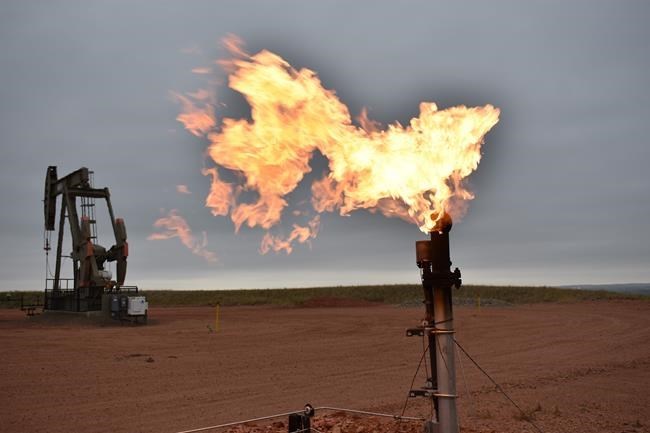
Additional measures to reduce methane emissions from drilling were announced Tuesday by the Environmental Protection Agency.
Next year’s lease sale will be the first by the bureau since Biden suspended the program just a week after taking office as part of his plan to address climate change.
The administration in June was ordered to resume the sales by a federal judge in Louisiana, who said Interior officials offered no “rational explanation” for canceling them.
Attorneys general from 13 states sued the administration saying the suspension would cost the states money and jobs.
___
Follow Matthew Brown on Twitter: @MatthewBrownAP