
US health insurers raise rates to match increase in usage
Advertisement
Read this article for free:
or
Already have an account? Log in here »
We need your support!
Local journalism needs your support!
As we navigate through unprecedented times, our journalists are working harder than ever to bring you the latest local updates to keep you safe and informed.
Now, more than ever, we need your support.
Starting at $15.99 plus taxes every four weeks you can access your Brandon Sun online and full access to all content as it appears on our website.
Subscribe Nowor call circulation directly at (204) 727-0527.
Your pledge helps to ensure we provide the news that matters most to your community!
To continue reading, please subscribe:
Add Brandon Sun access to your Free Press subscription for only an additional
$1 for the first 4 weeks*
*Your next subscription payment will increase by $1.00 and you will be charged $20.00 plus GST for four weeks. After four weeks, your payment will increase to $24.00 plus GST every four weeks.
Read unlimited articles for free today:
or
Already have an account? Log in here »
Hey there, time traveller!
This article was published 19/07/2022 (1315 days ago), so information in it may no longer be current.
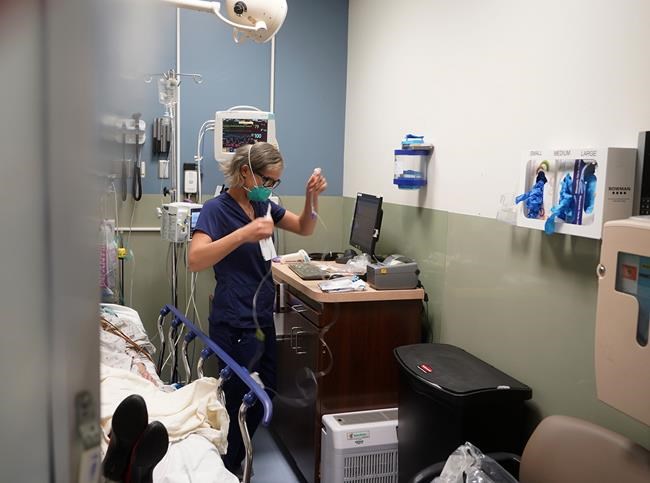
SACRAMENTO, California (AP) — After putting off routine health care for much of the pandemic, Americans are now returning to doctors’ offices in big numbers — a trend that’s starting to show up in higher insurance rates across the country.
Health insurers in individual marketplaces across 13 states and Washington D.C. will raise rates an average of 10% next year, according to a review of rate filings by the Kaiser Family Foundation.
That’s a big increase after premiums remained virtually flat for several years during the pandemic as insurers seek to recoup costs for more people using their policies, combined with record-high inflation that is driving up prices for virtually everything, including health care.
The rates review included Georgia, Indiana, Iowa, Kentucky, Maryland, Michigan, Minnesota, New York, Oregon, Rhode Island, Texas, Vermont and Washington.
“We’re at a point in the pandemic where people are using health care that they may have put off before,” said Larry Levitt, executive vice president for health policy with the Kaiser Family Foundation. “We have a double whammy right now of people using more care and inflation throughout the economy.”
In California, state officials announced Tuesday that rates would increase an average of 6% next year for the 1.7 million people who purchase coverage through Covered California, the state-operated health insurance marketplace. That’s a big jump after years of record low increases, when rate increases averaged about 1% in the past three years.
Increased use of health plans was the biggest reason for the increase, accounting for four percentage points, according to Jessica Altman, executive director of Covered California.
“That is really the consistent message that other states are seeing as well, and even more so than California,” she said.
About 14.5 million people purchased individual health coverage through state marketplaces this year, according to the Kaiser Family Foundation.
That’s a small portion of the total number of insured Americans, as about 155 million people get their insurance through their employer-sponsored coverage. But Kaiser said the filings for the individual plans are more detailed and publicly available.
The annual open enrollment period for when customers can shop for and buy 2023 coverage starts this fall. That’s the main window each year when people on the individual market can buy coverage or change plans.
How much people will pay for coverage depends on a variety of factors, including where they live and what type of plans they choose.
The rate increases come as Congress debates whether to extend financial help for consumers through the American Rescue Plan — the $1.9 trillion economic aid package Congress passed last year to combat the economic impacts of the pandemic.
The American Rescue Plan included significant funding to keep health insurance premiums low for people who purchase coverage through state marketplaces.
California receives about $1.7 billion annually from that funding to make sure no one paid more than 8.5% of their household income on monthly premiums.
If that assistance expires at the end of this year, about 3 million Americans — including 220,000 Californians — would likely drop coverage because they will no longer be able to afford it, according to an analysis by Covered California.
Without guidance on whether Congress will extend the assistance next year, some insurers have reacted by proactively raising rates in anticipation of people dropping coverage. The uncertainty accounted for half a percentage point of California’s 6% increase, Altman said.
California officials have lobbied hard for Congress to extend the financial assistance through the American Rescue Plan. In general, the price of health insurance premiums depends on who is buying coverage. If its mostly sick people, the premiums are more expensive. If more healthy people buy them, the premiums cost less.
Altman said California has managed to keep its rate increases below the national average in part because more healthy people are buying coverage through Covered California than most other states.
She said that’s in part because of a California law that taxes people who refuse to purchase health coverage. But she said it’s also because of subsidies that keep premiums low so more people can afford them.
Altman said not extending the federal financial assistance would price some people out of coverage and “is the core outcome to be concerned about here.”
“That would be a big step backwards,” she said.
___
Associated Press health writer Tom Murphy in Indianapolis contributed to this report.