
Food Banks Canada report paints dire picture of Canada-wide affordability crisis
Advertisement
Read this article for free:
or
Already have an account? Log in here »
We need your support!
Local journalism needs your support!
As we navigate through unprecedented times, our journalists are working harder than ever to bring you the latest local updates to keep you safe and informed.
Now, more than ever, we need your support.
Starting at $15.99 plus taxes every four weeks you can access your Brandon Sun online and full access to all content as it appears on our website.
Subscribe Nowor call circulation directly at (204) 727-0527.
Your pledge helps to ensure we provide the news that matters most to your community!
To continue reading, please subscribe:
Add Brandon Sun access to your Free Press subscription for only an additional
$1 for the first 4 weeks*
- Enjoy unlimited reading on brandonsun.com
- Read the Brandon Sun E-Edition, our digital replica newspaper
*Your next Free Press subscription payment will increase by $1.00 and you will be charged $20.95 plus GST for four weeks. After four weeks, your payment will increase to $24.95 plus GST every four weeks.
Read unlimited articles for free today:
or
Already have an account? Log in here »
Hey there, time traveller!
This article was published 25/10/2023 (1053 days ago), so information in it may no longer be current.
VANCOUVER – There are many heartbreaking tales behind the record number of Canadians using food banks as they struggle with high inflation and mounting housing costs, says a Vancouver food bank executive.
“We see parents who are skipping meals so that their children can eat. We see people who haven’t eaten in days. We see seniors who haven’t had produce in months,” said Cynthia Boulter, chief operating officer with Greater Vancouver Food Banks.
More and more people are accessing its services each year, and with greater frequency than in the past, Boulter said, as low wages and high rents squeeze people between inflation and other rising costs.
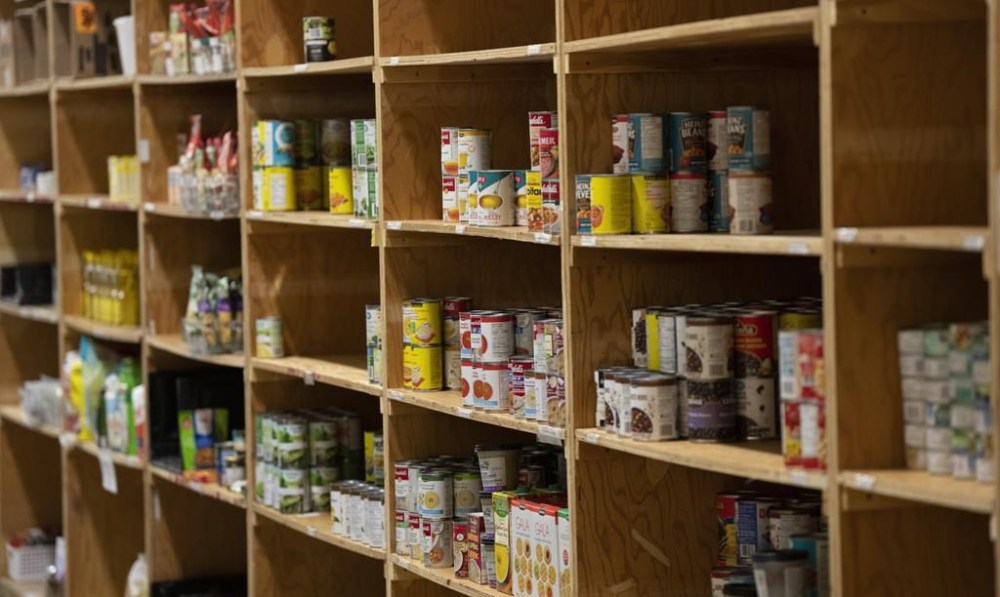
Boulter said the “unprecedented, record-breaking times” are being felt by food banks across the country, where nearly two million people visited in the month of March, 32 per cent more than the same month the year before, and a 78 per cent increase compared with March 2019.
The numbers, contained in Food Banks Canada’s annual Hunger Count report, highlight how Canadians are more food insecure than ever before as governments have seemingly ignored “blaring alarm bells,” the report said.
The data was collected from food banks across Canada, and this year’s Hunger Count, as well as other studies, show more and more Canadians are “struggling to pay for basic expenses, and that levels of food insecurity are rising dramatically.”
Seniors, single mothers, low-income workers, people on social assistance, and immigrants continue to drive food bank use, but this year’s report showed a rise in use among working people in higher income brackets.
More than 40 per cent of users are on provincial social assistance programs, the report said, with stagnant payments thatput most recipients under the official poverty line.
Indigenous people are disproportionately represented among food bank users at 12 per cent, while making up around five per cent of the general population, the report said.
More than a quarter of food bank users are immigrants who have been in Canada for less than a decade, the report said, a usage rate that has doubled since 2016.
“It’s one thing to look at a report filled with these big numbers,” said Food Banks Canada’s CEO Kirstin Beardsley. “Behind every single one of these numbers is a person, and I know what it takes for someone to get to the point where they’re turning to a food bank for help, and so you replicate that two million times in a single month and it’s heartbreaking.”
Beardsley said that those in the food bank sector across the country say the explosive growth in usage numbers are “unsustainable.”
Political action, she said, means that governments need to make “long term social policy investments,” from action on affordable housing to increasing fixed income rates.
“These are investments in our ability to thrive as a nation,” she said.
As the affordability crisis has intensified, Beardsley said, people who work at food banks “quite frankly, are shouldering too much of this burden.”
Food bank usage is a “quiet problem” where many people “suffer in silence,” she said, and only widespread public outrage will drive the political courage to create meaningful change.
“We’re not talking about a small investment in the future of this country,” she said. “What really drives political courage, to be honest, is everyday folks like you and I getting mad enough to make this a ballot issue, to make this an issue at the election, to not let our elected officials at every level of government off the hook anymore.”
Even as the report paints a grim picture, Beardsley said food banks remain places of “hope,” where communities come together to lift up those in need.
For those in the food bank sector to be ultimately successful would mean no more need for them, and they’re essentially hoping to work themselves “out of a job,” she said.
Until then, Beardsley said, “there’s no choice but to keep raising our voices, telling our stories, sharing the data, and if we’ve got a whole country behind us, I don’t think we can be ignored.”
This report by The Canadian Press was first published Oct. 25, 2023.