
Books on the impact of the internet and AI are finalists for the first-ever Women’s Nonfiction Prize
Advertisement
Read this article for free:
or
Already have an account? Log in here »
We need your support!
Local journalism needs your support!
As we navigate through unprecedented times, our journalists are working harder than ever to bring you the latest local updates to keep you safe and informed.
Now, more than ever, we need your support.
Starting at $15.99 plus taxes every four weeks you can access your Brandon Sun online and full access to all content as it appears on our website.
Subscribe Nowor call circulation directly at (204) 727-0527.
Your pledge helps to ensure we provide the news that matters most to your community!
To continue reading, please subscribe:
Add Brandon Sun access to your Free Press subscription for only an additional
$1 for the first 4 weeks*
- Enjoy unlimited reading on brandonsun.com
- Read the Brandon Sun E-Edition, our digital replica newspaper
*Your next Free Press subscription payment will increase by $1.00 and you will be charged $20.95 plus GST for four weeks. After four weeks, your payment will increase to $24.95 plus GST every four weeks.
Read unlimited articles for free today:
or
Already have an account? Log in here »
Hey there, time traveller!
This article was published 27/03/2024 (904 days ago), so information in it may no longer be current.
LONDON (AP) — Books about the dizzying impact of the internet and artificial intelligence are among finalists for a new book prize that aims to help fix the gender imbalance in nonfiction publishing.
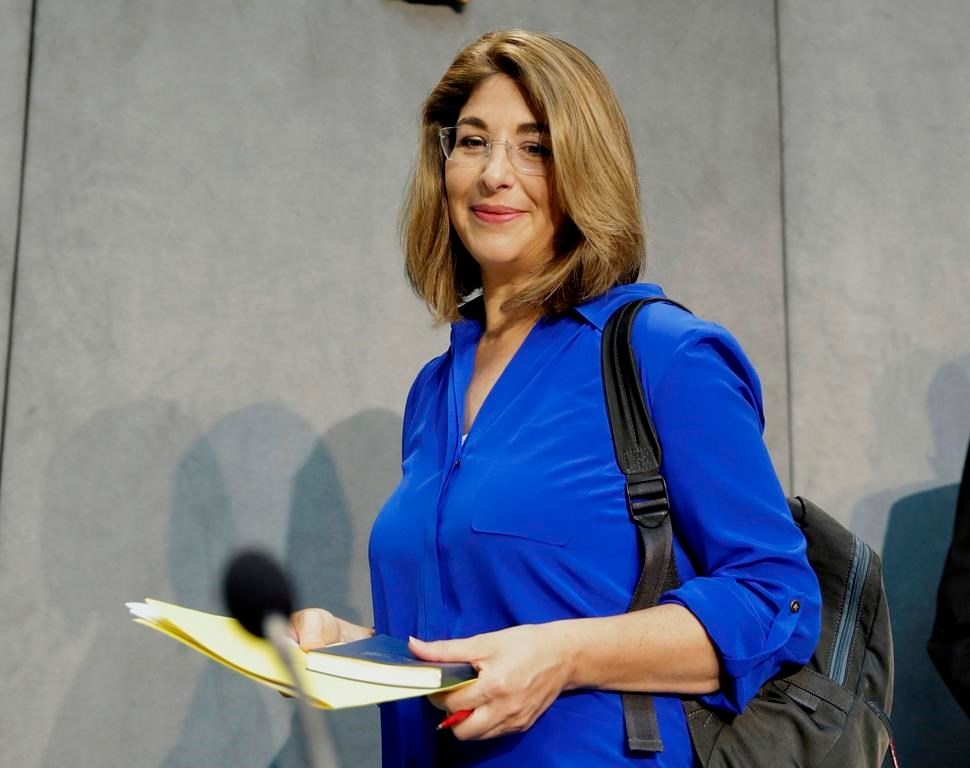
The shortlisted six books for the inaugural Women’s Prize for Nonfiction, announced on Wednesday, include Canadian author-activist Naomi Klein’s “Doppleganger,” a plunge into online misinformation, and British journalist Madhumita Murgia’s “Code-Dependent: Living in the Shadow of AI.”
The 30,000 pound ($38,000) award is a sister to the 29-year-old Women’s Prize for Fiction and is open to female English-language writers from any country in any nonfiction genre.
The finalists also include autobiographical works — poet Safiya Sinclair’s “How to Say Babylon: A Jamaican Memoir” and British art critic Laura Cumming’s “Thunderclap: A Memoir of Art and Life and Sudden Death.”
Rounding out the list are British author Noreen Masud’s travelogue-memoir “A Flat Place,” and Harvard history professor Tiya Miles’ “All That She Carried,” a history of American enslavement told through one Black family’s keepsake.
British historian Suzannah Lipscomb, who is chairing the judging panel, said that “the readers of these books will never see the world — be it through art, history, landscape, politics, religion or technology — the same again.”
The winners of both nonfiction and fiction prizes will be announced at a ceremony in London on June 13.
The prize was set up in response to a gender imbalance in the book world, where men buy more nonfiction than women — and write more prize-wining nonfiction books
The company Nielsen Book Research found in 2019 that while women bought 59% of all the books sold in the United Kingdom, men accounted for just over half of adult nonfiction purchases.
Prize organizers say that in 2022, only 26.5% of nonfiction books reviewed in Britain’s newspapers were by women, and male writers dominated established nonfiction writing prizes.