
Montana electricity generators not treated unfairly: Alberta utilities minister
Advertisement
Read this article for free:
or
Already have an account? Log in here »
We need your support!
Local journalism needs your support!
As we navigate through unprecedented times, our journalists are working harder than ever to bring you the latest local updates to keep you safe and informed.
Now, more than ever, we need your support.
Starting at $15.99 plus taxes every four weeks you can access your Brandon Sun online and full access to all content as it appears on our website.
Subscribe Nowor call circulation directly at (204) 727-0527.
Your pledge helps to ensure we provide the news that matters most to your community!
To continue reading, please subscribe:
Add Brandon Sun access to your Free Press subscription for only an additional
$1 for the first 4 weeks*
*Your next subscription payment will increase by $1.00 and you will be charged $20.00 plus GST for four weeks. After four weeks, your payment will increase to $24.00 plus GST every four weeks.
Read unlimited articles for free today:
or
Already have an account? Log in here »
Hey there, time traveller!
This article was published 02/04/2025 (372 days ago), so information in it may no longer be current.
Alberta’s utilities minister says that, contrary to a new report, the province’s electricity grid operator doesn’t discriminate against U.S. power generators.
The Office of the U.S. Trade Representative listed Alberta’s non-profit electrical grid operator as a trade irritant in a report this week, claiming Montana-based electricity producers aren’t being afforded fair access to the Alberta market.
The report, updated annually, claims the Alberta Electricity System Operator, or AESO, unfairly favours electricity generated within the province over equally priced U.S. energy during times of surplus grid power or congested transmission lines.
“The AESO has also proposed additional fees and other restrictions on imported energy,” the report reads.
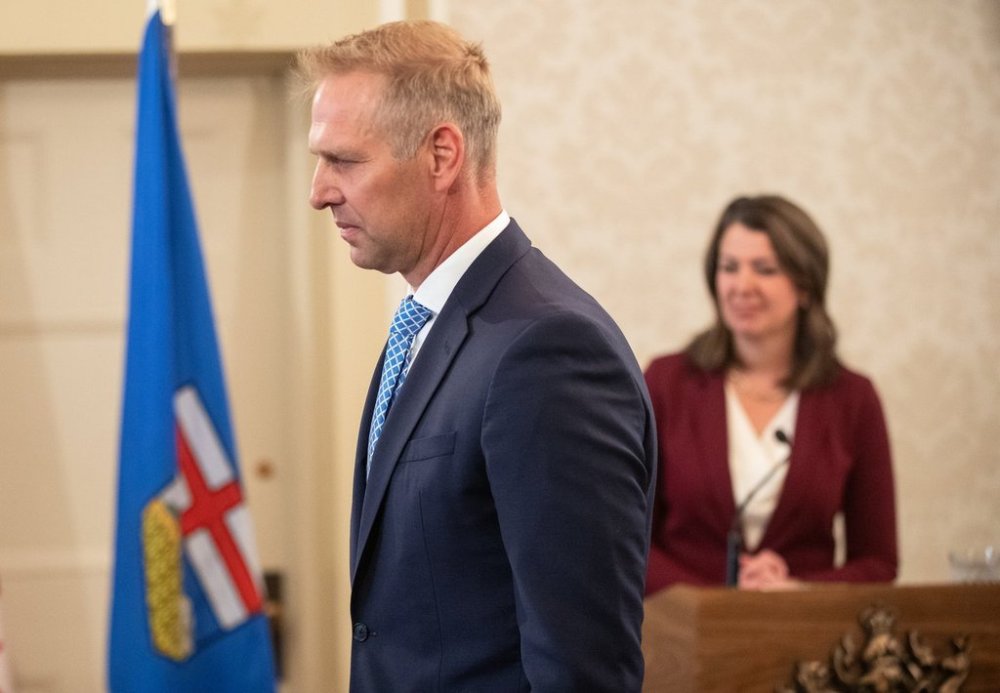
Utilities Minister Nathan Neudorf told reporters Wednesday that those concerns have been a “long-standing issue” raised with his office, but he maintained that no jurisdiction is receiving preferential treatment.
“We don’t treat generators in the U.S. or any other jurisdiction any differently than generators within Alberta,” he said.
“Any decisions made by the AESO has to do with reliability of our grid, something that we’ve been undertaking at least for the last two years as we’ve seen a significant imbalance in the generation capacity within the province.”
Neudorf said the province is making sure Alberta lives up to its trade obligations but said it’s possible AESO was named as a trade irritant because Alberta has imported less energy from Montana over the past two years while also increasing its electrical exports to the state over the same time period.
According to AESO’s 2024 Annual Market Statistics report, Montana is still a net exporter of electricity to Alberta despite the reduced imports, which in 2024 were less than half of what Alberta acquired from the state in 2022.
AESO’s report also says Alberta imported more power in 2024 from Montana than it did from British Columbia or Saskatchewan, the other two jurisdictions connected to Alberta’s grid.
Neudorf said Wednesday that interconnectivity — including with Montana — is key to having a reliable electrical grid, which is a top priority for the government as it’s tasked the AESO with completing an overhaul of the grid system. That overhaul is expected to be fully implemented in 2027.
“It’s a constant topic of conversation,” Neudorf said of grid interconnectivity and the impending regulatory changes.
“We are doing what’s best for Alberta and what’s best for our trade relationships with our neighbouring jurisdictions.”
Diane Kossman, a spokesperson for AESO, said in an email Wednesday that the operator encourages Montana-based generators to take part in the engagement work it’s doing for the system overhaul.
Kossman also said U.S. generators aren’t currently being treated unfairly and Alberta is actively looking “to increase the amount (of power) that can be imported from both Canadian and U.S. jurisdictions, including expanding the services and infrastructure necessary to ensure that imports can flow reliably into the province.”
When asked if reducing Montana’s overall stake in Alberta’s electrical grid was something that should be considered amid the ongoing trade war between Canada and the U.S., Neudorf said he thought that would be a mistake.
“Tariffs may come and go (and) governments come and go,” he said. “We want to make sure we build a good, competitive market that serves the needs of Albertans.
“If our government or our country is still faced with tariffs from the United States we can make those actions secondary to that, but I don’t think it should be embedded within the system that we’re developing and designing right now.”
This report by The Canadian Press was first published April 2, 2025.