
Manitoba Premier Wab Kinew drops promise to regulate gas prices
Advertisement
Read this article for free:
or
Already have an account? Log in here »
We need your support!
Local journalism needs your support!
As we navigate through unprecedented times, our journalists are working harder than ever to bring you the latest local updates to keep you safe and informed.
Now, more than ever, we need your support.
Starting at $15.99 plus taxes every four weeks you can access your Brandon Sun online and full access to all content as it appears on our website.
Subscribe Nowor call circulation directly at (204) 727-0527.
Your pledge helps to ensure we provide the news that matters most to your community!
To continue reading, please subscribe:
Add Brandon Sun access to your Free Press subscription for only an additional
$1 for the first 4 weeks*
*Your next subscription payment will increase by $1.00 and you will be charged $20.00 plus GST for four weeks. After four weeks, your payment will increase to $24.00 plus GST every four weeks.
Read unlimited articles for free today:
or
Already have an account? Log in here »
WINNIPEG – Manitoba Premier Wab Kinew says he’s not going to fulfil a 2023 election campaign promise to regulate gas prices.
The promise, outlined in the New Democrats’ campaign platform, was to give the Public Utilities Board, which currently sets rates for electricity, natural gas and other services, “new powers to review, investigate and regulate retail gasoline prices in Manitoba.”
After reviewing fuel regulations in the four Atlantic provinces, and a discussion with some of his counterparts in that region, Kinew says he has decided to drop the idea.
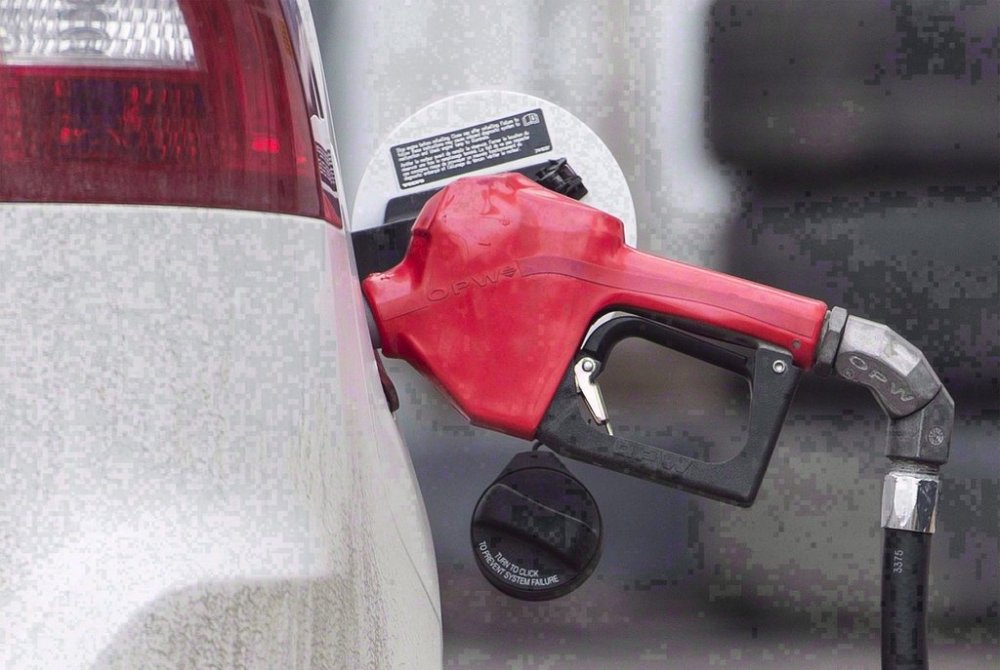
The concern appears to be that companies in regulated environments might apply for higher prices than needed to ensure they’re protected against any sudden, unexpected change.
“It’s not just the companies, actually,” Kinew said in a year-end interview with The Canadian Press.
“Former premier Andrew Furey of Newfoundland (and Labrador) said that the regulator always errs on the side of caution, too.”
Shortly after winning the election, Kinew’s government temporarily suspended Manitoba’s 14-cents-a-litre provincial fuel tax on gasoline and diesel, which was another campaign promise. When the tax was reintroduced a year later, it was at a lower rate of 12.5 cents.
The permanent tax reduction is more effective than regulation would be, Kinew said.
“I think we see a better alignment of Manitoba to Saskatchewan and Alberta gas prices than we had previously. So it seems like that’s the tool to use,” he said. “And it seems like there’s probably some risk that might actually be counterintuitively risking higher gas prices if you move to that more regulated model.”
The four Atlantic provinces started regulating gas prices at different times between 1988 and 2006. And there are some differences in how prices are set — some provide a minimum price as well as a maximum, for instance.
There has been debate over success of the initiative. Proponents say regulation has made prices more predictable and stable, while critics say it can keep prices higher than market forces would otherwise dictate.
A 2017 report by Kent Group Ltd., an Ontario-based petroleum data analytics company later acquired by U.K.-based Kalibrate, said there was evidence price regulations in some provinces affected markets in ways that may not necessarily benefit consumers.
The GasBuddy price-tracking website on Tuesday listed Manitoba as having the second-lowest average gas price among provinces, behind Alberta.
Taxation is one factor. Provinces east of Manitoba apply provincial or harmonized sales taxes to gas and diesel, in addition to their per-litre fuel taxes, an online chart from Natural Resources Canada shows. Manitoba and other western provinces don’t apply sales taxes to gas and diesel.
This report by The Canadian Press was first published Dec. 23, 2025.