
Report cites underinvestment, warning signals surrounding troubled Calgary water main
Advertisement
Read this article for free:
or
Already have an account? Log in here »
We need your support!
Local journalism needs your support!
As we navigate through unprecedented times, our journalists are working harder than ever to bring you the latest local updates to keep you safe and informed.
Now, more than ever, we need your support.
Starting at $15.99 plus taxes every four weeks you can access your Brandon Sun online and full access to all content as it appears on our website.
Subscribe Nowor call circulation directly at (204) 727-0527.
Your pledge helps to ensure we provide the news that matters most to your community!
To continue reading, please subscribe:
Add Brandon Sun access to your Free Press subscription for only an additional
$1 for the first 4 weeks*
*Your next subscription payment will increase by $1.00 and you will be charged $20.00 plus GST for four weeks. After four weeks, your payment will increase to $24.00 plus GST every four weeks.
Read unlimited articles for free today:
or
Already have an account? Log in here »
CALGARY – A report says Calgary’s catastrophic water main rupture in 2024 was largely the result of two decades of underinvestment and insufficient knowledge of the risk of pipe failures.
The report was released Wednesday after months of work by an independent panel tasked with studying what led to the burst Bearspaw South Feeder Main, which provides treated drinking water to 60 per cent of the city.
The breakdown led to months of water restrictions, and the issue returned to the spotlight last week after the water main ruptured again, forcing a renewed round of restrictions in the city of 1.6 million people.
The risk of disaster was traced back to 2004, when another water main fractured in the city. That break raised concerns for other parts of the city’s water system built with the same type of pipe, including the Bearspaw, the report says.
In the years that followed, it says, there were a number of projects to assess and mitigate risks with the Bearspaw pipe, but they were put off in favour of other initiatives.
“This pattern, which persisted over two decades, across multiple leadership teams and organizational structures, reflects systemic gaps in the water utility’s approach to managing critical infrastructure,” the report said.
The panel wrote that there were problems with the organizational chart, with no single executive solely accountable for water.
The lack of responsibility by any one manager, on top of the deferred inspections and monitoring, meant multiple eras of city council were also kept in the dark, the report says.
Panel chair Siegfried Kiefer told reporters that he doesn’t think blame should be placed on any individual or past city councils.
“We had management underinformed about the implication of their various decisions,” Kiefer said.
“Without the knowledge of the implications of those decisions, it’s difficult to put blame, if you will, on any specific decision.”
The report adds that Calgary isn’t alone in struggling to keep up with necessary maintenance for water infrastructure, citing Statistics Canada figures showing more than a quarter of water mains across the country are due for repair.
It says Calgary’s problem is unique, as its low population density means it has more kilometres of pipe per resident than any similar-sized Canadian city.
Kiefer and the other five members of the panel recommend new processes for identifying and managing infrastructure risks across all city departments.
They also recommend a stand-alone water department operating as a municipally owned corporation, like Edmonton’s water utility provider Epcor.
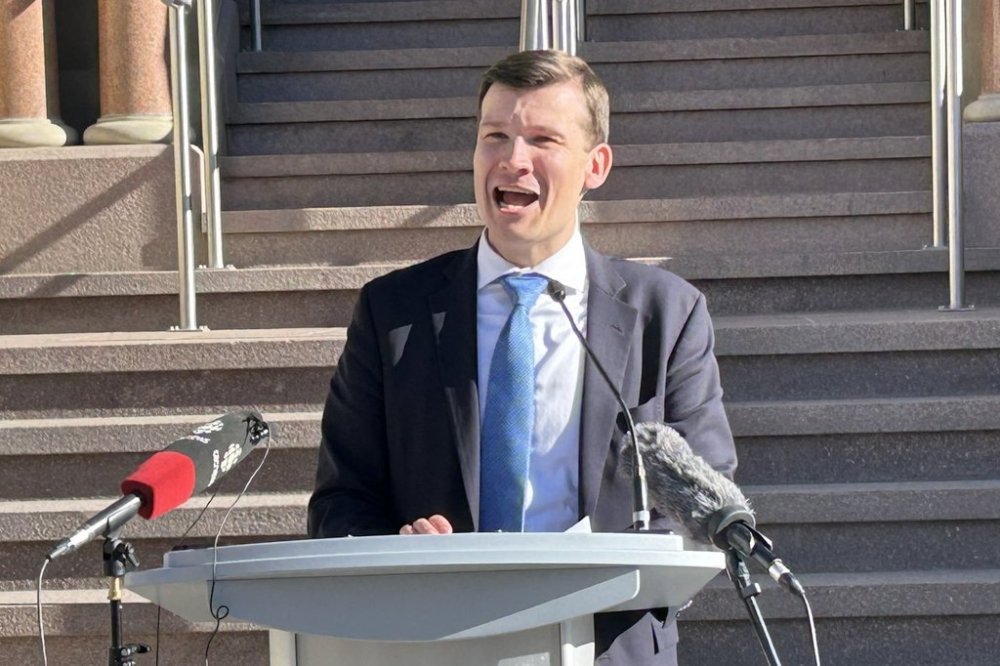
Calgary Mayor Jeromy Farkas told reporters he was committed to implementing all of the report’s recommendations.
He said it was more important for council and city staff to use the report to bring solutions rather than analyzing the past to cast blame.
“Do we have a council and city administration who are willing to fund this and spend the political capital to fund the needed investment, but also to implement the needed accountability measures?” he asked rhetorically.
“I strongly believe yes.”
Council heard Wednesday that administration will come back with a plan of action for implementing the panel’s recommendations early next month.
With the second major Bearspaw line rupture, residents have been asked again to take shorter showers and reduce toilet flushes and loads of laundry and dirty dishes.
On Wednesday, an emergency alert was issued for Calgary, saying water usage across the city had hit an unsustainable level and residents and businesses were called on to immediately conserve water.
It was the third straight day that city officials said water usage was far above desired amounts. Farkas said he knows many are frustrated, but he urged Calgarians to step up conservation efforts. The line is expected to be fixed as early as next week.
“This is all about supporting each other as neighbours, supporting our front line and supporting our first responders,” he said.
When asked by reporters if he’s doing his part for conservation, he dramatically sniffed his armpit to laughter, saying, “I’ve been keeping my showers to three minutes or less.”
This report by The Canadian Press was first published Jan. 7, 2026.
— with files from Jack Farrell in Edmonton