
U.S. House passes symbolic vote to end Trump’s fentanyl-related tariffs on Canada
Advertisement
Read this article for free:
or
Already have an account? Log in here »
We need your support!
Local journalism needs your support!
As we navigate through unprecedented times, our journalists are working harder than ever to bring you the latest local updates to keep you safe and informed.
Now, more than ever, we need your support.
Starting at $15.99 plus taxes every four weeks you can access your Brandon Sun online and full access to all content as it appears on our website.
Subscribe Nowor call circulation directly at (204) 727-0527.
Your pledge helps to ensure we provide the news that matters most to your community!
To continue reading, please subscribe:
Add Brandon Sun access to your Free Press subscription for only an additional
$1 for the first 4 weeks*
*Your next subscription payment will increase by $1.00 and you will be charged $20.00 plus GST for four weeks. After four weeks, your payment will increase to $24.00 plus GST every four weeks.
Read unlimited articles for free today:
or
Already have an account? Log in here »
WASHINGTON – President Donald Trump took aim at Canada Wednesday evening as the U.S. House of Representatives voted against his tariffs on America’s northern neighbour — a largely symbolic move that shows some wavering Republican support for the president’s massive trade agenda.
“Canada has taken advantage of the United States on Trade for many years. They are among the worst in the World to deal with, especially as it relates to our Northern Border,” Trump posted on social media Wednesday night as results of the vote became clear. “TARIFFS make a WIN for us, EASY. Republicans must keep it that way!”
Six Republicans joined Democrats in a bipartisan push against Trump’s so-called fentanyl emergency at the U.S.-Canada border, which the president used as justification for economywide tariffs against America’s northern neighbour last year.
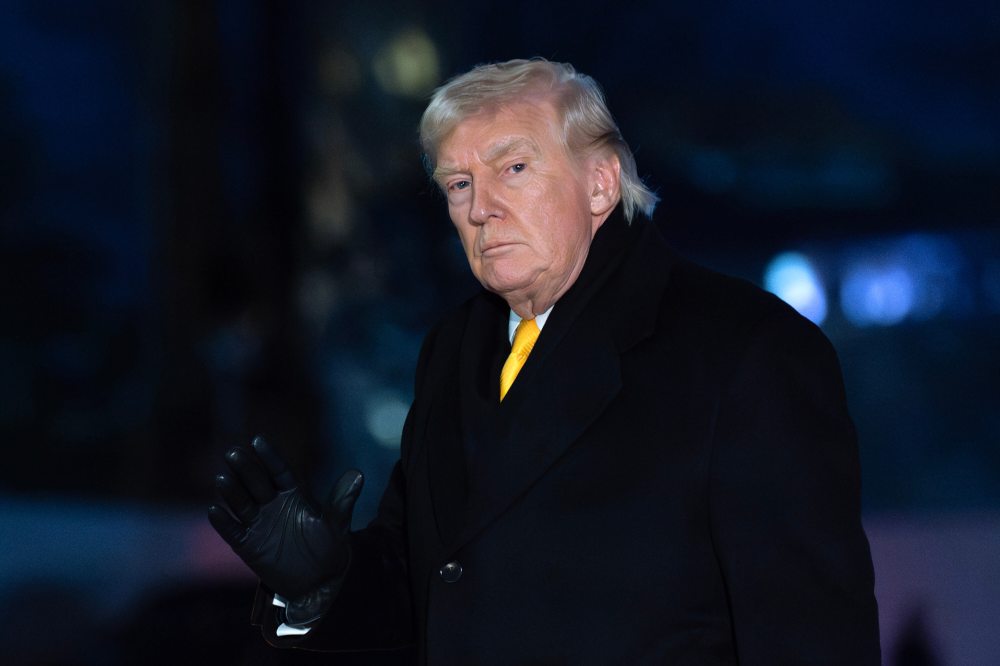
While Wednesday’s motion passed, it did not get the two-thirds majority it would need to become veto-proof. The resolution next goes to the Senate and both chambers need to approve the tariff rollbacks before it’s sent to Trump for the president’s signature — or more likely veto.
Canada is also being hammered by separate tariffs on industries like steel, aluminum, automobiles and lumber that Trump enacted through a different presidential power.
The bipartisan support does demonstrate Republican uncertainty around Trump’s erratic trade policies directed towards Canada. Democrat Rep. Gregory Meeks, who introduced the bill, said Canada isn’t a threat.
“Canada is our friend. Canada is our ally,” Meeks said.
Trump declared the emergency in order to use the International Economic Emergency Powers Act, also called IEEPA, to hit Canada with 35 per cent tariffs. Those duties do not apply to goods compliant under the Canada-U.S.-Mexico Agreement on trade, known as CUSMA.
Meeks said U.S. government data shows a minuscule amount of fentanyl is seized at the northern border compared to the border with Mexico.
In response to Trump’s stated concerns about fentanyl, Ottawa boosted border security measures, with more boots on the ground and drones in the air. Canadian police forces have widely promoted drug seizures in news releases.
During debate in the House earlier Wednesday, Brian Mast, a Republican from Florida, pointed to those drug seizures in Canada and Ottawa’s appointment of a “fentanyl czar” as evidence the problem is real. He also said Canada hasn’t done enough to crack down on drugs.
“Democrats don’t recognize that there is a crisis that it is killing thousands of Americans,” Mast said.
The Senate has voted repeatedly to overturn the fentanyl duties but a procedural rule allowed the House to avoid any votes on Trump’s tariff agenda. That ended Tuesday, when three Republicans joined Democrats to stop the extension of the procedural rule.
While the U.S. Constitution reserves power over taxation and tariffs for Congress, Trump’s duties have so far faced little public resistance from Republican lawmakers, despite concerns shared behind closed doors among traditional GOP free-traders.
IEEPA has become Trump’s favourite tool to impose or threaten tariffs — but its future is uncertain.
The U.S. Supreme Court is still weighing whether Trump can continue using IEEPA. The conservative-led U.S. Supreme Court appeared skeptical during a hearing on IEEPA in November.
Rep. Adrian Smith, a Republican for Nebraska, said Wednesday’s vote should be delayed until after America’s top court rules on the IEEPA tool. He said Canada is a friend but Trump’s use of duties has pushed Ottawa to have difficult conversations about trade irritants. He cited the example of the digital services tax, which Prime Minister Mark Carney paused to appease the president last year.
Trump’s inconsistent use of tariffs and his claims that Canada should become a U.S. state are hurting American businesses, multiple Democrats told the House. Many also pointed to the president’s Monday social media post threatening to stall the opening of the Gordie Howe International Bridge connecting Ontario to Michigan.
Rep. Linda Sanchez, a Democrat for California, said claims that Canada is a fentanyl threat are not borne out by facts. She pointed out that CUSMA was negotiated during the first Trump administration and ratified by Congress.
CUMSA is up for mandatory review this year and Trump repeatedly targeting Canada has indicated it could be a lengthy and contentious negotiation.
Responsible governments follow the law on trade agreements and don’t negotiate through weird social media tantrums, Sanchez said.
“It’s just reckless and frankly, it’s bizarre.”
The International Association of Machinists and Aerospace Workers, which represents around 600,000 workers in both countries, said “tariffs are already causing serious disruption to the deeply integrated U.S and Canadian aerospace and manufacturing sectors.”
“Indiscriminate tariffs against allies are bad for both U.S. and Canadian workers,” International President Brian Bryant Canadian Territorial Vice-President David Chartrand said in a joint statement Wednesday.
“Our industries are connected, and any attack on our partnership only leads to job losses, higher prices, and economic instability across North America.”
Wednesday’s vote was also celebrated by Ontario Premier Doug Ford, who posted on social media that it was an “important victory with more work ahead.”
“Let’s end the tariffs and together build a more prosperous and secure future,” Ford said.
This report by The Canadian Press was first published Feb. 11, 2026.
— With files from The Associated Press