
First Nation buys own backup generators, saying governments and utility failed them
Advertisement
Read this article for free:
or
Already have an account? Log in here »
We need your support!
Local journalism needs your support!
As we navigate through unprecedented times, our journalists are working harder than ever to bring you the latest local updates to keep you safe and informed.
Now, more than ever, we need your support.
Starting at $15.99 plus taxes every four weeks you can access your Brandon Sun online and full access to all content as it appears on our website.
Subscribe Nowor call circulation directly at (204) 727-0527.
Your pledge helps to ensure we provide the news that matters most to your community!
To continue reading, please subscribe:
Add Brandon Sun access to your Free Press subscription for only an additional
$1 for the first 4 weeks*
*Your next subscription payment will increase by $1.00 and you will be charged $20.00 plus GST for four weeks. After four weeks, your payment will increase to $24.00 plus GST every four weeks.
Read unlimited articles for free today:
or
Already have an account? Log in here »
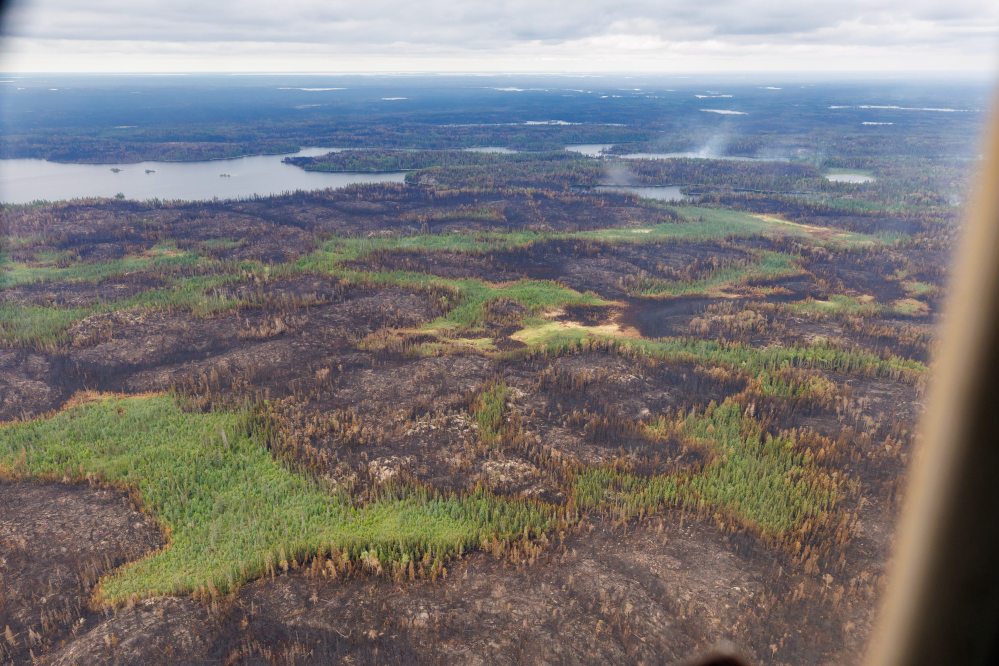
WINNIPEG – A Manitoba First Nation whose residents were evacuated for months last summer due to a wildfire and an extended power outage says it has bought its own backup generators, after it says governments and the province’s Crown-owned electric utility failed them.
The Mathias Colomb Cree Nation says it has moved forward, on its own, to arrange private financing for the $8-million purchase of generators it says were meant to be installed last summer to bring wildfire evacuees home.
More than 2,000 residents of the First Nation, in northwestern Manitoba, remained evacuated for 128 days due to an extended Manitoba Hydro outage that the community says the backup generators would have resolved.
In a news release, Mathias Colomb Chief Gordie Bear chastised Canada and Manitoba for not supporting or cost-sharing the urgent purchase of the generators earlier, and he called on the province’s minister responsible for Manitoba Hydro to direct the utility to connect the new equipment.
Manitoba Hydro says that during the wildfire crisis last summer, it told the community that transporting and setting up large generators at that time was not feasible due to continuing wildfires and limited rail service.
The utility says it paid for consultants last year to help the First Nation figure out what they would need for future backup generation, but that it doesn’t cost-share for any customer-owned generation.
“Hundreds of Manitoba Hydro employees repaired damage in remote areas and hundreds more kept them supplied and housed during the effort to restore power,” Manitoba Hydro spokesman Peter Chura said in an email.
“The line to the community required replacement of 253 structures, amid logistical challenges including limited rail freight and very challenging terrain often requiring helicopters and boring holes in rock to set poles,” he added.
Neither Finance Minister Adrien Sala, who is Manitoba’s minister responsible for Manitoba Hydro, nor federal Indigenous Services Minister Mandy Gull-Masty immediately responded to requests for comment late Friday.
Government officials called 2025 the worst fire season since daily electronic records began in the mid-1990s. At its peak, some 21,000 Manitobans were out of their communities.
Bear said more than 1,000 members of his First Nation were evacuated to Niagara Falls, Ont.
“We had to move forward with our own solution for energy security and emergency response,” Bear said in the First Nation’s news release.
“We can’t leave our elders and families and youth and children vulnerable to the harms and damages of another extended power outage and evacuation.”
The utility said diverting crews to attempt to supply generators, as well as modifying a substation to accept them, would have delayed the full restoration of power.
“We support the community acquiring its own backup generation, as it is their responsibility,” the utility’s statement said.
This report by The Canadian Press was first published Feb. 13, 2026.