
Mould, asbestos, keep thousands out of Manitoba First Nation after outage
Advertisement
Read this article for free:
or
Already have an account? Log in here »
We need your support!
Local journalism needs your support!
As we navigate through unprecedented times, our journalists are working harder than ever to bring you the latest local updates to keep you safe and informed.
Now, more than ever, we need your support.
Starting at $15.99 plus taxes every four weeks you can access your Brandon Sun online and full access to all content as it appears on our website.
Subscribe Nowor call circulation directly at (204) 727-0527.
Your pledge helps to ensure we provide the news that matters most to your community!
To continue reading, please subscribe:
Add Brandon Sun access to your Free Press subscription for only an additional
$1 for the first 4 weeks*
*Your next subscription payment will increase by $1.00 and you will be charged $20.00 plus GST for four weeks. After four weeks, your payment will increase to $24.00 plus GST every four weeks.
Read unlimited articles for free today:
or
Already have an account? Log in here »
WINNIPEG – The leader of a First Nation in northern Manitoba that has been dealing with severe water damage, forcing many to leave, says 2,000 people remain displaced due to unhabitable homes.
David Monias, chief of Pimicikamak Cree Nation, said mould and exposed asbestos from burst frozen pipes have made hundreds of homes unsafe.
More than half the community has been able to return home in the two months since the First Nation 530 kilometres north of Winnipeg suffered a days-long power outage at the end of last year.
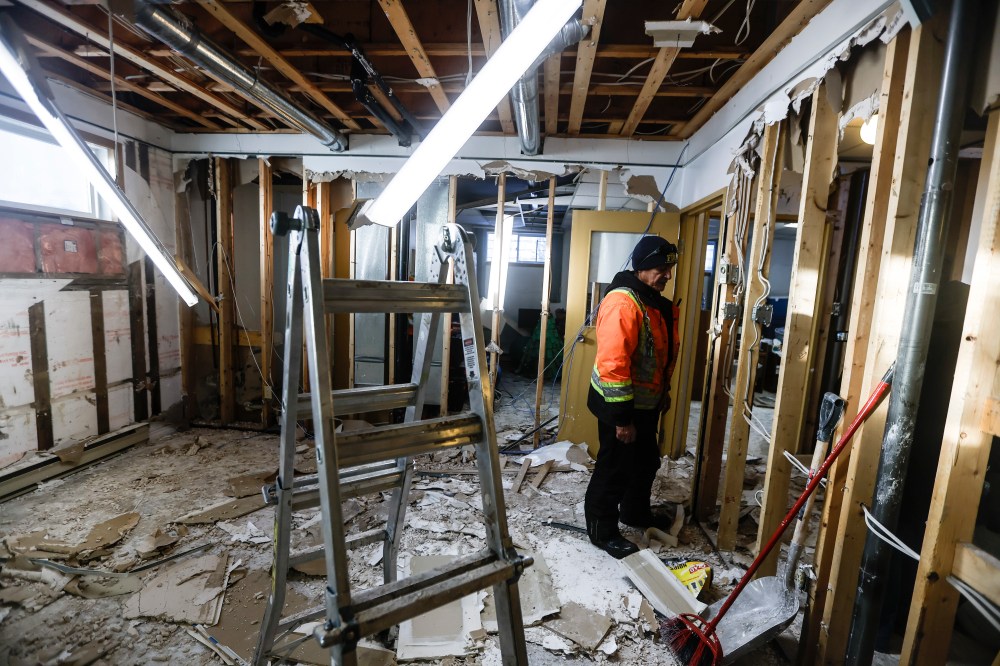
It led to frozen water systems, sewer backups, electrical issues and burst pipes.
Monias said the ones who remain out include members with health issues, elders and families with young children.
“You can’t have them return to a situation where there might be some bacteria or moulding issues that will affect their safety, affect their health, and possibly cause medical issues that could be made worse because they already have existing health issues,” he said.
“You should be able to return to a habitable home because every person has that right to have a safe environment and safe home.”
Crews have determined 237 homes are uninhabitable and require extensive repairs. Work to address mould remediation and emergency repairs continues on roughly 900 homes, he said.
Additional tradespeople were called in to help with assessing homes and repairs, and Monias said close to 100 remain in Pimicikamak.
Members of the Armed Forces were brought in last month to help survey damage to one of the community’s water treatment plants. Temporary fixes have been completed.
To date, about 75 per cent of the First Nation requires water to be trucked to individual homes, said Monias.
The community is calling for additional funding and resources from the provincial and federal governments, and for Manitoba Hydro to cover damages and costs for mould and asbestos remediation.
“We’re having issues in terms of who’s going to pay for those homes to make sure that they’re habitable,” said Monias.
Monias said some of the mould was found to have been in homes before the outage, leading to questions about whether cleanup should be covered by insurance or Indigenous Services Canada.
The chief recognized that while some of the homes had mould before, it was exacerbated by power and water failures and the homes not being occupied for months.
The federal government is providing financial support to the community to address damage directly related to the outage. Indigenous Services Canada said it has provided $1.1 million to help repair “any pre-existing conditions issues that the community determines as required.”
“While the emergency management assistance program does not have funding authority to cover pre-existing issues, the department takes mould and asbestos concerns very seriously,” a spokesperson said in an email.
Manitoba Hydro said in an email it does not provide funding for building repairs.
Infrastructure funding on First Nations in Canada is generally relegated to the federal government, which has led to a jurisdictional game of hot potato when it comes to addressing crises.
Premier Wab Kinew wouldn’t commit to offering additional resources. He pointed to the province providing emergency generators to the unincorporated community of Cross Lake, which neighbours Pimicikamak.
“One of the lessons that we’re taking out of it is the way we respond to some of these emergencies is a lot more comprehensive than how the federal government responds,” he told reporters Friday.
Hydro said the cause of the outage remains under investigation.
This report by The Canadian Press was first published Feb. 27, 2026.