
‘Wine tonight?:’ Statistics Canada data shows liquor store sales down another year
Advertisement
Read this article for free:
or
Already have an account? Log in here »
We need your support!
Local journalism needs your support!
As we navigate through unprecedented times, our journalists are working harder than ever to bring you the latest local updates to keep you safe and informed.
Now, more than ever, we need your support.
Starting at $15.99 plus taxes every four weeks you can access your Brandon Sun online and full access to all content as it appears on our website.
Subscribe Nowor call circulation directly at (204) 727-0527.
Your pledge helps to ensure we provide the news that matters most to your community!
To continue reading, please subscribe:
Add Brandon Sun access to your Free Press subscription for only an additional
$1 for the first 4 weeks*
*Your next subscription payment will increase by $1.00 and you will be charged $20.00 plus GST for four weeks. After four weeks, your payment will increase to $24.00 plus GST every four weeks.
Read unlimited articles for free today:
or
Already have an account? Log in here »
Having alcohol in the home felt like an eternal struggle for Andrea Pain.
“I always (had) that dialogue with myself about, ‘Am I going to have a glass of wine tonight?” the Burlington, Ont., resident said in a phone interview.
“‘No, maybe I shouldn’t, but I really want one.’ And I would keep going back and forth.”
Then, last year, an idea she had drained her mental turmoil.
“In the last year, one of the most important changes I made was not drinking at home,” said the 63-year-old, who is also the executive director of Moderation Management, a U.S.-based non-profit company that helps people moderate their drinking.
“I reserve my drinking choices for when I go out. My own in-store liquor purchases have gone down significantly.”
And she feels great.
“I felt like alcohol was making the choices for me,” she said.
“Now, I am a clearer and more productive individual. I’m more patient, definitely. I don’t lose days anymore.”
Rod Phillips, a professor at Ottawa’s Carleton University who specializes in the history of alcohol, says Pain is among many who’ve reduced their purchases.
“It’s not just Canada where this is happening,” said Phillips, who has also written several books about alcohol.
“But it’s certainly the case throughout North America, Europe and in many other places that alcohol consumption has been going down for the last five, ten years.”
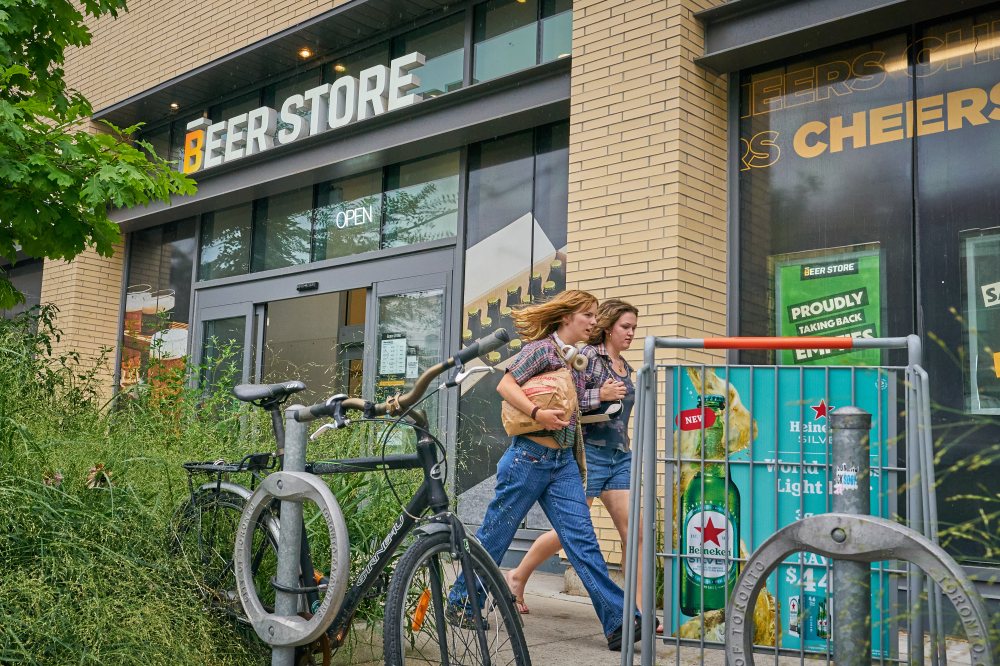
Recent data from Statistics Canada shows liquor stores saw a 1.6 per cent drop in sales in 2025.
“The decrease in alcohol sales occurred despite a 1.6 per cent increase in the price of alcoholic beverages in stores from March 2024 to March 2025,” the agency said.
“This was the fourth consecutive year volume sales have declined.”
Meanwhile, the sale of cannabis increased.
“Sales of recreational cannabis by provincial cannabis authorities and other retail outlets increased 6.1 per cent or $0.3 billion from the previous fiscal year to $5.5 billion in 2024/2025.”
Phillips said the decline in alcohol sales could be for various reasons.
The first is that there’s been an increase in awareness in recent years on the negative effects of alcohol.
“The World Health Organization and lots of public health organizations like Health Canada are coming out and warning people they should drink knowing what the risks are,” he said.
People might also be cutting down their alcohol purchases due to the affordability issue.
He said studies have shown young adults have reduced their drinking at a higher rate.
“My sense is that younger people are much more receptive to the warnings,” he said.
And that’s evident in studies in Europe.
“There are a few reports recently about a phenomenon in Europe. There’s more morning dance parties happening. So, instead of going out at night and dancing, people go and dance during the day. And there’s no alcohol at these,” he said.
“This notion that alcohol is an absolute precondition for enjoying yourself is going down.”
Phillips said alcohol consumption has waned in the past.
“The United States government and the Canadian government imposed Prohibition on native peoples from the 1800s through to the 20th century,” he said.
“In Muslim countries, they have had Prohibition for 1,500 years. So, you know, this Prohibition has been around in many forms and obviously that has an effect on drinking.”
But those campaigns were aimed at creating moral or social order.
“So, it’s very hard to compare with what’s going on now,” he said. “The stress today on health is something that’s really quite new.”
He said only time will tell about how alcohol consumption changes in the future.
“I’m very aware that, especially in the wine industry, that they’re very concerned about jobs and about the profitability of wine producers,” he said.
“But, you know, we got rid of the asbestos industry, we sort of hacked away at the tobacco industry. There are just industries that aren’t really essential.”
The alcohol industry could be one of them, Phillips said.
“Alcohol is a pretty much discretionary thing and if it were to disappear entirely, well, then that’s what would happen.”
This report by The Canadian Press was first published March 8, 2026.
Note to readers:This is a corrected story. An earlier version had an incorrect name for the company Moderation Management.