
Canada supplying 23.6 million barrels of oil under IEA release plan
Advertisement
Read this article for free:
or
Already have an account? Log in here »
We need your support!
Local journalism needs your support!
As we navigate through unprecedented times, our journalists are working harder than ever to bring you the latest local updates to keep you safe and informed.
Now, more than ever, we need your support.
Starting at $15.99 plus taxes every four weeks you can access your Brandon Sun online and full access to all content as it appears on our website.
Subscribe Nowor call circulation directly at (204) 727-0527.
Your pledge helps to ensure we provide the news that matters most to your community!
To continue reading, please subscribe:
Add Brandon Sun access to your Free Press subscription for only an additional
$1 for the first 4 weeks*
*Your next subscription payment will increase by $1.00 and you will be charged $20.00 plus GST for four weeks. After four weeks, your payment will increase to $24.00 plus GST every four weeks.
Read unlimited articles for free today:
or
Already have an account? Log in here »
OTTAWA – Canada plans to contribute 23.6 million barrels of oil to an International Energy Agency plan to help stabilize energy markets as the war in the Middle East continues to choke off tanker shipments from the Persian Gulf.
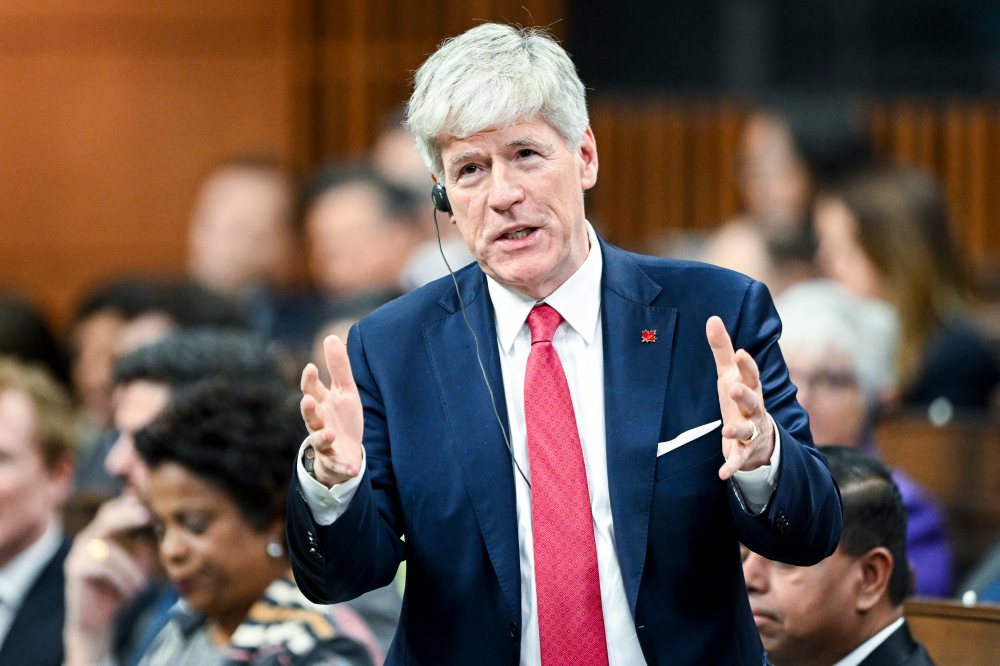
The announcement from Natural Resources Minister Tim Hodgson’s office late Friday comes two days after he said Canada would “do its part” to lower the cost of oil globally.
The IEA said earlier this week it would make 400 million barrels of oil available to the world market. That’s the biggest release in the Paris-based agency’s history and more than double the nearly 183 million barrels it unlocked after Russia invaded Ukraine in 2022 — the record at the time.
The IEA has 32 members, including Canada. Its reserves were established in 1974 after the Arab oil embargo, and member countries currently hold more than 1.2 billion barrels of public emergency oil stocks, with a further 600 million barrels of industry stocks held under government obligation.
“Canada meets our IEA responsibilities through our role as a major producer and exporter of oil to the world. We are the world’s fourth largest oil supplier, and the largest within the IEA,” Hodgson’s office said.
The IEA stipulates that members set aside enough oil to cover 90 days worth of net imports. But Canada is a net exporter — it sends the vast majority of its product to the United States and some to Asia via the Trans Mountain pipeline — so it is not beholden to that rule.
Canada is the only G7 nation that does not maintain a strategic reserve of oil, though industry players would have some set aside for emergencies.
The U.S. plans to pull 172 million barrels from its Strategic Petroleum Reserve over 120 days as part of the IEA effort. Germany, Austria and Japan also have indicated they will tap their stockpiles.
The federal government didn’t explain how the additional barrels will make their way to global markets. It said they’ll be “produced by our industry and co-ordinated with the federal and provincial governments.”
Hodgson said earlier this week that supplies could be freed up by asking producers to delay seasonal maintenance downtime.
The Trans Mountain pipeline to the Vancouver area has been operating at around 90 per cent capacity, so in theory there is some space to get more crude to the Pacific for export to Asia on tankers.
Global crude oil prices have been on a wild ride since the United States and Israel began launching strikes on Iran almost two weeks ago. The conflict has since embroiled several other countries in the region.
Iran sits on the north side of the Strait of Hormuz, a strategically vital waterway between the oil-producing Gulf states and the open sea. Typically, about one fifth of the world’s oil supply — 20 million barrels per day — passes through the channel, but traffic has all but vanished because of the fear of Iranian attacks.
Crude prices have touched levels not seen since Russia’s invasion of Ukraine four years ago, edging close to US$120 per barrel at one point this week. The April contract for West Texas Intermediate crude was up US$2.98 at US$98.71 per barrel on Friday — about 47 per cent higher than it was before the war began.
The minister’s office said Canada’s natural gas exports will also expand in the coming months but provided no further details. The country’s first liquefied natural gas export terminal, LNG Canada in Kitimat, B.C., started up last summer.
This report by The Canadian Press was first published March 13, 2026.
— with files from Lauren Krugel in Calgary.