
Canada spending $307M to buy new army rifles from Colt
Advertisement
Read this article for free:
or
Already have an account? Log in here »
We need your support!
Local journalism needs your support!
As we navigate through unprecedented times, our journalists are working harder than ever to bring you the latest local updates to keep you safe and informed.
Now, more than ever, we need your support.
Starting at $15.99 plus taxes every four weeks you can access your Brandon Sun online and full access to all content as it appears on our website.
Subscribe Nowor call circulation directly at (204) 727-0527.
Your pledge helps to ensure we provide the news that matters most to your community!
To continue reading, please subscribe:
Add Brandon Sun access to your Free Press subscription for only an additional
$1 for the first 4 weeks*
- Enjoy unlimited reading on brandonsun.com
- Read the Brandon Sun E-Edition, our digital replica newspaper
*Your next Free Press subscription payment will increase by $1.00 and you will be charged $20.95 plus GST for four weeks. After four weeks, your payment will increase to $24.95 plus GST every four weeks.
Read unlimited articles for free today:
or
Already have an account? Log in here »
OTTAWA – The federal government is buying 30,000 made-in-Canada assault rifles for the Canadian Army from Colt Canada in a $307 million procurement deal.
That sum covers just the first three years of the contract, after which the federal government has the option of acquiring another 35,000 rifles.
Stephen Fuhr, secretary of state for defence procurement, said the order for the new modular assault rifles ensures the army will quickly get the equipment it needs to replace the aging C7 and C8 rifles. Delivery is expected in early 2027.
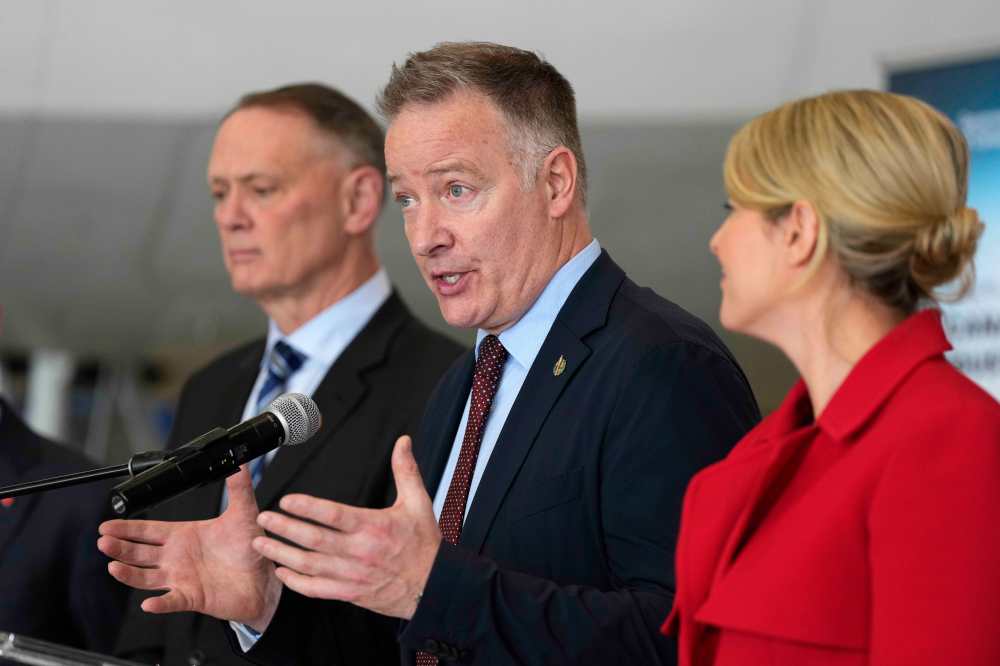
“The army’s current rifles, they’ve had them for 35 years. I’m sure they had a shelf life of less than that. So they’re looking forward to having a new piece of equipment and we’re happy to get it for them,” he told The Canadian Press on Thursday.
“This is the weapon the Canadian Armed Forces wanted.”
Fuhr said he’s been working to push this contract forward since the fall. He said the commander of the Canadian Army, Lt.-Gen. Michael Wright, told him the government managed to shave two years off the procurement timeline.
Fuhr said that was accomplished by employing special pandemic-era purchasing procedures, buying the rifles directly through the munition supply program, and managing the contract through the new Defence Investment Agency.
The government says Colt has committed to ensuring 80 per cent of each rifle will be sourced from within Canada, and the ammunition will also be made in Canada.
The project is also expected to contribute $10 million annually to GDP over five years, Fuhr said, adding Colt will add 70 jobs to its Canadian workforce to fulfil the contract.
Denmark also announced a few months ago it would purchase 50,000 of the same rifles.
“I couldn’t think of a better textbook example of what we’re trying to achieve here,” Fuhr said. “Pulling up the economy, exciting the supply chain and exporting to our allies.”
It’s not clear yet what will happen to the old rifles.
This contract is just the latest development in the federal government’s ongoing defence spending spree.
It follows recent announcements of $200 million for a dedicated space launch pad and $1.4 billion for the domestic munitions industry.
The National Research Council is also getting nearly $1 billion to put toward drones and aircraft research and equipment.
This report by The Canadian Press was first published March 19, 2026.