
Air Canada plane crash at New York airport may add to travel fears: psychologist
Advertisement
Read this article for free:
or
Already have an account? Log in here »
We need your support!
Local journalism needs your support!
As we navigate through unprecedented times, our journalists are working harder than ever to bring you the latest local updates to keep you safe and informed.
Now, more than ever, we need your support.
Starting at $15.99 plus taxes every four weeks you can access your Brandon Sun online and full access to all content as it appears on our website.
Subscribe Nowor call circulation directly at (204) 727-0527.
Your pledge helps to ensure we provide the news that matters most to your community!
To continue reading, please subscribe:
Add Brandon Sun access to your Free Press subscription for only an additional
$1 for the first 4 weeks*
- Enjoy unlimited reading on brandonsun.com
- Read the Brandon Sun E-Edition, our digital replica newspaper
*Your next Free Press subscription payment will increase by $1.00 and you will be charged $20.95 plus GST for four weeks. After four weeks, your payment will increase to $24.95 plus GST every four weeks.
Read unlimited articles for free today:
or
Already have an account? Log in here »
After the fatal Air Canada plane collision at a New York City airport on Sunday, travellers may experience an initial spike in anxiety that for some could reinforce existing concerns about flying, one Canadian psychology expert says.
Two pilots were killed and 41 people taken to hospital after an Air Canada jet carrying 72 passengers and four crew collided with a fire truck on a runway at New York’s LaGuardia Airport late Sunday night.
Flight AC8646, operated by Air Canada Express carrier Jazz Aviation, had arrived from Montréal Trudeau International Airport.
Martin Antony, a professor and chair of Toronto Metropolitan University’s psychology department, said people who are already fearful of flying may have those fears reinforced following the crash.
“I think for a lot of people, there may be some initial anxiety following an event like this, but it tends to pass,” said Antony, who specializes in anxiety research. “People who fear flying tend to pay much more attention to the plane crashes than they do to the 10 million flights that take off and land safely for every plane that doesn’t make it.
“Even if this doesn’t cause a fear for people, it may help to maintain fears that people have.”
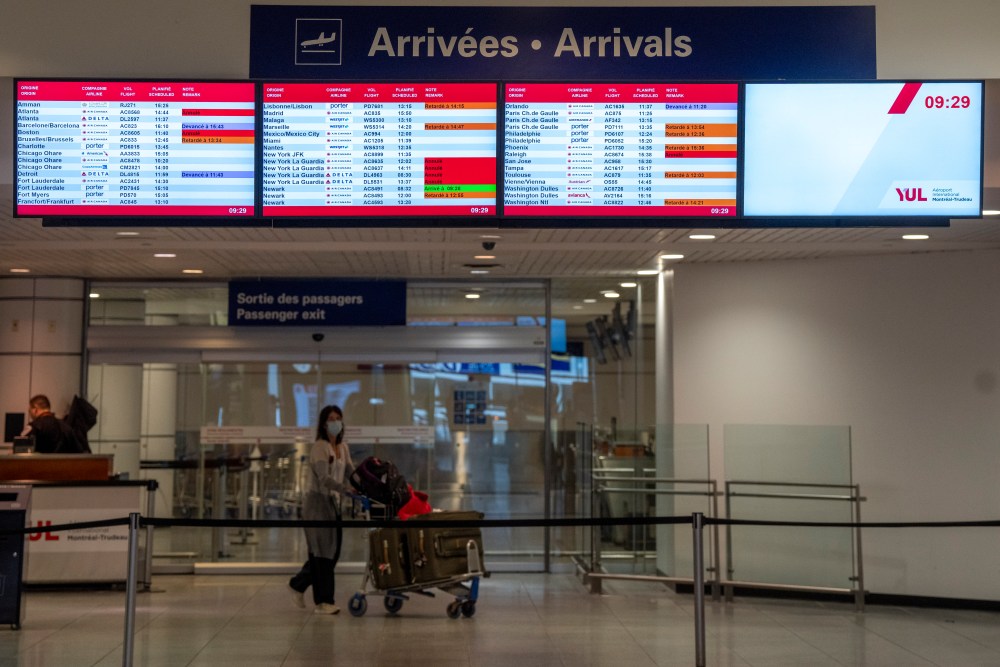
At Montreal’s airport, Air Canada passenger Andrew Burke, who was travelling with his wife to Toronto, said he learned about the accident at LaGuardia when he was still home.
“My mom’s travelling, but we haven’t told her,” he said on Monday. “She’s a nervous traveller; she would be scared.”
Burke said he wasn’t afraid to fly after the crash.
“It is what it is,” he said. “I could have been driving and gotten into a car accident on the highway.”
Meanwhile, traveller Kevin Sullivan said he had been glued to the news all day after hearing about the crash, and was feeling increasingly uneasy ahead of his own flight to John F. Kennedy International Airport scheduled at 7:10 p.m. from Montreal.
“Honestly, I’m a bit nervous,” he said. “I’ve been watching coverage of the accident all day, and it feels like the more I learn about it, the more anxious I get. The videos are pretty terrible.”
The news, he added, has been hard to shake, especially the deaths of the two pilots. “It’s just really sad,” he said.
Antony noted the crash isn’t the only thing that may reinforce existing fears surrounding travel. The psychologist said the incident may compound other anxieties linked to world events.
“This isn’t the only event that is happening. There’s lots of other things that potentially could lead to anxiety about travelling, just with all the different conflicts in the world,” he said. “This might just be sort of another thing contributing to a situation that some people are already kind of nervous about.”
Sullivan added he’s also concerned about travelling to the United States amid a partial government shutdown that has caused chaos at airports.
After weeks of missed paycheques, many U.S. Transportation Security Administration agents have called in sick — or even quit their jobs — as financial strains pile up. The staffing shortages have forced some airports to close checkpoints at times, with wait times swinging dramatically for travellers.
Sullivan hasn’t flown to the United States recently and said he can’t speak first-hand about any changes in airport operations in the country. Still, he’s heard from family members in the U.S. that procedures at airports seem affected by the cuts, adding to his worry.
“They’ve been telling me TSA lines have been really long lately, sometimes a few hours,” he said.
Sullivan arrived at Montreal’s airport around 3:30 p.m., way ahead of his flight, hoping it would ease some of his nervousness.
“I just felt like getting here early would help me be more prepared for whatever happens,” he said.
Benoit Lafayette, a 57-year-old from Montreal who was set to fly to Toronto for work, said he tends to be apprehensive when he flies, but the accident did not heighten his concerns.
“I’m usually a bit on edge when I travel, but this kind of accident doesn’t worry me as much as, for example, a plane crash,” he said. “It’s strange, when something happens on land, it seems less dramatic, but of course it is serious, especially with two people killed.”
For those who may be experiencing anxiety about travelling in the aftermath of Sunday’s crash, Antony said it’s helpful to “keep things in perspective.” Addressing the fear instead of avoiding it is key, he said.
“The best thing to do is to recognize the fear, but also recognize that the situation, on balances, is not as dangerous as it might feel following an event like this for most people most of the time.”
This report by The Canadian Press was first published March 24, 2026.
– With files from The Associated Press