
Manitoba finance minister says he’ll talk with critics of a planned food tax cut
Advertisement
Read this article for free:
or
Already have an account? Log in here »
We need your support!
Local journalism needs your support!
As we navigate through unprecedented times, our journalists are working harder than ever to bring you the latest local updates to keep you safe and informed.
Now, more than ever, we need your support.
Starting at $15.99 plus taxes every four weeks you can access your Brandon Sun online and full access to all content as it appears on our website.
Subscribe Nowor call circulation directly at (204) 727-0527.
Your pledge helps to ensure we provide the news that matters most to your community!
To continue reading, please subscribe:
Add Brandon Sun access to your Free Press subscription for only an additional
$1 for the first 4 weeks*
- Enjoy unlimited reading on brandonsun.com
- Read the Brandon Sun E-Edition, our digital replica newspaper
*Your next Free Press subscription payment will increase by $1.00 and you will be charged $20.95 plus GST for four weeks. After four weeks, your payment will increase to $24.95 plus GST every four weeks.
Read unlimited articles for free today:
or
Already have an account? Log in here »
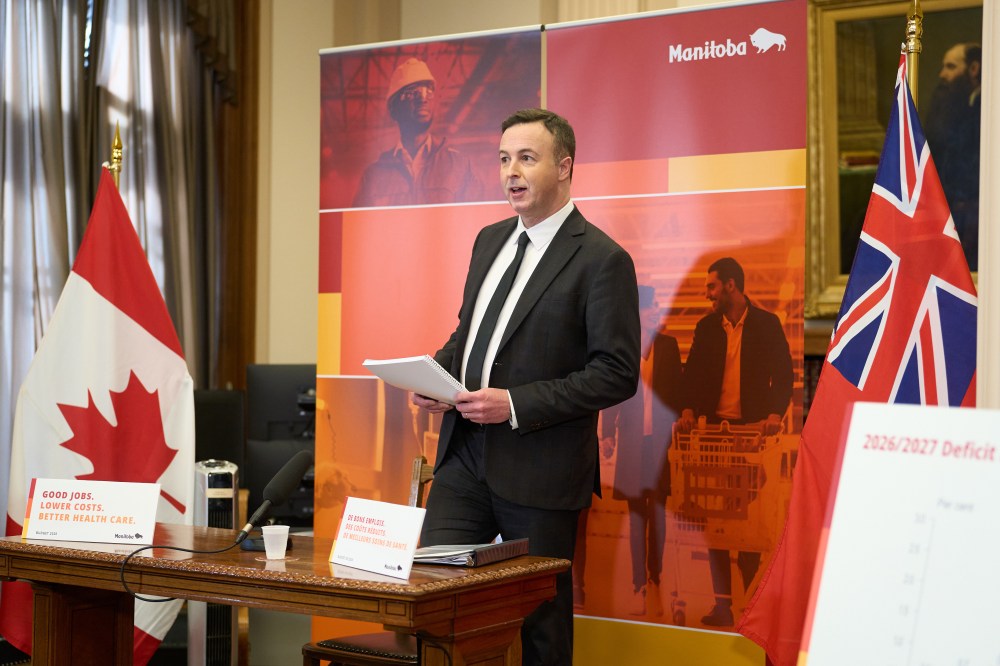
WINNIPEG – The Manitoba government indicated Friday it will meet with critics who say a planned grocery tax cut is unfair and excludes many businesses, but it did not promise any changes.
“These savings will be available in shops in all corners of Manitoba, large and small, but we are going to continue to have conversations with stakeholders who are perhaps requesting that we consider changes,” Finance Minister Adrien Sala said.
“And as a listening government, they can count on us to continue being open to that dialogue.”
The NDP government’s budget this week included a plan to, as of July 1, eliminate the seven per cent provincial sales tax on all food sold in grocery stores.
Basic groceries such as meat, milk, bread and produce are already exempt. The change would lift the tax on items including snacks, soft drinks and prepared takeout meals.
The plan has met with controversy because the tax exemption will not be applied to the same goods sold at restaurants, gas stations, curling rinks and small urban convenience stores that sell tobacco.
Groups that represent restaurant owners and small retailers say that will create an unfair disadvantage for their members and drive sales away to grocers.
“There is nothing fair about a system where a rotisserie chicken is tax-free in one store but taxed in another, or taxed at a restaurant,” Tyler Slobogian, a senior policy analyst with the Canadian Federation of Independent Business, said in a news release.
The Retail Council of Canada met with Sala’s staff Friday and said there were no commitments to change.
“What we got was certainly a willingness to participate in a conversation and a desire to get this right, at the same time as a sensitivity to opening up the financial costs of this initiative,” said John Graham, a regional director of government relations with the federation.
The current plan would see the government lose an estimated $32 million a year. Expanding the tax cut would cost more.
There is a recent precedent that saw the government expand a tax break after pushback from the public.
In December 2023, the province widened a temporary suspension of the provincial fuel tax that was initially designed only for on-road vehicles.
Following criticism that the move was too narrow, the government amended a bill to also apply the fuel-tax holiday to off-road vehicles and marked gas, which is sold at a discount for use in farm vehicles,
This report by The Canadian Press was first published March 27, 2026.