
As more copper wire thefts knock out service, some point fingers at scrap yards
Advertisement
Read this article for free:
or
Already have an account? Log in here »
We need your support!
Local journalism needs your support!
As we navigate through unprecedented times, our journalists are working harder than ever to bring you the latest local updates to keep you safe and informed.
Now, more than ever, we need your support.
Starting at $15.99 plus taxes every four weeks you can access your Brandon Sun online and full access to all content as it appears on our website.
Subscribe Nowor call circulation directly at (204) 727-0527.
Your pledge helps to ensure we provide the news that matters most to your community!
To continue reading, please subscribe:
Add Brandon Sun access to your Free Press subscription for only an additional
$1 for the first 4 weeks*
- Enjoy unlimited reading on brandonsun.com
- Read the Brandon Sun E-Edition, our digital replica newspaper
*Your next Free Press subscription payment will increase by $1.00 and you will be charged $20.95 plus GST for four weeks. After four weeks, your payment will increase to $24.95 plus GST every four weeks.
Read unlimited articles for free today:
or
Already have an account? Log in here »
ST. JOHN’S –
In early January, a bold telephone wire heist left about 135 people without phone services for about two weeks in Clarendon, a rural area of southern New Brunswick, between Fredericton and Saint John.
Clarendon does not have reliable cell service and with no telephones, residents couldn’t call 911, said Sgt. Ben Comely with the local RCMP.
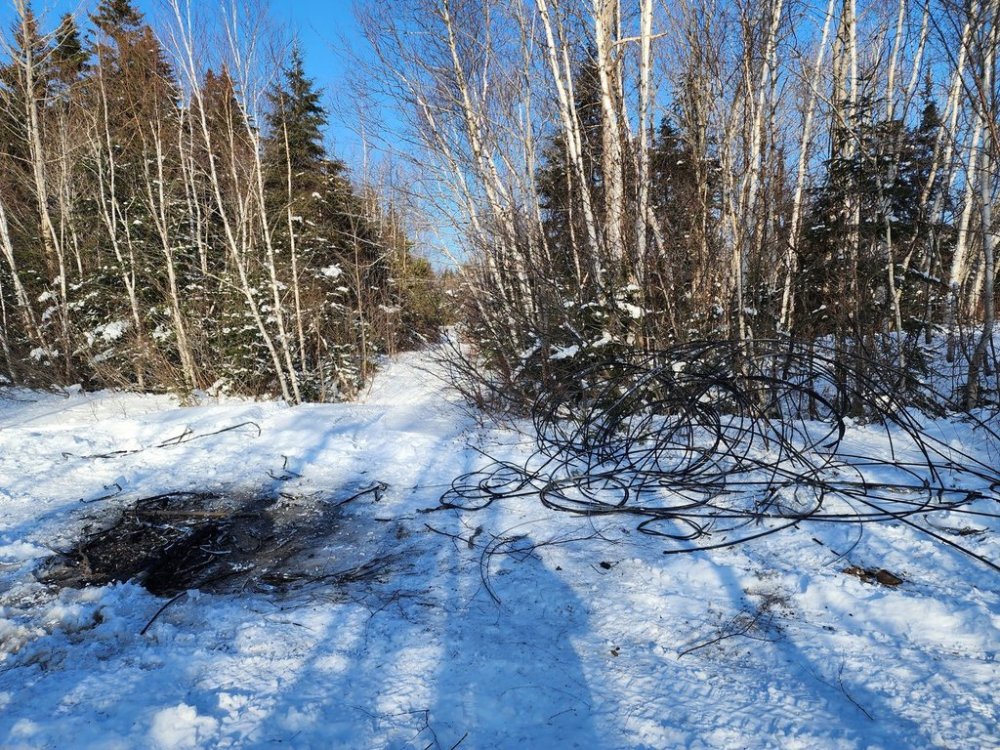
Police later found the wire split up in buckets at a nearby home, its black rubber coating melted away to reveal what the thieves were after: copper.
The officers seized 90 kilograms of copper wire and charged three people with theft of property over $5,000.
The case is just one example in a surge of telephone wire thefts across the country that have left people without phone or internet. Many are pointing fingers at scrap yard owners, including those who say they refuse to buy copper from thieves.
“The (social media) comments, they blame all the scrap yards,” said Daniel Rinzler, owner of D.R. Scrap Metals in Moncton, N.B. “We have to ask for ID … and that’s deterring a lot of people from stealing it and selling it to me. But there’s still other black markets they could sell copper to.”
As copper prices hit record highs, Bell logged 1,275 incidents related to thefts of the metal from its network in 2025, said Éliane Légaré, a spokesperson for the company. That’s an increase of roughly 40 per cent over the year before.
Bell also recently touted a decision by a Quebec Court judge who awarded the company $24,000 in damages after it sued a man convicted of stealing copper in Chicoutimi, Que., in a crime that caused 94 customers to lose internet service for more than a day.
Rogers said the total number of outage hours related to vandalism in its networks, which includes attempted copper thefts, has increased by 400 per cent since 2022.
The rise in thefts prompted Connie Cody, the Conservative member for Cambridge, Ont., to push for a crackdown on scrap yards that buy stolen copper wire.
Last month, she introduced a private member’s bill in the House of Commons that would make it a crime for scrap metal dealers to trade, traffic or have for sale any scrap metal that was known to be stolen, punishable by a fine of up to $10,000 and a jail sentence of up to two years.
Rinzler said salvage dealers know people are angry. But they are doing their best not to encourage crime while operating amid a patchwork of provincial laws, which may encourage thieves to steal in one province and sell in another, he said in an interview.
Although New Brunswick requires dealers to ask anyone trying to sell copper for identification, no such rules exist in neighbouring Nova Scotia or Quebec.
“They can drive 25 minutes, go across the border and they can sell copper there,” Rinzler said. “There’s guys coming through here that go to Quebec.”
In Alberta, metal recyclers must report all their sales to the police through a centralized database.
A metal dealer in Nova Scotia said scrap yard owners don’t want to buy stolen property, but they risk angering dangerous people if they don’t. The Canadian Press agreed not to name him because his business had just been broken into and he said he didn’t want to invite any more trouble.
Uniform rules across provinces would probably help, as long as they were evenly enforced, he said.
It’s easy to recognize stolen phone wire, and he always refuses those trying to sell it, he said. But others will buy it.
Eric Smith, senior vice-president of the Canadian Telecommunications Association, said wire thefts become a public safety issue when they interrupt communications. His group supports Bill C-14, a government bill which would introduce stiffer penalties for thefts that interfere with critical infrastructure.
He agreed that a more cohesive approach among the provinces, rather than a jurisdictional patchwork of different regulations, could help too.
“We would like to see all provinces adopt rigorous regulations around this,” he said in an interview.
As for Cody’s effort, Bill C-271, Smith said he hadn’t had a chance to dig into it yet, but he welcomed her initiative to raise awareness.
Rinzler said the situation is complicated.
“If people are going to steal something that’s valuable, that’s what they’re going to do,” he added. “If they’re desperate for money, they’ll do whatever they can.”
This report by The Canadian Press was first published April 2, 2026.